
Sunroom vs. Screened Porch: Choosing Your Perfect Muskoka Sanctuary in 2026
Imagine a quiet July evening on the water where the sunset turns the sky a dusty rose, yet you are forced to retreat indoors because the black flies have staged a takeover. It is a common Muskoka heartbreak, but it does not have to be your reality. Deciding between a sunroom vs screened porch often comes down to one essential question: how much of the Ontario climate do you want to control? You deserve a sanctuary that bridges the gap between your home and the rugged beauty of cottage country without the sting of mosquitoes or the weight of midsummer humidity.
We realize that your time at the lake is precious and far too short. Most homeowners agree that a porch should be a place of tranquility, not a battleground for pests. This guide will help you discover the critical differences in comfort, lifestyle impact, and long-term durability for your property. We will provide the practical insights you need to choose an extension that offers a bug-free environment and a seamless transition to the outdoors, ensuring you get the most out of every season.
Key Takeaways
- Compare the “outdoor-first” feel of a porch with the panoramic, climate-controlled comfort of a sunroom to find your ideal lifestyle fit.
- Identify the engineering requirements needed to extend your cottage season, from basic bug protection to full four-season insulation.
- Weigh the sunroom vs screened porch choice by considering how much time you want to spend cleaning away pollen, dust, and rain debris.
- Maximize your property value by choosing a sophisticated addition that offers a high return on investment in the luxury Muskoka market.
- Explore the Sunspace hybrid advantage to get the best of both worlds, featuring vinyl glazing that allows for maximum airflow or total protection.
The Great Outdoor Debate: Finding Your Ideal Cottage Extension
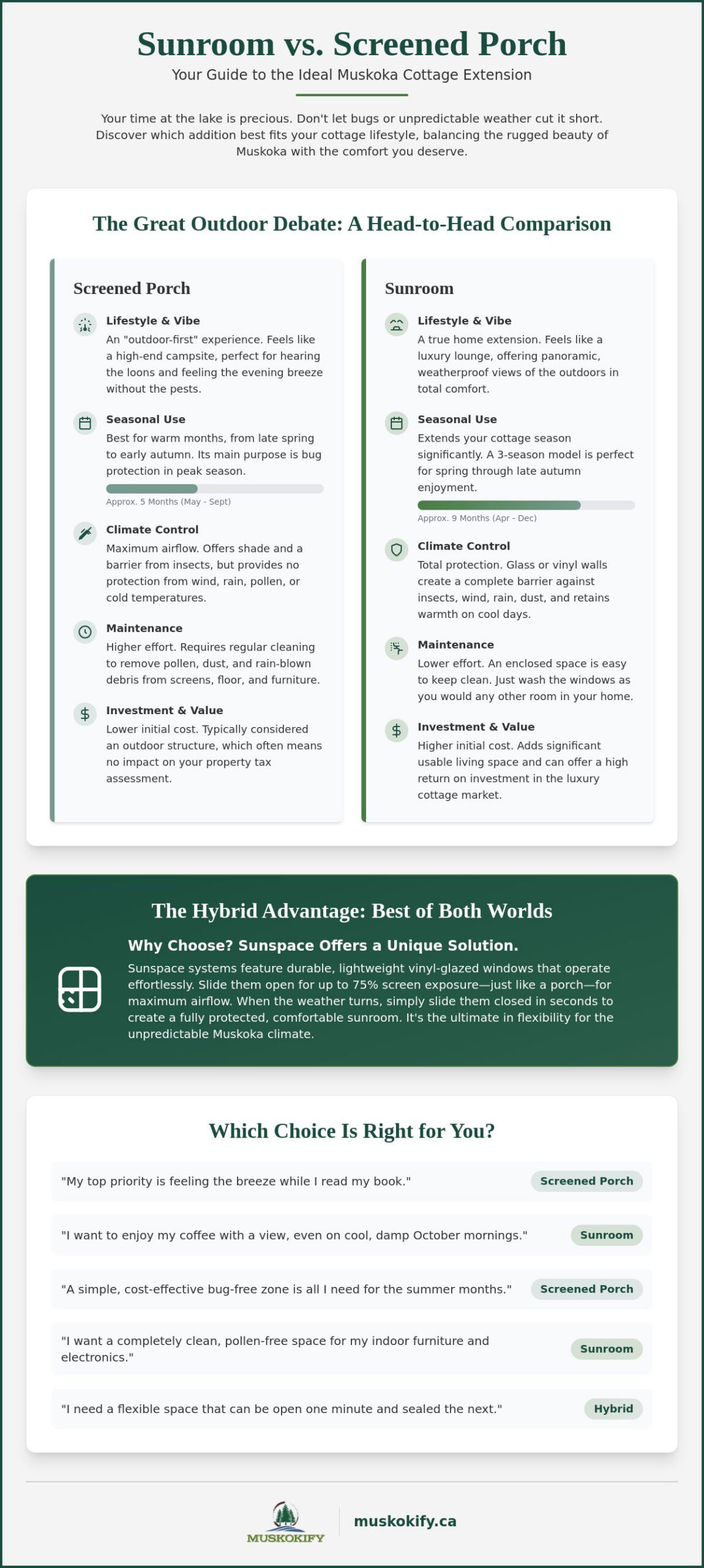
The “Muskoka Room” is more than just an architectural feature; it is a cultural staple of Ontario cottage life. Whether you are overlooking the granite shores of Lake Muskoka or a quiet wooded lot in Huntsville, the debate of sunroom vs screened porch usually begins with how you want to experience the air. A screened porch is an outdoor-first space. Its primary mission is to provide maximum airflow while acting as a barrier against the local insect population. It is a favourite for the person who wants to hear the loons and feel the evening breeze without the distraction of a mosquito coil.
In contrast, a sunroom is a glass-enclosed sanctuary designed for sophisticated climate control. While it still offers panoramic views, it leans toward being a true home extension. The choice between a sunroom vs screened porch often hinges on whether you want to watch the first snowfall in a t-shirt or if you simply need a place to escape the heat of July. If you are looking for the ultimate versatility, Sunspace Sunrooms offer a unique middle ground that balances these two worlds.
Why Your Choice Matters for the Muskoka Lifestyle
Your decision should be dictated by the seasons. Black fly season in May can be brutal, rendering open decks unusable. A screened porch solves this, but won’t help in the shoulder seasons of April or October when the Muskoka dampness sets in. If you want to enjoy your property during these crisp months, the warmth of glass walls is essential. Consider your view; glass provides a clear frame, while screens slightly soften the landscape.
Quick Comparison: At a Glance
The vibe of these structures is fundamentally different. A screened porch feels like a high-end campsite, whereas a sunroom feels like a luxury lounge. Porches require durable, outdoor-grade furniture that can handle humidity and dust. Sunrooms allow for plush, indoor-grade fabrics and electronics. Both additions change the light in your interior rooms; a sunroom with a glass roof can increase brightness, while a porch roof might shade your living space.
To start your planning, spend one full weekend tracking which times of day you currently avoid your deck. If it is because of the wind, go with glass. If it is just the bugs, screens might be your best friend.
Understanding the Build: Structural Differences and Seasonal Limits
When you start planning your project, the first thing to consider is what lies beneath your feet. A screened porch is essentially a deck with a roof and mesh walls. It usually rests on concrete piers, which is a simpler and more cost-effective approach. A full sunroom addition is a different beast entirely. It often requires a reinforced foundation or even a concrete slab to support the weight of glass walls and a solid roof. This choice in the sunroom vs screened porch debate significantly impacts your project timeline and your budget.
You should also consider your property’s official footprint. In many Ontario townships, a 4-season sunroom is classified as habitable living space. This means it adds to your home’s official square footage, which can increase your property taxes. A screened porch or a 3-season room is typically viewed as an outdoor structure, keeping your tax assessment more stable while still adding significant value to your cottage lifestyle.
The 3-Season vs. 4-Season Distinction
The sunroom vs screened porch decision really comes down to how many months of the year you want to use the space. For most Muskoka cottagers, a 3-season sunroom is the ideal middle ground. It provides a massive leap in comfort over a porch without the extreme expense of a 4-season build. To create a true 4-season space, you need “thermal breaks” in the frame and insulated glass to keep the heat in during a January blizzard. Adding HVAC to an outdoor space is a major investment. Unless you plan to live at the cottage full-time through the winter, the cost-to-benefit ratio usually leans toward a high-quality 3-season design. Understanding these key differences in engineering will help you avoid overspending on features you might not use.
Permits and Building Codes in Ontario
Don’t forget the paperwork. In the Township of Muskoka Lakes, you need a permit for any structure larger than 10 square metres. Local municipalities like Huntsville or Bracebridge also have strict rules about “lot coverage.” This limits how much of your property can be built upon to protect the natural landscape. Before you finalize your design, take these practical steps:
- Check your property’s current lot coverage to see if you have room for an extension.
- Verify if your structure will be more than 2 feet off the ground, as this triggers railing requirements under the Ontario Building Code.
- Consult with a professional to see if your sunroom requires more rigorous engineering approvals than a simple porch.
It is always a good idea to chat with a local expert who understands these regional bylaws before you start digging.
Airflow vs. Protection: Which Climate Control Wins?
The choice between a sunroom vs screened porch often comes down to how much of the natural environment you want to let into your living space. A screened porch is the champion of airflow. It allows the scent of pine and the cool lake breeze to flow through your home without interruption. If your goal is to feel like you are sitting on a dock while staying under a roof, the porch is your best bet. However, this open connection to nature comes with a maintenance cost that many homeowners overlook until the first heavy storm hits.
In Muskoka, we face a specific “debris problem.” Every May and June, a fine layer of yellow pine pollen coats almost every outdoor surface. On a screened porch, this dust settles on your furniture, rugs, and flooring, requiring frequent cleaning. Horizontal rain is another factor; a strong wind can easily push a summer downpour through mesh screens, soaking your cushions. A sunroom solves these issues by acting as a sealed barrier. It protects your investment from the elements and even serves as a thermal buffer for your main home, keeping the interior cooler in the summer and warmer in the shoulder seasons.
Winning the War Against Muskoka Pests
If you have spent a spring in Ontario, you know that standard mesh is not always enough. While it keeps out the big players, tiny “no-see-ums” and aggressive black flies can sometimes find their way through traditional screening. There is a distinct psychological comfort in being fully enclosed by glass during the peak of bug season. You can watch the sunset in total peace, knowing that no amount of buzzing will ruin your dinner. For those who want the best of both worlds, we recommend installing motorized screens. These allow you to enjoy a completely open air experience during the day and drop a high-performance barrier the moment the sun begins to set.
Managing Heat and Humidity
Humidity can make a porch feel oppressive in late July, making high-quality ceiling fans a non-negotiable addition to keep the air moving. Sunrooms face a different challenge: the greenhouse effect. On a bright afternoon, glass walls can trap heat quickly. You can easily mitigate this by installing interior blinds designed for sunroom environments. These help you regulate the temperature and protect your furniture from UV fading. By controlling the light, you turn a potentially hot room into a cool, private sanctuary that remains comfortable even during an Ontario heatwave.
Investment and Value: How Each Choice Impacts Your Property
When you invest in your cottage, you aren’t just buying glass and aluminum; you are buying more time to enjoy the landscape you love. However, from a purely financial perspective, the sunroom vs screened porch choice has a measurable impact on your home’s equity. In the luxury cottage market, a four-season sunroom can offer a return on investment of 60-75%, while a three-season room typically sits between 55-65%. A screened porch is a wonderful lifestyle addition, but its ROI is generally slightly lower, ranging from 50-60%. In growing hubs like Barrie or Collingwood, buyers prioritize spaces that offer protection from the elements, often viewing a sunroom as a more valuable, permanent asset.
Resale appeal often depends on how well a structure blends with the existing architecture. A sophisticated glass enclosure feels like a seamless part of the home, whereas a poorly maintained wood porch can eventually look like an afterthought. If you want to maximize your property value, choosing durable materials that resist the harsh Ontario climate is essential. This ensures that when it comes time to sell, your sanctuary looks just as inviting as the day it was built.
Evaluating Your Existing Deck for Conversion
Building on what you already have is a smart way to manage your budget. If your cottage has a sturdy deck, you might be halfway to a new room. Use this 3-point checklist to see if your current structure is ready for a transformation:
- Check the footings: Are they deep enough to handle the extra weight of glass walls and a solid roof?
- Inspect the frame: Is the wood still solid and free of rot or carpenter ant damage?
- Measure the height: Anything more than 2 feet off the ground will need integrated aluminum railings to meet the Ontario Building Code.
Building on an existing footprint can save you thousands in foundation costs, allowing you to reallocate those funds toward premium features like motorized screens or high-efficiency glass.
Maintenance and Longevity
Think about the long-term work involved before you commit. Traditional wood-framed porches require regular staining and are prone to rot in the damp Muskoka air. Aluminum systems are virtually maintenance-free. They handle the intense freeze-thaw cycles of Ontario without warping, cracking, or requiring a paintbrush. While glass panes do need an occasional cleaning to keep your view crystal clear, they don’t trap pollen and dust the way screen mesh does.
Snow loads are the silent killers of poorly designed extensions. Ontario winters are famous for heavy, wet snow that puts immense pressure on a structure. Glass panes and solid roofs are engineered to bear these loads and shed ice far more effectively than flexible screen mesh. If you opt for a screened porch, you might find yourself frequently repairing mesh that has sagged or torn under the weight of a February blizzard. Choosing high-quality materials ensures your structure survives the winter without the warping or rot common in traditional builds.
Ready to see what is possible for your property? Contact us today for an expert assessment of your cottage deck.
The Hybrid Advantage: Why Sunspace Offers the Best of Both Worlds
If you are still weighing the pros and cons of a sunroom vs screened porch, you might find that a hybrid room is the perfect answer. This innovative system uses vertical four-track vinyl windows to give you complete control over your environment. When the weather is perfect, you can slide the panels to achieve 75% airflow; this feels identical to the open experience of a traditional screened porch. When a storm rolls in or the temperature drops, you can close them completely for 100% protection. It is the ultimate “Muskoka Room” solution for those who want versatility without compromise.
Vinyl glazing is a game-changer for cottage owners with active families or pets. Unlike glass, this high-tech memory film is virtually unbreakable. If it is pushed or struck, it simply returns to its original shape within minutes. This makes it an ideal choice for properties located on golf courses where stray balls are a concern, or for homes with large dogs and energetic children. You get the crystal-clear views of a sunroom with a level of durability that traditional glass or mesh simply cannot match. It effectively ends the sunroom vs screened porch debate by providing the benefits of both structures in a single, elegant design.
Customizing Your Sanctuary with Muskokify
Designing your sanctuary is a collaborative process focused on your specific lifestyle. We specialize in creating a custom Sunspace sunroom that matches your cottage’s existing colour palette and architectural style. This ensures the new structure looks like a natural extension of your home rather than a later addition. For those who want extra peace of mind, we can integrate security shutters into the design. These provide a robust layer of protection for your windows and belongings when you are back in the city during the week, allowing you to relax knowing your lakeside retreat is secure.
Next Steps: Reimagining Your Outdoor Living
The best way to decide which option fits your property is to see these systems in person. We encourage you to visit a local project in Parry Sound or Gravenhurst to feel the difference between the materials yourself. Seeing how the light interacts with the vinyl glazing can help you visualize the potential for your own deck. Once you are ready to move forward, booking a professional estimate is the best way to assess the structural integrity of your current space. You can also explore our detailed guide on Sunroom Installation in Muskoka to learn more about our local building process. Take the first step today toward a bug-free, comfortable summer that lasts well into the autumn months.
Ready to Transform Your Lakeside Living?
Deciding between a sunroom vs screened porch is about more than just budget; it is about how you want to feel when you are at the lake. Whether you prioritize the constant breeze of a porch or the year-round protection of a glass enclosure, your choice should reflect your personal rhythm of cottage life. We have explored how structural needs, local bylaws, and maintenance levels play a role in this investment. Remember that a hybrid system can often bridge the gap, giving you the airflow you crave with the protection you need.
As an Authorized Sunspace Dealer, we specialize in custom-built solutions specifically engineered for the unique Ontario climate. Our team provides professional installation across the Muskoka region, ensuring your sanctuary is both beautiful and durable. If you are ready to stop fighting the black flies and start enjoying your view in refined comfort, we are here to guide you. Take the next step toward a more seamless living experience by connecting with our experts today.
Request a Professional Estimate for Your Custom Muskoka Sanctuary and let’s begin reimagining your outdoor space together.
Frequently Asked Questions
Does a sunroom add more value to a home than a screened porch?
Yes, a sunroom typically provides a higher return on investment because it adds more functional, weather-protected living space. According to industry data, a four-season room can offer an ROI of up to 75 percent, while a screened porch generally sits closer to 60 percent. This makes the sunroom vs screened porch choice a significant factor in your property’s long-term equity.
Can a screened porch be converted into a sunroom later on?
It is often possible to convert a porch, provided the existing foundation and roof can support the added weight of glass or vinyl panels. You will need a professional to inspect your deck’s footings and frame to ensure they meet the building code for an enclosed room. This is a common way to phase your cottage improvements over several years while spreading out the investment.
Which is more expensive to build: a sunroom or a screened porch?
A sunroom is generally more expensive to build because it requires glass or high-performance vinyl windows and a more robust foundation. Screened porches use simpler materials like mesh and basic framing, which makes them a more budget-friendly entry point. However, you should factor in the long-term maintenance costs of traditional wood porches when comparing these two options for your home.
How do I keep my sunroom from getting too hot in the summer?
You can regulate the temperature by installing custom interior blinds and ensuring your design includes plenty of ventilation. Choosing high-quality glazing with UV protection also helps reflect heat before it enters the room. We recommend adding a ceiling fan to keep the air moving. This makes the space feel much cooler even on the humid days of July.
Are screened porches effective against Muskoka’s black flies?
Screened porches are effective against larger insects, but standard mesh can sometimes let in tiny “no-see-ums” or persistent black flies. For total protection, a sunroom with solid glazing or high-performance screens is a better choice. If you love the porch feel, consider a hybrid system that allows you to seal the room completely during the peak of bug season in May and June.
What is the difference between a 3-season and a 4-season sunroom?
The main difference lies in insulation and thermal breaks within the frame. A 4-season room is engineered to be heated and cooled year-round, functioning as a true extension of your home’s interior. A 3-season room lacks the heavy insulation required for a Muskoka winter but provides a comfortable sanctuary from early spring through late autumn without the high cost of a full addition.
Do I need a building permit for a screened porch in Ontario?
Yes, you almost always need a building permit in Ontario for any structure that is attached to your home or exceeds 10 square metres. In municipalities like the Township of Muskoka Lakes, you must submit your plans through an online portal before construction begins. Skipping this step can lead to fines or issues when you eventually try to sell your cottage property.
How long does it typically take to install a Sunspace sunroom?
The actual on-site installation of the structure often takes just two to four days once the foundation is ready. Because these systems are custom-manufactured to your specific measurements, the lead time for production can vary throughout the year. Planning your project in the winter or early spring ensures you are ready to enjoy the space by the time the warm weather arrives.