
Winterized Sunroom Solutions: Reclaiming Your Muskoka Space for Every Season
What if your morning coffee came with a clear view of snow-covered pines and a room warm enough to linger in? With the right winterized sunroom solutions, you can make better use of your Muskoka space without giving up the light and landscape that make it special.
If your sunroom turns drafty in January, needs more heat than expected, or gathers condensation and frost on the glass, beautiful views alone aren’t enough. Ontario winters also bring heavy snow and repeated freeze-thaw cycles, so comfort and structural planning need to go hand in hand.
This guide explains how to plan a sunroom for winter, from comparing three-season and four-season designs to considering glazing, insulation, snow loads and local building permit requirements. You’ll find practical questions to ask, ways to check for drafts, and advice for choosing a room that suits how you live. The goal is a welcoming space where you can watch the seasons change and feel at home, even when winter settles over the lake.
Key Takeaways
- Check how lakeside wind, snow and air leaks affect your sunroom before choosing upgrades.
- Compare three-season and four-season designs based on how often you want to use the room in winter.
- Review the complete window system, including glazing, frames and seals, rather than comparing pane materials alone.
- Consider interior blinds as an added layer for light and privacy, not as a replacement for insulation or repairs.
- Explore how Sunspace Sunrooms, interior blinds and security shutters could suit your Muskoka property.
The Challenge of Winterizing Sunrooms in the Muskoka Region
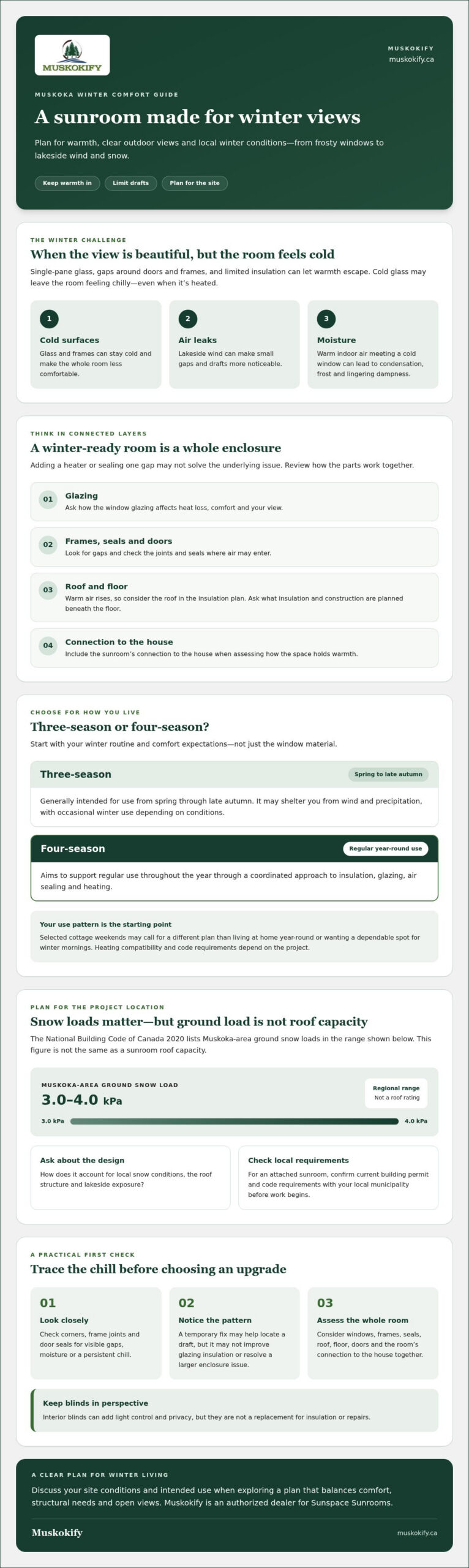
A sunroom that feels like an extension of the outdoors in July can become an ice box by January. Single-pane glass, gaps around doors and frames, and limited insulation let warmth escape. Cold glass can also make the room feel chilly, even when it’s heated. In Muskoka, lakeside exposure can add another challenge: wind can make small air leaks more noticeable.
The result is often a room you stop using just when the snowy shoreline looks its best. Winterized sunroom solutions aim to make the space more comfortable while keeping the view open, so you can enjoy a quiet coffee with the winter landscape beyond the glass.
Battling the Ontario Chill: Wind and Snow
Think of the “refrigerator effect” as more than a cold draft. When glass and frames stay cold, they can make the whole room feel uncomfortable. Insulation, careful sealing and thoughtful window placement all contribute to comfort. These ideas connect with passive solar design principles, which consider how a building can collect and retain warmth.
Snow brings a structural concern, too. The National Building Code of Canada 2020 lists Muskoka-area ground snow loads in the range of 3.0 to 4.0 kPa. That figure is not the same as a sunroom roof capacity, but it underscores why a structure needs a design suited to its specific site and expected loads. Ask how the design accounts for local snow conditions, the roof structure and lakeside exposure before moving ahead.
Even on short winter days, natural light can make your room feel more connected to the outdoors. A well-planned enclosure lets you enjoy the view of snow-covered pines and frozen water without having to experience the landscape from a cold room.
The Cost of Inaction: Energy Loss and Condensation
Heat can escape through single-pane glass and poorly sealed vinyl frames. When warm indoor air meets a cold window, condensation may form. If moisture lingers, frost can build up and dampness may affect frames over time. Check corners, frame joints and door seals for visible gaps, moisture or a persistent chill.
Temporary fixes can help you locate a draft, but they may not address the underlying issue. Sealing one gap, for example, won’t improve the glazing’s insulation or resolve a larger enclosure problem. In sub-zero weather, materials and quick fixes may also behave differently than in milder conditions. Treat a draft audit as a useful first step, then assess the room as a whole.
Reclaiming this square footage can change how you use your home, from Gravenhurst to Huntsville. A comfortable sunroom gives you another place to read, share breakfast or watch snow fall over the lake. Muskokify is an authorized dealer for Sunspace Sunrooms. Discuss your site conditions and intended use when considering a plan that balances winter comfort, structural needs and clear outdoor views.
What Defines Winterized Sunroom Solutions?
A winterized sunroom is designed to stay more comfortable through cold weather by limiting heat loss and blocking drafts. That takes more than adding a heater or sealing one gap. The glazing, frames, roof, floor, doors and connection to the house all affect how well the space holds warmth. These winterized sunroom solutions can preserve broad views of the lake and pines without turning the room into a fully enclosed, heavy-walled addition.
The term “winterized” can mean different things, so focus on how you plan to use the room. Ask what the enclosure is designed to handle, what insulation and glazing it includes, and whether it’s intended for occasional cold-weather use or regular year-round comfort. For an attached sunroom, confirm current building permit and code requirements with your local municipality before work begins.
3-Season vs. 4-Season: Which is Right for You?
A three-season room is generally intended for use from spring through late autumn, with occasional winter use depending on conditions. It may offer shelter from wind and precipitation without maintaining the same indoor comfort as a four-season space. A four-season design aims to support regular use throughout the year through a coordinated approach to insulation, glazing, air sealing and heating. Heating compatibility and code requirements depend on the project, so confirm them with your contractor and municipal building department.
Think about your routine. If you visit your cottage on selected weekends, a season-extending room may suit how you use the property. If you live there year-round or want a reliable spot for winter mornings, discuss a four-season design. The right choice depends on your comfort expectations and the building as a whole, not just the window material.
The Anatomy of a Winterized Structure
Every surface matters. Warm air rises, so the roof needs to be considered as part of the insulation plan. A cold floor can make a sunny room uncomfortable, especially on frosty lakeside mornings, so ask what insulation and construction are planned beneath your feet. Frames matter too: thermal breaks are design features that reduce the transfer of cold through framing components. They can help limit cold spots, but they don’t replace suitable glazing, careful air sealing or an overall design suited to the site.
Before choosing a system, ask for a clear explanation of how its roof, floor, frames and glazing work together. Muskokify is an authorized Sunspace Sunrooms dealer. You can contact Muskokify about your sunroom plans to discuss your property and intended use.
Comparing Thermal Glass and Vinyl Pane Options
The right glazing depends on how you plan to use your sunroom. Flexible vinyl panes can help shield a seasonal room from wind and weather, while insulated glass is generally a better fit when you want to use the space through an Ontario winter. Neither choice works in isolation: frames, seals, roof, floor and the structure’s design all affect comfort.
For winterized sunroom solutions, compare the complete window system rather than relying on labels alone. Ask what the manufacturer specifies for heat retention, ventilation and winter use, and how the glazing works with the rest of the enclosure.
Vinyl Panes: A Flexible Seasonal Choice
Vinyl panes can suit a three-season room where protection from wind and rain matters more than maintaining indoor temperatures during severe cold. They can also offer flexibility for opening the room to fresh air in warmer months. Performance varies by system, so check how the panels operate and what conditions they’re designed to handle. Don’t assume the panes themselves carry roof snow loads; ask how the overall structure is designed for local snow conditions.
If your cottage is unheated in winter, or you mainly use the room in spring, summer and autumn, vinyl may fit your routine. But wind protection isn’t the same as insulation. Ask whether the room is intended for occasional winter use or comfortable, regular use in cold weather.
Thermal Glass: A Stronger Fit for Year-Round Use
Double-pane thermal glass has two panes separated by a sealed space, helping reduce heat transfer compared with single glazing. Some systems may include a Low-E coating, a thin layer that reflects heat back toward its source. Ask whether the glass specification includes this coating and what performance information the manufacturer provides. Argon gas may also be used between panes in some insulated glass units, but don’t assume it’s included. Confirm the actual glazing details for your project.
Insulated glass can help create a more comfortable setting for a quiet winter morning, though it won’t make a room soundproof. Its ability to reduce outdoor noise depends on the full window assembly, including the panes, frame and seals. Request details for the specific system you’re considering.
For homes in Parry Sound and across Muskoka, weigh seasonal flexibility against year-round comfort, clear views and the room’s complete thermal design. A full system review is more useful than comparing panes alone. Muskokify is an authorized dealer for Sunspace Sunrooms. Ask which glazing options are available and how the selected sunroom is designed for your site and intended use.
Practical Steps to Winterize Your Existing Sunroom
Start by finding where the cold gets in. A draft audit helps you spot problems before choosing a heater or adding window coverings. On a windy day, check around window frames, door edges and where the sunroom meets the house. Note any moving air, cold spots, visible gaps or signs of moisture. If you find damaged frames or persistent condensation, get the cause assessed before covering it up.
- Check door seals and window edges for gaps or worn material.
- Look for frost, dampness or water marks around frames.
- Use weather-resistant caulking only where it’s suitable for the material and won’t block drainage or moving parts.
- Add a heavy rug to make a cold floor more comfortable, and ask a qualified professional whether floor insulation is practical for your structure.
These steps can improve comfort, but they can’t replace insulation or correct a structural issue. Treat winterized sunroom solutions as a whole-room plan, not a collection of quick patches.
Smart Shading and Privacy
Thermal window treatments can create an extra air layer between the glass and your room. Explore interior blinds to manage light and privacy as winter sunlight shifts across the lake. Ask whether motorized operation is available for the system you’re considering. Blinds can offer privacy when bare trees leave your sunroom more visible from outside, but they won’t correct drafty frames or replace insulated glazing.
Heating Your Glass Sanctuary Safely
Choose a heat source to suit the room and its existing electrical or fuel connections. Electric heaters, radiant options and propane appliances work in different ways; radiant heat warms people and nearby surfaces, while other heaters may primarily warm the air. Have a qualified professional assess what’s appropriate for your space. Follow the appliance maker’s instructions, and consider ventilation and moisture control to help limit condensation. If you’re considering a fuel-burning appliance, check applicable carbon monoxide alarm requirements for your home.
External Protection with Security Shutters
Exterior security shutters can add a barrier over sunroom glazing when the room is closed up. Ask whether the shutter system is suitable for your openings and intended weather exposure; don’t assume it’s designed to resist wind-driven debris. Interior blinds, perimeter sealing, floor comfort, suitable heating and exterior protection each address a different part of winter use.
If you’re unsure which improvements suit your existing enclosure, talk with Muskokify about your sunroom and the conditions at your property.
The Muskokify Approach: Custom Sunspace Solutions
A sunroom for a cottage near Gravenhurst may face different wind exposure, views and site conditions than one in Huntsville or Haliburton. Choosing a system is only part of the decision. Your lot, existing structure, snow exposure and plans for the room all matter. Muskokify serves homeowners in the Muskoka region and is an authorized Sunspace Sunrooms dealer, offering a starting point for exploring custom sunroom options.
Start with a clear picture of how you want to use the space. Will it be a quiet winter retreat, a bright extension of your main living area, or a room that opens up in warmer months? A project-specific assessment can help you discuss those priorities, your site conditions and how the sunroom could complement your cottage’s architecture. Ask what the proposed design includes and how it addresses the conditions at your property.
Engineered for the North
Ontario’s freeze-thaw cycle and heavy winter snow make site-specific planning essential. Don’t assume that a frame, roof or existing deck is suitable without reviewing the full structure. Ask how the sunroom design accounts for local snow loads and how it will connect to your home. If you’re considering an existing deck or a new foundation, confirm what the project requires rather than assuming one option fits every cottage.
For an attached sunroom, check building permit and code requirements with the building department for your municipality. Local authorities review requirements for the project location. This step helps you understand what plans and approvals may be needed before construction proceeds.
Explore Sunspace Sunrooms as one option for balancing weather protection, natural light and a clear view of the lake. The design conversation should also consider rooflines, frame appearance and how the new space will sit alongside your cottage’s existing architecture.
Your Journey to a Four-Season Retreat
Planning starts with your goals, then moves into reviewing the property, design options and project requirements. Ask how the proposed glazing, insulation, framing and heating plan work together. A well-considered design can help preserve the view while making the room more comfortable. Confirm what is included in the estimate and who is responsible for drawings, permits and installation, since those details can vary by project.
If you’re considering an upgrade, start planning before the first frost. Make a note of your room’s cold spots, draft locations, preferred views and how often you’ll use the space. Bring those details to a project discussion so you can assess the right winterized sunroom solutions for your cottage and daily routine.
Make Your Sunroom a Winter Retreat
A sunroom can bring you closer to Muskoka’s winter landscape, but comfort depends on more than adding heat. The right glazing, insulation, sealing and site-specific structural planning work together to help your space feel welcoming through the colder months. Start by deciding how you’ll use the room, then assess its drafts, windows, floors and exposure before choosing your next steps.
For lasting winterized sunroom solutions, balance thermal performance with the clear views that make your cottage special. Muskokify is an authorized Sunspace dealer serving the Muskoka region. A plan tailored to your property can help you make the most of your space in every season.
Ready to explore what could work for your cottage? Request a professional sunroom estimate from Muskokify and take the first step toward a brighter, more comfortable winter retreat.
Frequently Asked Questions
Can I really use a sunroom in the winter in Ontario?
Yes, if the sunroom is designed for winter use. A three-season enclosure may offer shelter but won’t necessarily stay comfortable in severe cold. For regular winter use, discuss insulation, glazing, air sealing, heating and snow-load design as one system. A well-planned room can let you enjoy a bright view of snowy pines or a frozen Muskoka shoreline, but the right design depends on your home, site and comfort goals.
What is the best way to heat a sunroom during a Muskoka winter?
There isn’t one best option for every sunroom. Electric and radiant heaters, or fuel-burning appliances, each have different installation and ventilation needs. Ask a qualified professional to assess your room, the heater’s instructions and the home’s electrical or fuel setup before choosing. Ontario’s Fire Code requires carbon monoxide alarms on every storey of a home with a fuel-burning appliance, fireplace or attached garage. Check current requirements for your home.
Do I need a building permit to winterize my existing porch?
You may need one, especially if the work changes the structure or converts an attached porch into a sunroom. In Ontario, a permit is required for an attached sunroom, regardless of its size. The requirements for your proposed work depend on the project, so contact your local building department before starting. If your cottage is in Gravenhurst, Huntsville or another Muskoka community, ask the municipality which plans and approvals apply.
How do I stop condensation from forming on my sunroom windows?
Reduce excess indoor moisture, keep air moving around the glass and check for drafts or damaged seals. Condensation forms when warm, moist indoor air meets a cold surface. Thermal blinds may add a layer at the window, but don’t treat them as a fix for persistent moisture. Wipe away water and watch for recurring dampness, frost or marks around frames. If condensation continues, have the glazing, seals and ventilation assessed.
How do thermal glass and vinyl panes differ for sunrooms?
Thermal glass is generally a better fit if you want to use your sunroom regularly through winter, while vinyl panes can suit a seasonal enclosure focused on shelter from wind and weather. Performance depends on the full system, including frames, seals and installation. Ask what each option is designed to handle and request the manufacturer’s performance details. Match the glazing to how often you’ll use the room and the comfort you expect.
Can Sunspace sunrooms handle heavy snow loads on the roof?
Sunspace Sunrooms can be custom-built for local Ontario snow loads, but the design needs to suit your specific site and project. Ask how the proposed roof and supporting structure account for local snow conditions, including the exposure at your cottage. Don’t assume every configuration has the same capacity. Muskokify is an authorized Sunspace dealer, and you can request details about how the proposed design addresses your project location.
What are the best window treatments for keeping heat in a sunroom?
Well-fitted interior blinds can add a layer between the glass and your room, while giving you control over light and privacy. Choose a style that suits your windows and daily routine, then ask about available operating options. Blinds may support comfort, but they won’t replace insulated glazing or repair a drafty frame. For a Muskoka cottage, consider how you want to manage winter sunlight while keeping lake and forest views clear when the blinds are open.
How long does it typically take to install a winterized sunroom solution?
There isn’t a standard timeline to rely on. The schedule depends on the design, site conditions, required approvals and installation details. Ask for a project-specific estimate that outlines the expected steps and timing before you make plans. Muskokify serves homeowners in Gravenhurst, Huntsville, Parry Sound, Midland, Tiny, Collingwood, Orillia, Barrie, Dorset, Haliburton, Mactier and Coldwater, where site and municipal requirements can vary.