
Retractable Insect Screens for Muskoka Patios and Outdoor Spaces
The best patio screen isn’t necessarily one that stays in place. Retractable insect screens for patios let you close an opening when insects are active and retract the screen when you want an open view. The right setup depends on the opening, preferred controls, mounting space and exposure to Muskoka weather.
If you’re comparing manual and motorized operation or considering a deck, balcony or pergola, those details matter. A screen should suit how you use the space, not get in the way.
This guide covers screen controls, materials, installation and practical weather considerations. Use the comparisons to assess different outdoor spaces and choose a setup that lets you enjoy fresh air and lake views with fewer interruptions from insects.
Key Takeaways
- Choose crank, cordless or motorized operation based on how often you’ll adjust the screen and whether you want powered controls.
- Compare fabric openness and colour to balance insect protection, daylight and your view of the Muskoka landscape.
- Measure the opening and available mounting depth before selecting an installation approach; inside mounts need at least 5 1/4 inches of depth.
- Raise screens when wind exceeds 60 km/h to help protect them from harsh conditions.
- Plan screens around how you use your patio, deck, balcony or pergola, since each space has different openings and exposure.
Crank, cordless, and motorized controls
Patio screens may use crank-operated, cordless or motorized controls. A hand crank provides direct operation without a power source. Cordless models eliminate the crank, while motorized screens operate with powered controls. Consider how often you’ll adjust the screen, who will use it and whether power is accessible.
Crank-operated screens suit a single opening you adjust by hand. Available widths range from 36 to 144 inches, with screen heights from 36 to 120 inches. A crank can be a straightforward choice for a patio door or one side of a covered deck. Consider where you’ll stand to operate it, especially if furniture or a railing sits near the screen.
Cordless models also span 36 to 120 inches in height, with widths from 36 to 84 inches. Their appeal is a screen without a crank handle to turn. Before choosing one, map the opening and think through who will raise or lower it during a typical Muskoka evening. A smaller opening, such as a balcony doorway, may call for a different control than a broad patio span.
Motorized outdoor living screens work well when you want to adjust a large opening without manual effort. Listed width options run from 36 to 240 inches, and each screen can be operated independently and set to a desired height on its tracks. Remote operation is available; some systems also offer mobile-app or Google Assistant control. You can program screens individually or operate them together, which helps when several sides of a porch need adjusting at once.
Start with how you’ll use the screen. A crank may suit an opening you adjust occasionally, while a motorized screen can make a wide lakeside opening easier to operate. Powered controls need a suitable power arrangement; manual operation does not. Compare controls with the opening’s width, access and furniture layout. An accessible control makes it easier to adjust the screen without disrupting the view.
Consider who will operate each screen throughout the season. If family and guests share the patio, straightforward controls can make it easier for everyone to use. For multiple openings, decide whether you want to adjust each screen separately or operate them together. This helps guide your choice while keeping the space comfortable and the lake view open.
To compare manual and motorized screens, consider whether hand operation, cordless use or remote control best suits your patio routine. That simple choice helps match the screen to your outdoor space, rather than adapting your routine to the hardware.
Screen materials, colours, and customization
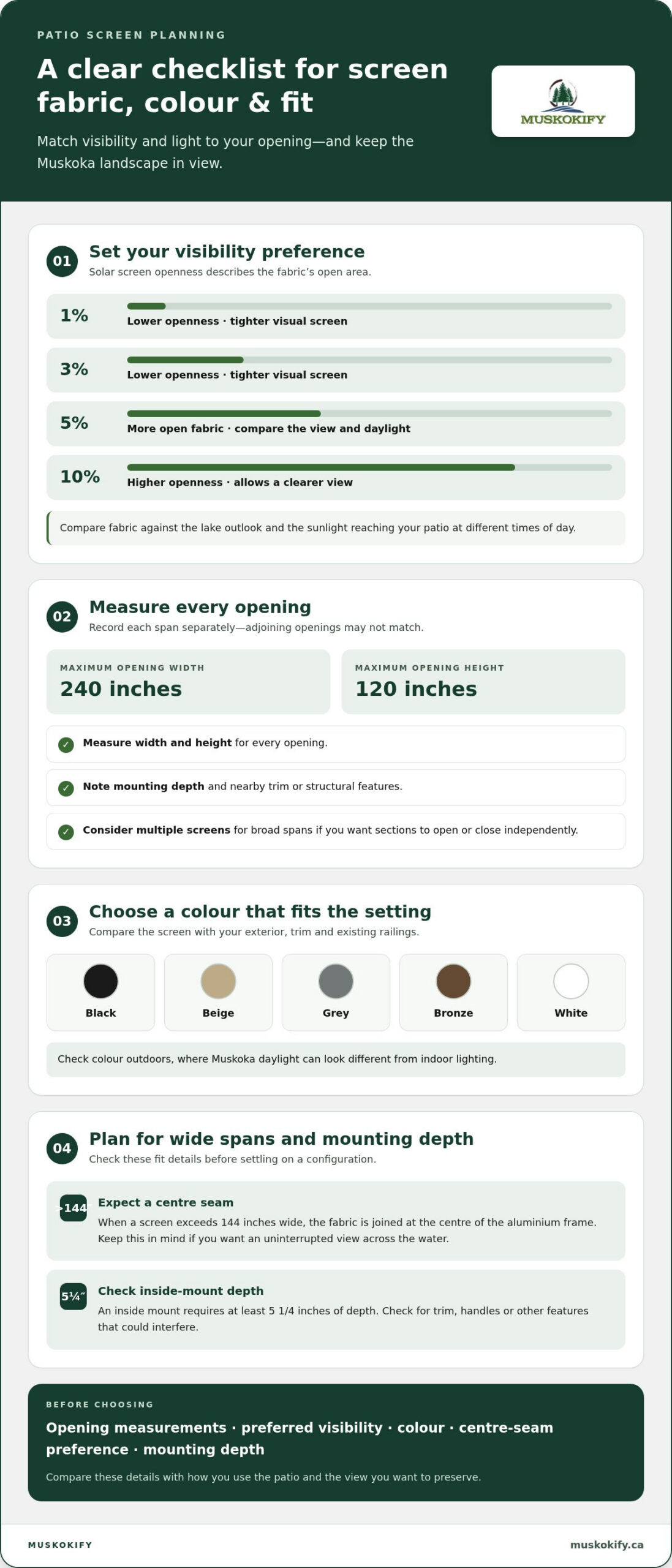
For a Muskoka patio, screen fabric affects how much light and scenery pass through. Solar screen fabric is available in 1%, 3%, 5%, and 10% openness. The percentage describes the fabric’s open area. Lower openness creates a tighter visual screen; higher openness allows a clearer view. Compare fabric options against the lake outlook and sunlight reaching your outdoor space at different times of day.
Start customization by measuring each opening’s width and height. The screens described here cover openings up to 240 inches wide and 120 inches tall. Record every opening separately instead of assuming adjoining spans match. A covered porch, for example, may have one broad lake-facing opening and narrower sides. Accurate measurements help determine whether one screen or several units suit the layout.
Colour also shapes the finished look. Available zip-screen colours include black, beige, grey, bronze, and white. Compare the screen with your home’s exterior, trim, and existing railings. A darker colour may blend into a shaded porch, while a lighter option can complement pale siding. Look at the choices outdoors, where Muskoka daylight may reveal a different effect than indoor lighting.
For large openings, width affects how the fabric is made. When a screen exceeds 144 inches wide, the fabric is joined at the centre of the aluminium frame. Keep that centre seam in mind if your priority is an uninterrupted view across the water. Another option is to divide a broad span into separate screens, allowing you to open or close sections independently.
Plan installation around the opening and its mounting area. Measure the clear span, height, and available mounting depth, then note nearby trim or structural features. An inside mount requires at least 5 1/4 inches of depth. These details help an installer assess the fit and plan a configuration suited to the structure, dimensions, and chosen materials.
Before choosing fabric and colour, list the details that matter: opening measurements, preferred visibility, colour and whether a centre seam works for you. A wide, sunlit deck may call for a different fabric choice from a shaded balcony. Comparing these factors helps you plan the look and visibility while keeping the Muskoka landscape in view.
DIY installation and professional installation
Installation depends on the opening, mounting surface and screen type. Decide whether you’re comfortable measuring and fitting the screen yourself or would prefer professional installation.
Mounting Options
An inside mount sits within the opening, so measure its clear width, height and depth before choosing this approach. The minimum inside-mount depth for patio screens is 5 1/4 inches. Check for trim, handles or other features that could interfere with the screen. If the opening lacks that depth, the mounting plan needs to account for its structure and available space.
A DIY installation may suit homeowners who have the necessary tools and can follow the instructions. Patio screen installation requires at least two capable adults, so arrange help before lifting or positioning components. Keep parts organized, check measurements and work through each opening methodically. A wide porch opening may require more coordination than a doorway.
Professional installation is useful if you’d rather leave the fitting to an installer, particularly for multiple screens, unusual openings or layouts where trim and railings affect access. Share opening measurements and photos of the mounting area when discussing the project. These details help plan an approach suited to the space.
Finding an Installer
Choose an installer experienced with retractable screens and openings like yours. Explain whether the screen is for a patio door, deck or enclosed porch, and note any nearby aluminum framing or trim. Ask how the plan accounts for the opening’s dimensions, mounting depth and access. Clear answers help you understand the proposed work.
Before installation, record each opening’s width and height, note the mounting surface and identify obstructions. A door handle, for example, may affect screen placement. Clarify which parts of the installation you’ll handle and which the installer will complete. Before work begins, agree on how the screen should operate, including its remote control if applicable.
After fitting, operate the screen through its full range and check that it moves smoothly along the tracks. Test the remote, if included, and make sure the screen clears nearby furniture and door hardware. Before regular spring use, check that the installation works as expected. Careful planning supports comfortable outdoor living in Muskoka.
Weather resistance and wind limits
Muskoka weather can shift from calm sunshine to gusts and rain quickly. Follow the screen’s operating limits and raise it when conditions call for protection.
Screen Retention and Wind Safety
Retractable screens rely on fabric held within side tracks, so wind exposure matters. Retract the screen when windy conditions could put strain on it. This limit is especially relevant on open decks and lake-facing patios, where gusts can reach the screen with little shelter. Watch local conditions rather than waiting for the fabric to strain or move out of position.
Before leaving a cottage or outdoor space unattended, check the forecast and retract each screen fully into its housing. If winds pick up while you’re outside, retract the screen rather than leaving it extended. Conditions can vary across a property: a sheltered porch may feel calm while an exposed edge faces stronger gusts. Assess each side separately.
Wind and Rain Resistance
An insect screen is not a sealed wall or a substitute for a weather enclosure. Mesh allows air through, and wind-driven rain may also pass through the fabric. If rain protection matters, consider how the patio roof, drainage and surrounding structure manage water. A screen can help limit insects while leaving the space exposed to outdoor conditions.
After a storm, inspect the fabric, tracks and lower rail. Look for debris in the mesh, fabric out of its track or anything affecting smooth operation. Gently clear loose leaves and operate the screen only when the opening is unobstructed. These checks can reveal an issue before you use the screen again.
Cold weather brings another operating limit. Raise screens when temperatures fall below −15°C. In Muskoka, that can matter during winter stays or sudden cold snaps. Avoid forcing a screen that feels stiff; retract it and let conditions moderate before operating it again. Check each opening, since a shaded lakeside porch may stay colder than a sunlit wall.
Screen fabric and aluminum frames are designed for regular outdoor use, but weather-aware operation still matters. Retract screens before a storm, then inspect the tracks and fabric afterward. If you’ll be away from the cottage for an extended period, include retraction in your seasonal closing routine. This respects the screen’s limits and leaves the view open when calm weather returns.
Retractable insect screens for patios, decks, balconies and pergolas
Match each screen to the opening, exposure and structure of your outdoor space. In Canada, permit and condominium requirements depend on the property and project scope.
Screens for Outdoor Spaces
A patio screen can cover a broad opening beside an outdoor dining area, while a deck screen may suit a sheltered seating space. On a balcony, consider how the screen fits with existing railings and whether it affects access to the door. For a pergola, assess the roof, posts and sides together before planning where screens will sit.
List the openings that need coverage and how you use each space. A lakeside patio might need screens along the sides exposed to evening breezes, while a balcony may need coverage only across its doorway. Mesh helps limit insects, but it doesn’t turn an open structure into a sealed room or guarantee weather protection.
For retractable insect screens for patios, decks and pergolas, consider the structure as well as the view. Posts, beams and exterior trim affect where screens can sit and how they move. When building or modifying an outdoor structure to fit screening, established landscaping and construction specialists like azgreenearth.com demonstrate how sturdy pergolas and patio framing can be planned to support custom additions. Mark each opening on a simple sketch to compare coverage and preserve the lake view.
Rules for Patio Screens
Permit requirements and condominium rules can depend on the municipality, property type and proposed changes. A screen fitted within an existing opening may raise different considerations from work that alters an exterior structure. Review municipal permit guidance and your condominium’s governing documents before planning installation.
For a condominium balcony, identify whether the railing, exterior wall or other shared elements are part of the proposed work. For a cottage deck, describe the screen layout and any structural changes when reviewing local requirements. This helps clarify approval steps before materials or installation are arranged.
Cleaning and Maintenance
Clean screen mesh with a soft brush or cloth and mild soapy water. Rinse gently and let the fabric dry before retracting it. For example, remove pollen and loose debris after a windy week rather than letting them build up in the mesh or tracks.
Include the tracks and lower rail in routine care. Clear leaves, pine needles and other debris by hand, then check that the screen moves smoothly. Don’t force it if it catches. After cleaning, retract the screen fully and inspect the fabric for damage before using it regularly again.
In Muskoka, seasonal maintenance can fit into your cottage opening and closing routine. In spring, clear winter debris and operate each screen gently. Before leaving for the season, clean the mesh, check the tracks and retract the screens according to their operating guidance. This simple routine helps keep them ready for the next stretch of outdoor living.
Muskokify: Sunspace Sunrooms
Muskokify can help incorporate retractable screening into a broader plan for your Muskoka outdoor space. Motorized Screens offer a way to adjust openings, while Sunspace Sunrooms can create a more enclosed area. Glass Railings and Aluminum Railings can complement the layout while keeping the focus on your surroundings.
Whether you’re screening one patio opening or rethinking how you use a porch or deck, consider how each solution suits your home, views and seasonal plans. Muskokify can help you explore options for your space. Contact Muskokify to discuss your outdoor living project.
Shape an outdoor space that works for you
Let the way you live at your cottage guide your design decisions. Consider where you gather, which openings you want to screen and how you want the space to feel when the screens are retracted. A considered plan can combine insect protection with the wider look and use of your property, without letting hardware dominate the view. If you are looking for fresh ideas on unifying your patio with the surrounding yard, firms like Nu Scape Designs offer great examples of how custom, low-maintenance design can create seamless outdoor living spaces.
For projects that extend beyond patio screens, Muskokify offers Sunspace Sunrooms, Glass Railings and Aluminum Railings. These options can shape an outdoor area around its setting, whether you want a more enclosed retreat or a clear sightline across the lake. Start with your space and how you want to enjoy it.
If you’re ready to plan retractable insect screens for patios around your Muskoka home, contact Muskokify about patio screens. Take the next step towards an outdoor space that feels welcoming and distinctly yours.
Frequently Asked Questions
How much do retractable patio insect screens cost in Canada?
There’s no single useful figure for every Canadian patio because project scope varies. List the openings you want screened and the result you want from each. For example, decide whether you’re screening a dining area, a doorway or several sides of a porch. A clear scope helps you compare suitable designs rather than relying on a generic figure.
What factors affect the price of retractable patio screens?
Design choices determine what needs to be planned. Consider the number and shape of the openings, the structure they’re part of, the look you want and how the screens fit your outdoor routine. A cottage porch with varied openings needs a different plan from a simple, uniform layout. Note your priorities before choosing a design.
How do motorized and manual retractable screens compare?
Choose controls that suit the people using the space. Consider who will open the screens, whether they can reach them comfortably and how often they’ll be adjusted during the day. At a shared cottage, think about whether everyone can use the controls easily. Consistent controls on frequently used openings may also simplify operation.
What patio measurements are needed to order a retractable screen?
Measure each opening where the screen will sit and note details that could affect the fit. Check whether the surrounding surface is level, whether trim changes the opening’s shape, and where handles or posts are located. For an older cottage with uneven framing, photos from inside and outside can clarify the layout. Label each opening to keep measurements distinct.
How are retractable patio insect screens installed?
Plan installation around the screen’s position, supporting surface and path of operation. Before work begins, move furniture and identify anything that limits access. At handover, ask for a demonstration of normal operation and care. This lets you understand how the screen moves and address practical questions before using the space.
Can retractable screens be installed on existing patios, pergolas, and covered decks?
An existing structure may suit screening if its layout provides a suitable place for the screen assembly. Assess the posts, beams and surrounding surfaces, and note whether the sides are open or partly enclosed. A pergola with widely spaced supports presents a different planning challenge from a covered deck with defined wall openings. Let the structure guide the screen arrangement.
Which screen mesh is best for mosquitoes, no-see-ums, pets, and airflow?
No single mesh suits every concern equally. The weave affects how well smaller insects are kept out, while the fabric also influences airflow and visibility. If pets use the space, consider how they behave around screens, especially whether they push or scratch them. Prioritize your main concern before comparing fabric options.
How durable are retractable patio screens in Canadian weather and wind?
Durability depends partly on exposure and how screens are handled between uses. A sheltered porch and an open lakeside deck face different conditions, so consider how much wind and rain reach each opening. Retractable mesh is not a solid weather enclosure. When closing a cottage for the season, leave screens clean, dry and retracted according to their operating guidance.