Awning Fabric for Canadian Weather: Compare Your Options
The best awning fabric for Canadian weather depends on what your outdoor space faces most: strong sun, damp conditions, cold and snow, or wind. Solution-dyed acrylic suits sunny areas because it resists fading and allows airflow. Vinyl-coated polyester is easier to wipe clean in damp climates, while PVC-laminated polyester absorbs little moisture and can help snow slide off. In windy locations, tightly woven synthetic mesh with reinforced seams can help reduce wind stress.
Choosing fabric is about more than colour or appearance. The material should suit your region and be manageable through changing seasons. This comparison explains how acrylic, vinyl-coated polyester, PVC-laminated polyester, synthetic mesh, and other options differ in sunlight, moisture, airflow, and weather resistance. You’ll also find practical care advice, including why fabric should dry fully before you retract the awning. Use these differences to narrow down an option for your home or cottage and its Canadian climate.
Key Takeaways
- Match the fabric to your main weather challenge: strong sun, damp conditions, snow, or wind.
- Consider solution-dyed acrylic for sunny areas where airflow and colour retention matter.
- For damp or cold conditions, compare coated or laminated fabrics and how they manage moisture.
- Let awning fabric dry fully before retracting it, and use gentle cleaning methods to protect its surface.
- When fabric looks worn or no longer suits your setting, replacement can refresh your outdoor space and its weather protection.
Moisture resistance and mildew prevention
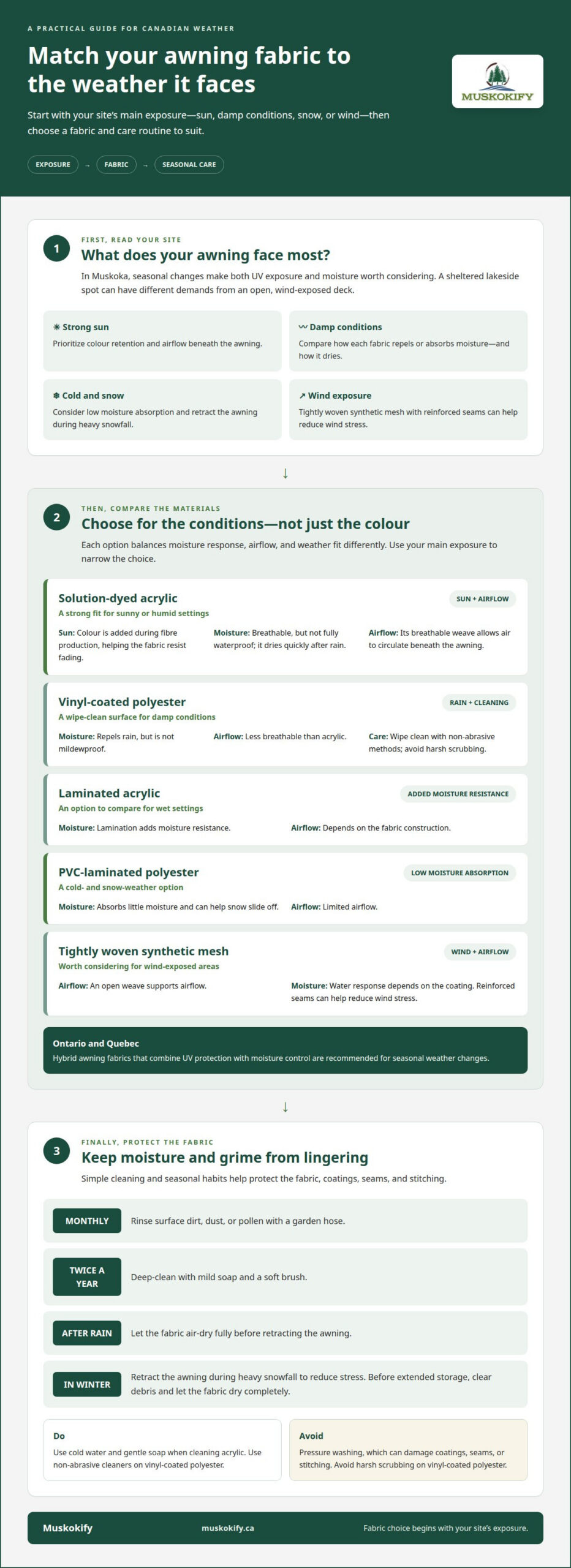
In Canadian climates with snow, rain, wind, and UV exposure, no single fabric suits every site. Solution-dyed acrylic handles sunny conditions, coated or laminated fabrics suit damp settings, and tightly woven mesh can help in windy areas.
Choose based on the weather your awning faces most. In Muskoka, seasonal changes make both UV protection and moisture management relevant. Around Gravenhurst or Huntsville, consider whether the awning sits in a damp, sheltered spot or faces open wind and sun. The site’s exposure helps narrow the material choice.
| Fabric option | Moisture response | Airflow | Weather fit |
|---|---|---|---|
| Acrylic | Breathable, but not fully waterproof | Allows circulation | Sunny or humid settings |
| Vinyl-coated polyester | Repels rain; not mildewproof | Less breathable | Damp conditions |
| Laminated acrylic | Added moisture resistance | Depends on fabric construction | Wet settings |
| PVC-laminated polyester | Absorbs little moisture | Limited airflow | Cold, snowy conditions |
| Tightly woven synthetic mesh | Coating affects water response | Open weave supports airflow | Wind-exposed areas |
Use the table as a starting point, then prioritize your site’s main exposure. An awning beside a humid lakeshore faces different moisture demands from one over an open deck. Even waterproof fabric can have moisture-related issues if dirt and dampness linger. Acrylic’s breathable weave helps limit mildew in humid climates, though it still needs to dry after rain.
Follow a simple care routine to keep moisture and grime from lingering:
- Rinse surface dirt, dust, or pollen with a garden hose monthly.
- Deep-clean the fabric twice a year with mild soap and a soft brush.
- Use non-abrasive cleaners on vinyl-coated polyester; avoid harsh scrubbing.
- Let the fabric air-dry fully before retracting the awning.
- Avoid pressure washing, which can damage coatings, seams, or stitching.
For Muskoka winter care, retract the awning during heavy snowfall. Snow adds stress, while moisture trapped in folded fabric can encourage mildew. Before storing the awning for an extended period, clear away debris and let the fabric dry completely. These steps help protect the surface and stitched areas through changing seasons.
Consider UV exposure as well as moisture. Sun and weather can fade or damage fabric, while damp conditions encourage mould and mildew. Breathable acrylic may suit strong sun and humidity; coated fabric can suit repeated rain. Match the fabric to local exposure, then keep it clean and dry.
Choose the option that best balances your site’s exposure to wetness, sun, wind, and winter conditions.
Regional conditions can help guide your choice. In coastal British Columbia, moisture-resistant vinyl or laminated acrylic fabrics are recommended to reduce mildew in wet conditions. In Ontario and Quebec, hybrid awning fabrics that combine UV protection with moisture control are recommended for seasonal weather changes.
For Atlantic Canada, tightly woven awning fabrics with hydrophobic coatings are recommended for fluctuating marine weather. Sun and weather exposure can fade or damage awning fabric and encourage mould and mildew. Consider both moisture resistance and protection from the elements when choosing.
Solution-dyed acrylic for sunny conditions
For a sun-exposed deck, solution-dyed acrylic is a strong fabric option. Its colour is added during fibre production, helping it resist fading in summer sun. The breathable weave also allows air to circulate beneath the awning, which can make a covered seating area feel less stuffy.
That airflow matters in hot, sunny spaces such as a south-facing Muskoka deck. Acrylic fabric dries quickly after rain and resists fading, balancing shade with a lighter, more open feel. It won’t block every effect of heat, but it avoids the sealed surface of vinyl-coated fabric.
For sunny Canadian summers, solution-dyed acrylic is often a practical choice because it retains colour and allows airflow. Vinyl may suit you better when easy cleaning is the priority. The key difference is breathability versus a wipe-clean surface, not a simple ranking of one material over another.
Compare these factors before choosing:
- Sun exposure: Acrylic resists fading, making it suitable for a bright, exposed patio.
- Air movement: Its breathable weave allows air to pass beneath the awning.
- Cleaning: Acrylic needs occasional brushing or rinsing; vinyl can be wiped clean.
- Rain: Acrylic dries quickly, while vinyl fabric offers a waterproof surface.
- Seasonal care: Allow either material to dry fully before retracting it.
Acrylic and vinyl serve different priorities. For a cottage deck used through bright afternoons, acrylic’s airflow and colour retention can be appealing. For an outdoor dining area near trees, vinyl’s wipe-clean surface may make it easier to remove surface dirt. Acrylic still needs care: rinse it with cold water and gentle soap to maintain its waterproofing. Breathable does not mean mildewproof, so drying and cleaning remain important.
Local building requirements can affect an awning installation, while fabric choice centres on weather performance. No fabric selection replaces attention to the structure and site conditions. Keep the decisions distinct: account for local installation requirements, then choose fabric for the exposure it must handle.
During heavy snowfall, retract a retractable awning to reduce winter stress. In wind-exposed areas around Muskoka, tightly woven synthetic mesh with reinforced seams can help reduce wind damage by distributing stress. These are different conditions, so consider both when selecting fabric and planning seasonal use.
For a sunny, sheltered space, acrylic can balance airflow and colour retention. If rain, dirt, or frequent cleaning is a bigger concern, compare vinyl’s smooth, wipeable surface. Let your site’s exposure to sun, wind, and moisture guide the final choice.
Polyester durability and weather resistance
Polyester performance depends on its weave, UV resistance, and exposure. For a wind-exposed property near Parry Sound, pay particular attention to reinforced seams and mesh construction.
Polyester Durability
Polyester awning fabrics range from tightly woven cloth to open mesh. In a wind-exposed Muskoka setting, synthetic mesh with reinforced seams can help reduce wind load and distribute stress across the fabric. This construction serves a different purpose from dense, coated fabric, which prioritizes rain resistance. At exposed sites, assess seam strength and fabric structure alongside colour and appearance.
UV resistance also matters. Fabrics without it may fade, crack, or tear within one or two seasons, particularly under long, sunny summers. Some premium awning fabrics come with 10-year coverage against fading and wear. Treat that coverage as product-specific, not as a standard for every polyester fabric. Compare the stated UV performance and coverage with the exposure at your property.
Use these points to assess polyester for your setting:
- Wind: Consider tightly woven synthetic mesh with reinforced seams in exposed locations.
- Sun: Prioritize UV-resistant fabric where summer sunlight lasts for long stretches.
- Wear: Compare seam construction and any stated coverage for fading or wear.
- Winter: Retract an awning during heavy snowfall in regions with heavy snow.
Awning Fabric Temperature Range
There isn’t one temperature range that applies to every common awning fabric. Polyester, acrylic, and coated fabrics differ in construction, and exposure matters too. For a Canadian cottage, consider the fabric’s stated temperature guidance alongside sun, wind, and seasonal snow. Retract awnings during heavy snowfall to reduce winter stress on the extended structure.
Temperature alone doesn’t describe how fabric handles a Canadian season. UV exposure can affect colour and wear, while wind stresses seams. Rain and damp storage also influence fabric condition. A sunlit deck in Collingwood faces a different combination of conditions from a sheltered patio in Huntsville. Match the material to the dominant exposure rather than relying on temperature guidance alone.
Before choosing polyester, identify the site’s main challenge: sustained sun, wind exposure, or seasonal snow. Then compare the fabric’s construction and UV resistance. For a wind-exposed property, reinforced seams address a different concern from UV-resistant cloth on a sunny patio. Seasonal use matters too. Retract the awning during heavy snowfall, and let wet fabric dry fully before storing it.
The best awning fabric for Canadian weather depends on how it’s made and cared for. Mesh with reinforced seams can help in wind, while UV-resistant polyester suits prolonged sun. Use the fabric’s care and temperature guidance to assess whether it fits your property.
For a wind-exposed deck near Parry Sound, the best awning fabric for Canadian weather is the one whose construction addresses that site’s exposure. Consider seam reinforcement, UV resistance, and winter use together before choosing a material.
Vinyl-coated polyester and laminated fabrics
Vinyl-coated polyester and laminated fabrics suit Canadian sites where rain, dampness, or snow shape the choice. Their coated surfaces manage moisture differently from breathable acrylic weaves, so compare the construction with your seasonal exposure.
Vinyl-coated polyester has a smooth coating that repels rainwater and wipes clean. The surface can be useful beneath trees, where leaves and pollen settle on an awning. It’s also more universally compatible and easier to retrofit than acrylic fabric. When replacing fabric on an existing frame, that broader compatibility can make vinyl a practical option to consider.
The coating changes the fabric’s feel and function. Unlike breathable acrylic, vinyl-coated polyester does not prioritize airflow beneath the awning. Instead, it emphasizes water repellence and straightforward surface cleaning. Vinyl is waterproof, but not completely mildewproof: moisture and debris still need attention. For a damp patio, weigh the convenience of wiping the surface against the value of airflow.
PVC-laminated polyester is another option, particularly for colder settings. It absorbs little moisture and can help snow slide off rather than pool on the fabric. For a cottage near Huntsville or Haliburton, consider this construction if winter snow exposure is a concern. It can help manage moisture, but it does not replace seasonal care or retracting an awning during heavy snowfall.
Compare the two constructions against your main exposure:
- Rain and dampness: Vinyl-coated polyester repels rain and has a smooth, wipeable surface.
- Cold and snow: PVC-laminated polyester absorbs little moisture and helps snow slide off.
- Retrofit needs: Vinyl fabric is more universally compatible than acrylic.
- Winter setting: Snow-shedding construction can be useful where winter exposure affects an awning.
These materials aren’t identical, even though both use protective coatings. A lakeside deck with frequent rain may favour vinyl-coated polyester’s cleanable surface. A colder cottage property may make PVC lamination’s low moisture absorption more relevant. Match the material to the conditions your awning regularly faces rather than choosing by coating name alone.
Warranty coverage varies by fabric. Some low-cost vinyl awning fabrics offer only a one-year limited warranty. Treat that as a product-specific term, not a standard for every vinyl fabric. Read coverage details alongside the fabric’s stated use and construction, especially if the awning will face strong sun, persistent dampness, or winter exposure.
For care, use non-abrasive cleaners and a soft brush on vinyl-coated polyester. Avoid pressure washing, which can harm coatings, seams, or stitching. Let wet fabric dry fully before retracting it. These steps help protect the surface and seams through Canada’s shifts between rain, summer sun, and cold weather.
Awning fabric replacement
Replacing worn fabric can refresh an awning’s appearance and improve protection from sun and weather. In a cottage setting, faded cloth above a lakeside dining area can make the whole deck feel tired. Tears, persistent mildew, or a surface that no longer sheds rain also signal that replacement deserves consideration.
Start by matching replacement fabric to the conditions that affected the old material. A south-facing patio with prolonged sun needs a different priority from a wind-exposed deck near open water. If the old fabric faded quickly, consider UV resistance. If wind stressed its seams, look at tightly woven synthetic mesh with reinforced seams. That construction can help reduce wind load and distribute stress.
Before choosing, note what the existing awning experienced through the seasons. For example, identify whether its main problem was fading, tearing, dampness, or wind strain. This pattern helps you choose a replacement that addresses the problem instead of simply repeating the original material choice.
Use this practical sequence to narrow your options:
- Inspect the fabric for fading, tears, mildew, and seam wear.
- Identify the leading exposure, such as strong sun, rain, or wind.
- Compare fabrics by their response to that exposure and their care needs.
- Consider winter use, including retracting the awning during heavy snowfall.
- Choose a material that suits both the site and your seasonal routine.
Construction matters as much as the material category. A wind-exposed deck near Parry Sound may benefit from reinforced seams that spread stress. A sheltered patio in Gravenhurst may place greater emphasis on colour retention or easy cleaning. Look at where the fabric meets seams and edges, as these areas can reveal the type of wear the old installation faced.
Replacing fabric also offers a chance to refine your outdoor space. A fresh colour can complement cottage siding, deck boards, or railings, while renewed coverage makes a sunny seating area more usable. Choose fabric that fits the architecture and addresses the specific weather that wore down the previous material.
Plan the change around the awning’s condition, not just the calendar. A small tear may grow with repeated wind exposure, while accumulated mildew can point to lingering moisture or storage habits. If the fabric remains wet after rain, let it air-dry fully before retracting it. This helps prevent damp fabric from being stored against itself.
For exposed Muskoka locations, prioritize the weakness your existing fabric revealed. Choose UV resistance for persistent sun, reinforced seams for wind stress, or moisture-conscious construction for damp conditions. Replacing fabric can restore appearance and weather protection, but the best result starts with a clear understanding of what the old material endured.
Muskokify: Awnings
Muskokify offers awnings for homeowners shaping outdoor spaces around Canadian weather. If you’re weighing sun, rain, wind, and seasonal use, an awning can bring shade and shelter to a deck or cottage patio while complementing your home’s design.
Bring your priorities into the planning conversation: perhaps you want airflow on a sunny Muskoka afternoon, easier cleaning near trees, or fabric suited to an exposed site. These details help guide an awning choice that fits both your setting and the way you use the space. If you’re planning a larger outdoor living area, Sunspace Sunrooms, Glass Railings, and Aluminum Railings can complement the design.
Contact Muskokify to discuss an awning for your home or cottage.
Shape your outdoor space around the seasons
Your awning should feel at home in every season you use it. Before choosing, picture how sunlight moves across your deck, where rain collects, and how exposed the fabric is to wind. These details can help you select the best awning fabric for Canadian weather and create a more comfortable place to relax outdoors.
If you’re planning a broader outdoor upgrade, Muskokify also offers Sunspace Sunrooms, Glass Railings, and Aluminum Railings. Each can help shape how your space feels and functions, from a sheltered seating area to a clearer view of the surrounding landscape.
Ready to explore an awning for your home or cottage? Contact Muskokify to discuss your outdoor space and take the next step toward a more inviting place to enjoy the seasons.
Frequently Asked Questions
How do solution-dyed acrylic, vinyl-coated polyester, and woven polyester compare for awnings?
Compare the exact fabric construction, not just the fibre name. “Woven polyester” describes a broad category, so the weave and any surface treatment affect how it suits your project. For a cottage dining area, prioritize the qualities you value most, such as an airy feel, straightforward cleaning, or reinforcement for a more exposed site. This helps distinguish products that may share similar material labels.
How resistant are different awning fabrics to fading, mildew, water, and tearing?
There’s no single resistance score that covers all four concerns. Read each product’s performance claims separately, and note what test or coverage each claim refers to. A water-related claim, for example, doesn’t automatically describe mildew resistance or tear strength. Keep the product description and warranty with your purchase records so you can refer to the stated protections if wear appears later.
How long do acrylic and vinyl awning fabrics typically last in Canadian weather?
A single lifespan estimate would be misleading because acrylic and vinyl products vary in construction and coverage. Treat a warranty period as the manufacturer’s stated coverage, not a promise of how long the fabric will look new. Keep the installation date and warranty documents together. A simple seasonal record of visible wear can also help you track how the fabric is holding up at your property.
What awning fabric weight, coating, and UV protection rating should I look for?
Choose specifications that suit the awning’s dimensions and frame rather than selecting a weight or rating in isolation. Compare fabric weight using the same unit, and read the coating and UV claims for the specific fabric. If a product gives no comparable rating scale, focus on its stated performance and coverage terms instead of assuming weight alone predicts durability.