
Compare cottage blinds and shades for light and privacy
The most charming cottage window covering isn’t always the best for managing sunlight. When choosing interior blinds for a cottage, match the fabric or material to the window’s sun exposure, your need for privacy, and the view you want to keep. Solar shades can reduce glare and help protect interiors from UV damage while preserving an outside view; blackout blinds offer stronger light blocking but cover more of it.
Appearance matters, but so do practical needs. Wood blinds and shutters bring natural warmth and adjustable light control, while roller and honeycomb shades offer a simple way to soften or block sunlight. Roman shades and curtains add texture, but sheers alone provide limited privacy, especially at night with the lights on.
This guide compares cottage window treatments by daylight, privacy, views, and comfort through Muskoka’s changing seasons. Use the practical tips to choose for each room, from a bright lakeside living area to a bedroom facing a road or neighbouring cottage.
Key Takeaways
- Choose window coverings by room, sunlight, privacy needs, and how much of the cottage view you want to preserve.
- Compare wood blinds and shutters for a warm cottage look with adjustable light control, and consider how the window’s setting affects your material choice.
- Layer shades with curtains or drapery panels to adjust daylight and privacy throughout the day while adding softness to the room.
- Use solar shades to help manage glare and protect interiors from sun exposure; remember that view-preserving options may offer less privacy at night.
- When you’re ready to tailor window shading to your cottage, Muskokify’s Interior Blinds offer a next step for balancing light, privacy, and the view.
Roller and honeycomb shades
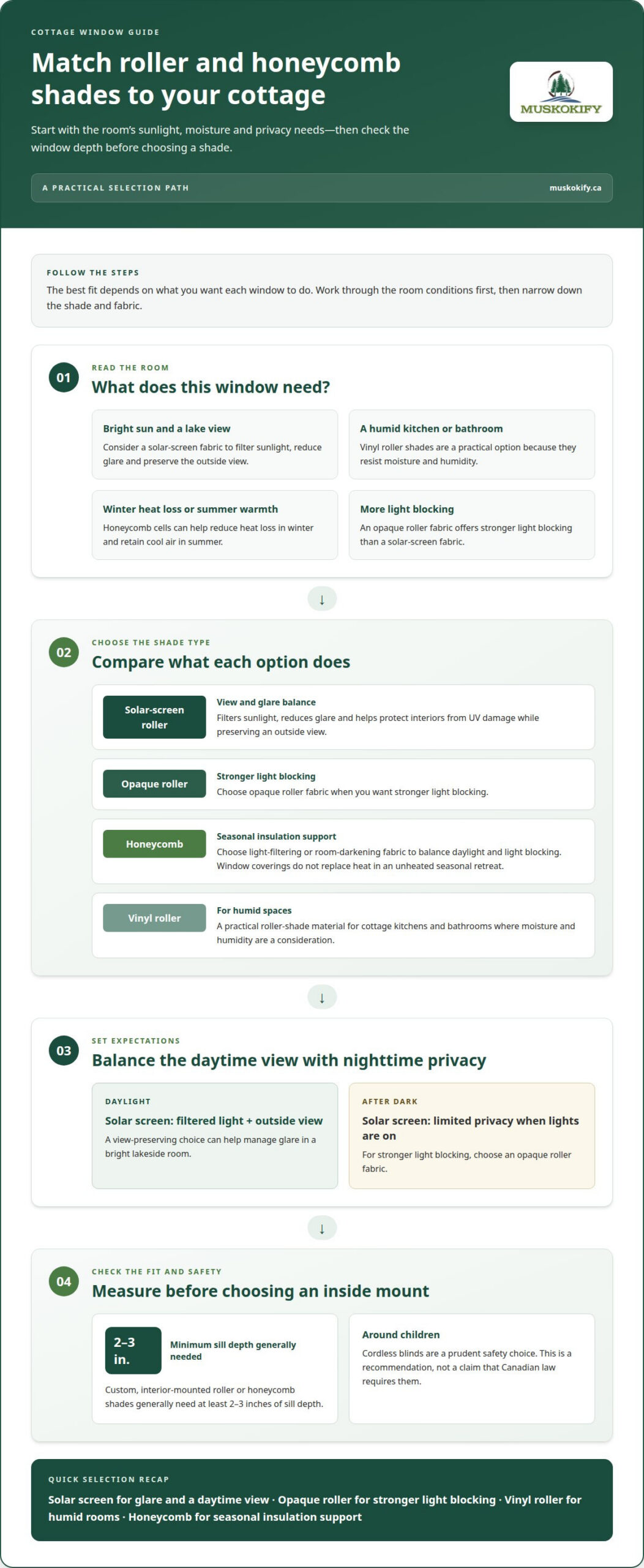
Roller shades suit cottage windows when you want a clean profile and flexible sunlight control. Solar-screen fabric filters sunlight, reduces glare, and preserves an outside view across the lake. At night, however, solar shades offer limited privacy when interior lights are on. For stronger light blocking, choose an opaque roller fabric.
Need privacy and a view? Solar-screen roller blinds balance both during daylight, but won’t provide full nighttime privacy. In a humid cottage bathroom or kitchen, vinyl roller shades are a practical option because they resist moisture and humidity. Consider how often the room gets steamy when selecting your material.
Honeycomb shades suit rooms where insulation matters. Their cells can help reduce heat loss in winter and retain cool air in summer. In an unheated seasonal retreat, they may help limit heat loss, but window coverings don’t replace heat. Choose light-filtering or room-darkening fabric to balance daylight and light blocking.
Before selecting custom, interior-mounted roller or honeycomb shades, measure the sill: they generally need at least 2-3 inches of depth. Cordless blinds are a prudent safety choice around children; this is a recommendation, not a claim that Canadian law requires them. Explore interior blind options for cottage windows.
Cottage-style wood blinds and shutters
Wood blinds bring natural grain and warm tones to a cottage study, boot room, or snug. Adjustable slats let you direct daylight while balancing light and privacy. Interior shutters also offer sunlight and privacy control, with a tailored look that suits timber beams and stone floors. Choose a finish that complements the window trim for a cohesive look.
Match each window treatment to its room and scale. In a bedroom, adjustable slats can soften morning light while limiting views from outside. A wide window may suit shutters or blinds that span the opening, while a smaller window can take a simpler treatment. In a humid cottage kitchen, faux wood can resist humidity-related warping and cracking better than real wood.
To measure for an inside mount, record the window opening’s width at the top, middle, and bottom, then its height at both sides and the centre. For an outside mount, measure the area you want the covering to span. Older cottages can often keep original frames intact by fixing brackets to sound surrounding trim or the wall instead. If you’d like help planning window coverings for your cottage, discuss your window treatment needs.
A commenter says painted wood plantation shutters installed on every window in a home in 1982 helped keep heat out in summer and cold out in winter.
Layering shades with curtains or drapes
Blinds offer adjustable slats or a compact profile; curtains soften a room and frame its windows. Shades sit between those approaches, with roller shades offering a clean line and flexible light control. Layer a roller blind near the window with full-length curtains to adjust daylight and privacy separately. For example, open the curtains to enjoy a Lake Muskoka view, then lower the shade against afternoon glare.
Sheer curtains create an airy look, but provide limited privacy at night when interior lights are on. They also offer little insulation against heat, cold, or noise. Pair them with a light-filtering shade for daytime softness, or add an opaque shade when you need more privacy. The combination can also help reduce direct sunlight on furniture.
For a stylish cottage living room, coordinate curtain fabric with the room’s wood tones, then choose a shade that handles the window’s exposure. Use the shade for quick adjustments and curtains to soften the window’s edges. A layered treatment gives you more options than either covering alone. For help planning a coordinated window treatment, get in touch about your cottage windows.
Pairing shades with curtains or drapes gives you more control over light and privacy while adding depth to a cottage interior. Light-filtering shades or sheer curtains let in natural light and create a soft, airy atmosphere. For additional coverage, pair sheers with blackout curtains or blinds. This layered approach keeps a room bright while giving you another option when you want more control.
A roller or Roman blind near the window recess can be paired with full-length curtains for flexible light and privacy control. Choose shades and curtains to suit the atmosphere you want, from a light, open feel to a more layered look. Zebra blinds provide moderate privacy, so add curtains when you need complete privacy at night. Consider window exposure when selecting sheer fabric, as prolonged sun exposure can cause it to fade and deteriorate. Choose fabrics and coverings that complement your cottage’s wood tones and natural surroundings.
Mixing Roman shades with drapery panels
Roman shades bring a tailored fabric finish to a cottage window, while drapery panels soften the frame. Together, they suit a classic Muskoka living room without hiding its character. Raise the shade to welcome morning light, then draw the panels for a quieter feel. Linen, cotton, or woven fabric can soften sunlight and complement wood trim.
Start by deciding what each layer should do. Choose a light-filtering Roman shade for gentle daylight or blackout fabric for stronger light control. Add full-length panels to change the room’s look and provide another layer of coverage. In a bedroom, this pairing lets you manage daylight and privacy separately from the fabric’s decorative effect. Shutters offer a different look, with adjustable slats rather than soft folds.
Measure the window recess before choosing the shade. One suggested approach is to extend a Roman shade no more than 2 inches past the window on each side. Then select panels that frame the opening without obscuring the view when drawn back. For a bright lakeside room, pale cream or soft blue fabric can keep the treatment light. This pairing can transform a bare window into a more considered feature while supporting everyday comfort.
What types of interior blinds work best in a cottage?
Start with each window’s exposure, your privacy needs, and the cottage’s style. Solar shades reduce glare and help protect furnishings from sun damage while preserving views. They offer limited privacy after dark, so pair them with curtains or choose blackout blinds for a bedroom facing a road. In a secluded room, light-filtering fabric may provide enough coverage. Choosing interior blinds for a cottage starts with how you use each space.
For adjustable light, zebra blinds use alternating fabric panels to shift between brighter and more private settings. Their modern lines may not suit rustic beams or vintage furnishings. Wood or faux wood blinds offer a traditional look; faux wood can better resist humidity-related warping and cracking in damp spaces. Wider slats leave more of the view open when tilted.
For a seasonal cottage, consider how you use each room during colder months. Honeycomb shades can help reduce winter heat loss, while blackout blinds block sunlight for a darker room. Match materials to moisture and sun exposure, especially near a humid kitchen or a bright west-facing window. In each room, weigh your need for daylight against the privacy you want.
Component Glass Railings
Along a Muskoka shoreline, glass railings can keep the lake view open from a deck or porch. Muskokify’s Component Glass Railings suit cottage owners who want a clear boundary without solid pickets across the sightline. The company typically uses 13.52mm laminated tempered glass. Laminated glass bonds two layers with a plastic interlayer, helping resist shattering.
Plan the railing around the deck’s layout, entry points, and the views you want to preserve. Muskokify offers five distinct colour finishes, giving you options to coordinate the railing with your cottage exterior. Glass can also pair with wood trim or stone features without dominating the surrounding landscape. A careful layout helps the railing feel integrated with the outdoor space.
Consider the view from inside as well as from the deck. Interior blinds can manage sunlight and privacy without obstructing the view through a glass railing. When planning a cottage deck, consider its sightlines and how you use the space through the seasons. This creates a more connected transition between the cottage and its lakeside surroundings.
Sunspace Acrylic Roof System
A roof can shape the daylight in a cottage sunroom before it reaches the windows. Muskokify’s Sunspace Acrylic Roof System uses UV-stable acrylic, designed for high light transmission and impact resistance. It offers an overhead option for an outdoor living area where you want natural light without a conventional opaque roof.
Think about how overhead light works with the room’s vertical glazing. A bright roof can keep the space feeling open, while blinds on the windows give you separate control over glare, privacy, and views. For example, light-filtering shades can soften sunlight at a lakeside table, while a more opaque option can cover a window facing a neighbouring property.
Plan the roof and window coverings as parts of one space. Consider where you sit, which windows catch direct sun, and whether you use the room in different seasons. The acrylic roof addresses overhead coverage; interior blinds address the windows. That distinction helps you decide where you need adjustable shading, without expecting one feature to manage every source of light or privacy.
Aluminum Railings
Muskokify’s Aluminum Railings define the edge of a cottage deck while keeping the outdoor space visually connected to its surroundings. On a Muskoka property, the boundary can shape how you experience a lakeside deck, entry, or porch. Consider the railing alongside your cottage’s exterior and the view from inside. Interior blinds manage sunlight and privacy at the window; a railing serves a different purpose outdoors.
Plan both features around the sightlines you value. If a living-room window faces the deck and lake, consider how the railing appears through the glass. A coordinated layout can keep attention on the water rather than create competing visual lines. Muskokify offers Aluminum Railings for cottage projects, helping carry a consistent exterior detail across deck or porch spaces.
Before settling on window coverings, note where the deck sits in relation to each room. A bedroom facing the railing may need a different privacy level from a living area overlooking open water. Think about how blinds look from outdoors as well as indoors, especially when the cottage is closed for the season. Connecting the interior and exterior plans helps your window choices support the view and the way you use each space.
Professional site consultation
A professional site consultation connects your cottage’s window conditions with your priorities for light, privacy, and views. Muskokify can discuss how a west-facing living-room window differs from a shaded bedroom opening. Your preferred blinds should suit each room’s use and the building’s character, whether the cottage is in Huntsville, Gravenhurst, or another Muskoka community.
Consider factors such as window size, frame condition, sun exposure, and seasonal use. A kitchen window, for example, may call for a moisture-conscious material, while a lakeside sitting room may need light control that preserves the outlook. Older trim and uneven openings can also shape your choices, particularly in a cottage with original windows.
Decide which rooms need daytime privacy, where afternoon sunlight creates glare, and whether you want to keep a lake or forest view open. Muskokify’s custom interior window treatments can be tailored to these priorities and your cottage. This grounds your design decisions in the actual windows, their surroundings, and how you use the property across the seasons.
Model 100 – Screen Room
Muskokify’s Model 100 – Screen Room is an outdoor screen-room option for cottage living. It creates a distinct space for enjoying fresh air while keeping the focus on the surrounding landscape. Think of it separately from interior blinds: a screen room shapes the outdoor experience, while blinds manage light and privacy inside your cottage.
Consider how each room connects to nearby windows and indoor spaces. A screen room beside a living room may extend your view towards the trees or lake, while interior blinds can help manage direct sunlight and evening privacy. These features address different needs, so plan them together without expecting one to replace the other.
Before deciding on blinds for adjoining rooms, note which windows face the screen room and which look beyond it. A light-filtering treatment can preserve daylight, while a more opaque option can suit a bedroom or a window facing neighbours. Coordinate indoor and outdoor spaces around how you use them, from quiet mornings inside to relaxed time in the screen room.
Engineered Picket & Component Railing Systems
Muskokify’s Engineered Picket & Component Railing Systems are an exterior design choice, separate from the blinds you select for cottage windows. Picket railings create a defined visual pattern, while component railing systems offer another format for shaping a deck or porch edge. Consider how either option looks from inside, especially where a window frames the deck, trees, or lake.
Start with the view you want to preserve. A railing’s position and visual pattern can affect what you see through a living-room window, while interior blinds control light and privacy within the room. For example, pair a deck-facing window’s light-filtering treatment with an exterior railing that suits the cottage’s style. Each element has a different role, so plan them together without expecting one to replace the other.
For your cottage, think about the railing alongside the exterior and the way you use the adjoining space. Muskokify offers glass and aluminum railing options, as well as Interior Blinds for window shading. If you’re planning a railing project, contact Muskokify to discuss your railing plans and how they relate to the cottage’s views.
Muskokify: Interior Blinds
Muskokify’s Interior Blinds are a practical next step once you’ve narrowed down your priorities for light, privacy, and cottage views. Choosing interior blinds for a cottage means considering how each room feels at different times of day. A living area facing the lake may need a different balance from a bedroom facing a neighbouring cottage.
Bring your main decisions into focus: which windows need more privacy, where sunlight causes glare, and which views you want to preserve. Muskokify can help you consider suitable interior blinds for those needs and your cottage’s windows. If you prefer motorized shades, available motor choices include 120 volt, 24 volt, or Battery motors.
Turn to Muskokify when you’re ready to move from comparing options to planning window treatments for your cottage. A conversation can centre on the rooms you use most, the light they receive, and the privacy you want. You don’t need to settle for one approach throughout the property. Get in touch with Muskokify to discuss your cottage’s interior blinds.
Shape a cottage that feels right in every season
As you plan your cottage’s next design update, consider the atmosphere you want throughout the home. A consistent fabric palette can connect rooms, while varied textures keep each space distinctive. Natural materials and finishes that complement your cottage’s character can make new window coverings feel like part of the architecture, not an afterthought.
Think beyond a single summer visit. A thoughtful design should feel inviting when the lake is busy and when the property is quiet in the off-season. Take time to settle on the look and feel you want before making your choices. That clear direction can make the finished space feel personal and considered.
Ready to take the next step? Contact Muskokify for window advice, and start shaping a cottage that feels unmistakably yours.
Frequently Asked Questions
Which Blinds Offer the Best UV Protection?
Solar shades made with UV-resistant material can reduce sun exposure while preserving the view. Prioritize windows that receive direct afternoon light, especially on the west or south side of your cottage. In rooms where you also need privacy after dark, pair the shade with curtains. Check the room at different times of day to see where sunlight falls on furnishings and flooring, then focus protection there.