
Deck Privacy Ideas for Trees, Screens, and Outdoor Enclosures
A fence isn’t the only way to make your deck feel private. If you’re wondering how to make your deck more private, consider layered screening: umbrellas, curtains, bamboo screens and an enclosure for flexible coverage. The right choice can give you privacy without closing off the Muskoka view.
You may want to screen a neighbour’s sightline while keeping the lake, trees or open sky in view. That balance matters: a solid barrier can feel enclosing, while a lighter screen softens the view without shutting out the landscape.
Explore practical ways to create privacy with umbrellas and outdoor curtains, bamboo screens, and patio enclosures. Choose an approach that suits your deck’s exposure and the level of screening you want, including options you can adjust as the seasons change.
Key Takeaways
- Use outdoor curtains to create a softer screen and adjust privacy as needed.
- Position an umbrella near a fence, or add outdoor curtains to adjust privacy and shade as needed.
- Use a fence to create a screen; plan for partial coverage rather than complete coverage.
- Consider bamboo panels for a defined privacy wall, and choose their placement to preserve the views you want to keep.
- Shape an outdoor retreat around a secluded corner, or explore an enclosure when you want a more sheltered space.
1. Evergreen trees for year-round screening
Evergreen trees and shrubs soften a deck’s edge while screening neighbouring windows through the seasons. Start by identifying the sightline you want to block, then place plants along that boundary without hiding the lake, tree line, or open sky. Columnar evergreens can suit narrow spaces; some varieties used for deck privacy remain under 2 feet wide.
Choose plants for the light, exposure, and winter conditions at your property. Japanese holly shrubs were expected to grow about 2 feet wide and no higher than 6 feet in one deck planter example. Treat those dimensions as an example, not a guarantee for every plant. Check the mature size of your chosen variety before setting containers or planting beds.
For Canadian decks, evergreen shrubs offer year-round screening, while small trees add seasonal interest. Amur maples bring fall colour, and crabapples can provide spring blooms. Tall hedges can block views and reduce wind and noise, but may also obscure scenery and make a small deck feel enclosed. Position the planting where it interrupts a neighbour’s view without blocking your preferred outlook.
What are the pros and cons of deck privacy screens, fences, curtains, and plants? Solid screens and fences create a defined visual barrier, while curtains and fabric screens can be opened or removed. Plants create a softer boundary, but need suitable growing conditions and time to fill in.
How can you add privacy without blocking light or airflow? Choose spaced wooden slats, a trellis, or loosely woven fabric instead of a solid wall. Openings let light and breezes through, though they won’t block every sightline. For seasonal privacy, hang outdoor fabric from a rod or wire, then take it down when you want an open view.
Privacy screens and cladding walls give a deck a more finished boundary. A wooden slat screen lets you balance coverage and openness. Position the slats to interrupt direct views from a neighbouring patio, while leaving gaps for daylight and airflow. Before building, consider how the screen will attach to the deck and meet the existing railings.
Do Canadian building codes or municipal bylaws limit deck privacy screens or fences? Requirements vary by municipality and project, so check local requirements before adding a fence or screen. Confirm whether your proposed work needs a permit, especially if it changes the deck structure.
What deck privacy plants grow well in Canada? Evergreen shrubs, Amur maples, and crabapples are options to consider, depending on your site’s growing conditions. Match each plant’s mature size to the space available, and use containers for a movable screen.
2. Outdoor umbrellas and curtains
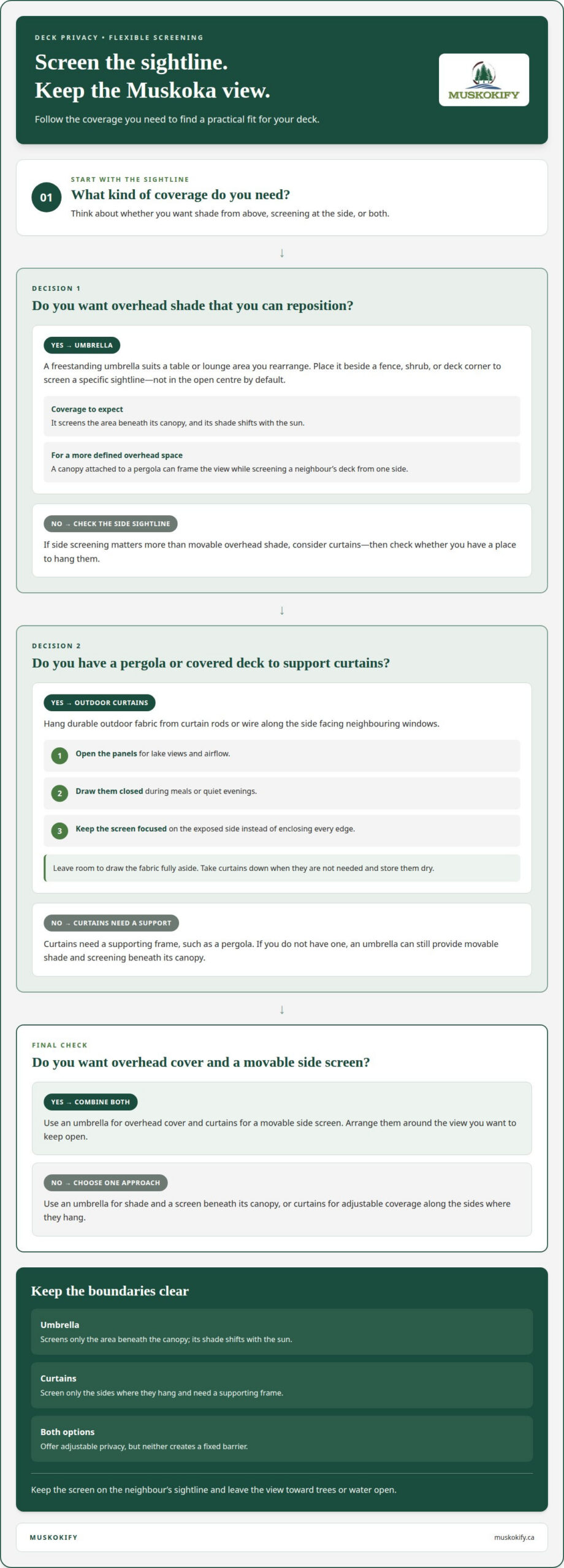
An umbrella provides flexible shade and a movable screen from nearby windows. Place it beside an existing fence, shrub, or deck corner to block a specific sightline. This can work better than putting it in the open centre of the deck. Adjust its position as the sun and seating area shift.
A freestanding umbrella suits a table or lounge area you rearrange often. A canopy attached to a pergola creates a more defined overhead space. At a Muskoka cottage, overhead cover can frame the view while screening a neighbour’s deck from one side. Arrange the cover around the view you want to keep open.
A pergola also gives outdoor curtains a clear place to hang. Suspend durable outdoor fabric from curtain rods or wire along the side facing neighbouring windows. Open the panels for lake views and airflow, then draw them closed during meals or quiet evenings. Curtains soften the structure without making the deck feel fully enclosed.
For a simple seasonal screen, attach fabric to an existing covered deck or pergola. Keep the panels easy to slide or tie back so you can adjust the coverage. Use a single curtain across the most exposed side instead of enclosing every edge. This preserves other sightlines and keeps the space feeling light.
Consider how the fabric will move before hanging it. A loose panel may shift in a breeze, while a gathered curtain can bunch beside a post. Leave enough room to draw it fully aside. Take curtains down when you don’t need them and store them dry, so the deck is ready for changing weather.
Umbrellas and curtains offer adjustable privacy, but neither creates a fixed barrier. An umbrella screens only the area beneath its canopy, and its shade shifts with the sun. Curtains need a supporting frame, such as a pergola, and screen only the sides where they hang. Use both for overhead cover and a movable side screen.
If you’re planning a pergola for curtains, consider cedar, pressure-treated lumber, metal, or vinyl as weather-resistant materials. Match the frame to your home’s exterior and deck layout. Focus the curtain on the neighbour’s sightline rather than closing off the view toward trees or water. A pergola can also define an outdoor room without a fence.
For a pergola that suits your deck’s layout and intended curtain coverage, contact Muskokify about pergola options.
Curtains hung from a covered deck or pergola provide privacy without making the space feel closed off. Durable fabric can make a pergola-covered deck feel more intimate and block sun. If your home has no fence, a canopy or pergola with curtains can create a private outdoor room while keeping the setting open and comfortable.
3. How to create privacy without a fence?
Container gardens can screen a deck while keeping the boundary green and movable. Tropical plants create a quick screen in warm-winter climates. In northern Canada, bring them indoors as houseplants during the off-season or grow them as exotic annuals. Choose plants suited to the available light, then group them where a neighbour’s view reaches your seating area.
Use a narrow planter where deck space is limited, and choose one with drainage. Raised planter boxes intended to block views from neighbouring patios should be at least 36 inches tall. Set the planter along the exposed edge, but leave a clear route between the seating area, stairs, and deck door.
One planter approach is to fill about one-quarter of the base with branches, leaves, and wood chips. This leaves space below the planting layer, but keep the container’s drainage in mind. Add suitable planting material above, then position the planter to screen a particular sightline rather than the entire deck edge.
Plan for the screen you want, not just the plants you buy. Three Japanese holly shrubs initially looked sparse in one deck planter, so a fourth shrub was added. The example shows how spacing affects coverage: allow plants to fill out, or consider a fuller arrangement for more immediate screening.
Focal-point planting can also draw attention away from a visible seating area. Place a vegetable garden or ornamental grasses near the stairs, then arrange the main seating beyond it. The garden draws the eye toward the deck entrance and helps the sitting area feel more secluded without putting a solid wall across the view.
A trellis offers another light-touch option. Grow ivy, wisteria, jasmine, or climbing roses across it to soften a direct sightline. A trellis breaks up views but doesn’t provide complete screening, so place it where partial coverage is enough. Its open framework also keeps the deck from feeling boxed in.
What safety risks should you consider when adding a screen or fence to a deck? A screen can catch wind, and a planter adds weight, so consider the deck’s structure and attachment points before adding either. Keep heavy containers stable and away from stairs and walkways.
For a practical layout, first identify the neighbour’s viewing angle from a seated position. Place a narrow planter or trellis across that line, then check the view from the deck entrance. This approach can preserve open sightlines toward the lake while screening the part of the deck that needs more privacy.
4. Bamboo privacy walls
If you’re considering how to make your deck more private with bamboo, start by choosing the sightline you want to soften. A panel beside a dining area can screen nearby windows while leaving the lake-facing side open. Bamboo screens come in different arrangements, so check the spacing: tighter coverage screens more of the view, while wider gaps let more light and air through.
Choose a panel that suits the deck layout and the privacy you need. A roll-style screen can cover part of a railing, while a framed panel can define a more distinct seating nook. Don’t screen every side by default. From the deck, check whether the panel hides the neighbour’s window without obstructing your preferred view of the trees or water.
Plan the support before attaching a bamboo screen. A roll needs a suitable surface, such as an existing railing or a separate frame. Follow the product’s installation instructions for attachment points and fasteners. Keep the screen clear of doors, stairs, and walkways. Secure its edges as directed so they don’t flap freely in Muskoka weather.
Consider local seasons when choosing a screen. Outdoor bamboo products differ in finish and care, so follow the maker’s cleaning and storage guidance. If the screen is removable, storing it during the off-season can keep the deck open for winter views. Check its condition before putting it back in place.
Keep a bamboo screen separate from the deck’s safety railing. It should provide visual coverage, not replace a barrier intended to protect the deck edge. For example, screen the neighbour-facing side of a seating area while leaving stairs and the main route across the deck clear. If the screen attaches to the railing, follow the product’s installation instructions.
Colour and texture affect how a bamboo screen looks against the cottage. Natural tones can complement wood decking, while a darker finish can contrast with pale railings. Before fastening the panel, hold it in position and check the view from seated and standing positions. This helps you assess its coverage and whether it feels too dominant.
A useful planning question is how to make your deck more private without making it feel closed in. Treat bamboo as a focused backdrop, and leave other sides open to the landscape. This creates a more secluded seating area while preserving the breezes and scenery that make outdoor time in Muskoka inviting.
5. Patio privacy corners and enclosures
Start with the deck corner that already feels most secluded. A side of the home, nearby tree line, or quiet edge of the patio can shield seating from direct views. Move a table or lounge chairs there, then check sightlines from the neighbour’s windows and outdoor seating. A small layout change may create a more private retreat without enclosing the whole deck.
Use furniture to define the corner. Turn chairs toward the lake or garden, and place a small table between the seating and the exposed edge. Keep the path from the door to the stairs clear. This gives the seating area a clear purpose while preserving an open route across the deck.
If changing the layout isn’t enough, consider a partial enclosure around the seating area. A screen room can create a defined boundary while keeping the outdoor setting visible. Screen only the sides that need it. For example, screen the neighbour-facing edge and leave the lake-facing side open.
A more enclosed patio can create a sheltered transition between indoors and outdoors. Think about how you use the space in Muskoka: an open screen may suit warm-weather lounging, while a more enclosed design may fit longer seasonal use. The right approach depends on how much exposure you want to reduce and whether you value an open-air feel.
Glass can preserve sightlines where a solid panel would hide the landscape. Place transparent sections along the view-facing edge, then use more private screening toward neighbouring windows. For glass near a deck edge, safety matters: tempered glass is designed for safety applications, and the railing design must suit the deck’s requirements.
Consider practical details before settling on an enclosure layout. Note the door location, existing railings, and direction of the strongest views. Consider how rain, wind, and snow affect the site, and decide whether the space should remain open to fresh air. These choices shape the balance between privacy, shelter, and visibility.
For a cottage deck, a well-placed corner can make the difference between exposed seating and a calm outdoor room. Begin with the neighbour-facing sightline, choose the level of enclosure that suits your seasonal use, and preserve the outlook you value. Discuss a patio enclosure for your deck.
Use the secluded corner or side of the home as the anchor for planning the seating area. First identify where you want to feel most removed from nearby activity, then arrange the chairs so the spot feels intentional. Check the view from the approach to the deck as well as from the seating: the same position can feel different depending on where people enter and look. Focus any added boundary on the exposed side, and leave the chosen corner open if it already provides enough separation. This lets the location do some of the work while keeping the retreat comfortable and connected to the rest of the outdoor space.
Muskokify
Muskokify helps you shape a more private deck without losing the Muskoka landscape. For adjustable screening, Motorized and Manual Screens can soften exposed sightlines. Sunspace Sunrooms create a more enclosed, sheltered setting, while Glass Railings can preserve views along the deck edge. The right fit depends on where neighbours overlook your deck and how open you want the space to feel.
Share the view you want to keep, the areas you’d like screened, and how you use your deck through the seasons. These details help guide a design that balances privacy, openness, and comfort.
Contact Muskokify to discuss privacy options for your deck.
Shape a deck that feels like your own
Your next step is to decide which view you want to screen and which parts of the Muskoka landscape you want to keep open. That choice guides how to make your deck more private without making it feel cut off. Consider how you use the space, too: a quiet reading corner may need a different balance of screening and openness than a dining area used with guests.
For a more finished outdoor setting, Muskokify’s Sunspace Sunrooms, Glass Railings, and Aluminum Railings are options to consider alongside your privacy goals. The right design can bring greater comfort to your deck while keeping its connection to the surrounding trees, water, and changing seasons.
Share the view you hope to preserve and the sightlines you want to soften. Contact Muskokify to plan your private deck, and take the next step toward an outdoor space that feels more comfortable and distinctly yours.
Frequently Asked Questions
How to create privacy without a fence?
Create a private zone with a movable divider, container garden, or screen attached to an existing structure. For example, place a freestanding panel beside a dining table rather than along the entire deck edge. Check the view from inside your home, too: a screen that blocks a neighbour’s window from the deck may still leave a clear sightline from an upstairs room. Keep access routes open.
What are the best ways to add privacy to a deck?
The best option depends on whether you need privacy year-round, seasonally, or only in one seating area. For a cottage deck used in different seasons, combine a lasting feature with an adjustable one, such as a fixed side panel and a screen you can open. Before choosing, view the deck from nearby windows and seating. This helps you target unwanted sightlines instead of covering the entire outlook.
How to build a DIY deck privacy screen step by step
Identify the neighbour’s viewing angle from a seated position, then choose a screen, such as outdoor fabric hung from rods or wire. Position it across that sightline, check the view from the deck entrance, and consider the attachment points and deck structure.