
Blackout Blinds for Bedrooms and Room-Darkening Shades
The darkest-looking fabric doesn’t always make a room completely dark. Blackout blinds for bedrooms block most light through the material, while room-darkening shades soften incoming light and may let a glow through. Light can still enter around the edges, depending on the window and how the blind is mounted.
When choosing bedroom window coverings, you’re likely balancing darkness with the look and feel you want during the day. Both options can help manage light and privacy, but they offer different levels of darkness. The right fit also depends on your window, mounting style and whether you prefer manual or motorized operation.
This guide explains how blackout and room-darkening shades differ, what to expect from each, and why blackout fabric may not create complete darkness on its own. You’ll also find considerations for choosing a style, measuring your window and planning installation or motorization, so your bedroom feels restful without losing its comfort and style.
Key Takeaways
- Choose blackout fabric for stronger light control, or room-darkening shades if you prefer a softer glow.
- Consider the mounting style and window edges, since light can still enter around a shade even when its fabric blocks it.
- Compare manual, cordless and motorized operation to find a setup that suits your room and household.
- Professional measuring and installation can help match the shade to your window and reduce gaps.
- For a bedroom or nursery, weigh darkness, privacy and ease of use together when choosing a shade.
Do Blackout Roller Shades Provide Complete Darkness?
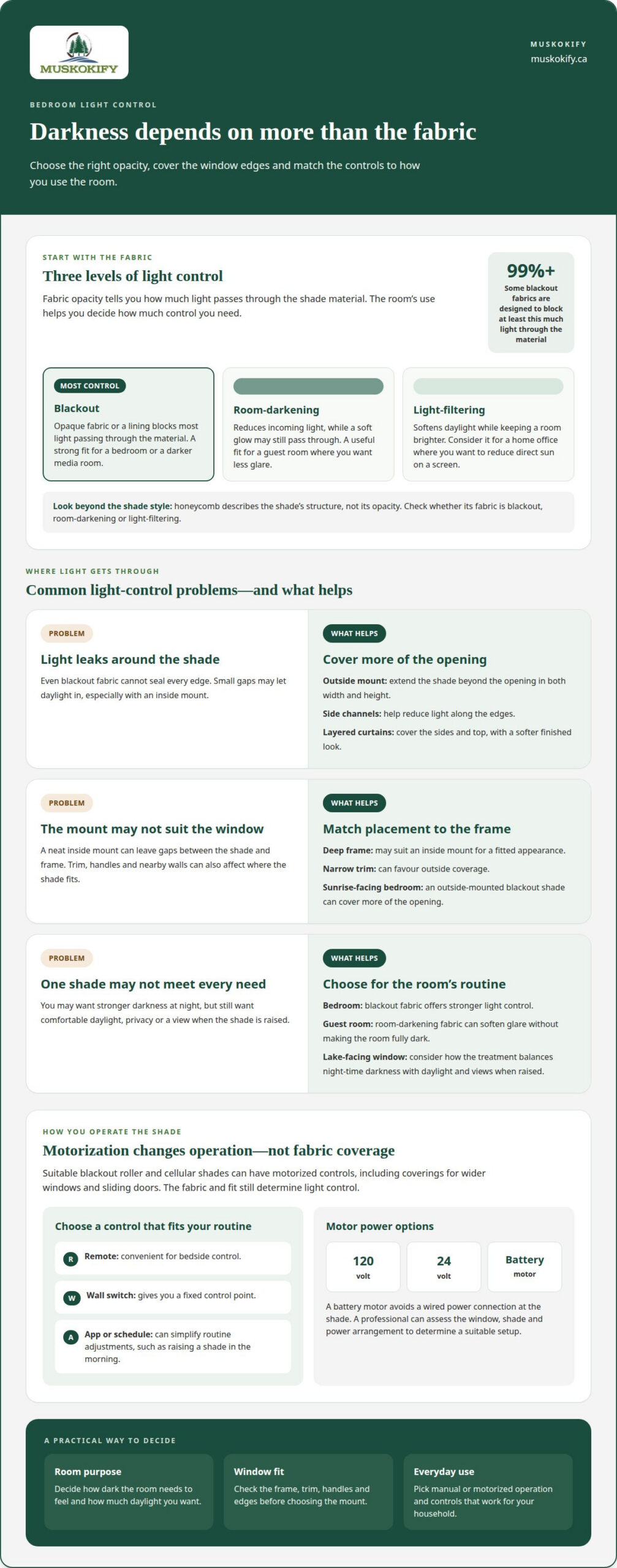
Blackout roller shades can make a bedroom very dark, but fabric alone cannot seal every edge. Some blackout shades are designed to block at least 99% of light through the material. Small gaps may still let daylight in, especially with an inside mount. For a bright Muskoka morning, the window frame and shade placement matter as much as the fabric.
A blackout roller shade uses opaque fabric to block sunlight and provide privacy after dark, even with interior lights on. An outside mount can extend beyond the window opening to reduce light around the edges. Side channels may further reduce those gaps. Curtains layered over the shade can cover the sides and top, adding a softer finish while helping block light.
Match the fabric and operating style to how you use the room. Roller shades have a clean, simple profile, while blackout fabric suits bedrooms where darkness is the priority. Zebra shades alternate sheer and solid bands to adjust daylight and privacy; blackout bands offer that flexibility with darker coverage. Light-coloured blackout fabric can also include a blackout liner, preserving a pale look while limiting light through the material.
Cellular, or honeycomb, shades form air pockets that add insulation against heat and cold, which can be useful in a cottage bedroom through Muskoka’s changing seasons. Their structure may also soften some outside sound, but it is not soundproofing. Pairing a cellular shade with curtains adds another layer and a more finished look. For lake-facing windows, consider how the treatment balances darkness at night with daylight and views when raised.
Keep the fabric in good condition with gentle, routine care. First, remove loose dust with a soft brush or a vacuum’s upholstery attachment on a low setting. Then follow the care directions for the specific shade; avoid soaking fabric or applying a cleaner without checking those instructions. If you add curtains, leave room for the roller to move freely and ensure the panels cover the shade’s edges when closed. For a tailored bedroom solution, bedroom window coverings can be selected to suit the window and the room’s light needs. A blackout shade can greatly reduce incoming light, while the right mount and extra layers address the gaps that fabric cannot.
What’s the difference between blackout and room darkening shades?
The key difference is how much light passes through the fabric. Match the level of light control to the room’s purpose, your window frame and the atmosphere you want.
Blackout and Room-Darkening Options
Blackout shades use opaque fabric or a lining to block most light passing through the material. Room-darkening shades reduce incoming light, but may allow a soft glow through the fabric. Light-filtering shades pass more daylight, creating a brighter, diffused effect. Look at the fabric’s opacity first, then consider how dark the room needs to feel.
For a bedroom used during daylight hours, blackout fabric provides stronger light control. Room-darkening shades may suit a guest room where you want less glare without making the room fully dark. Light-filtering shades work well in a home office, where softened daylight keeps the room bright while reducing direct sun on a screen. Choose based on how you use the room, not the label alone.
Honeycomb describes a shade’s structure, not its opacity. Check whether the selected fabric is blackout, room-darkening or light-filtering. In a media room, blackout material can reduce ambient daylight during a film, while room-darkening fabric can preserve some visibility between viewings. The distinction is the amount of light controlled, not simply the shade’s style.
Reducing Light Leakage at Window Edges
An inside mount sits within the window frame for a neat, fitted appearance. Small gaps between the shade and frame can let light into the room. An outside mount sits beyond the opening and can cover more of the surrounding area. For stronger coverage, the shade should extend beyond the window opening in both width and height.
Consider the trim, handles and nearby walls before choosing a mounting position. A deep window frame may suit an inside mount, while narrow trim can favour outside coverage. Side channels can help block light along the edges. Curtains layered over the shade are another option, especially if you want to soften the room’s look and cover the sides.
Consider daily use as well as daylight. In a home office, an inside-mounted light-filtering shade can provide a clean appearance and comfortable daytime light. In a bedroom facing the sunrise, an outside-mounted blackout shade can cover more of the opening. The frame, fabric opacity and mounting style work together, so assess them as one light-control decision.
Can a professional motorize blackout blinds or shades?
Yes. Suitable blackout roller and cellular shades can be fitted with motorized controls, including wider coverings for oversized windows and sliding doors. Motorization changes how you raise and lower a shade, not how much light its fabric blocks. For a bedroom with a large window, consider both fabric coverage and ease of operation before choosing a motor.
Motorized shades can be operated by remote, wall switch, app or schedule. A remote is convenient for bedside control, while a wall switch offers a fixed control point. App or schedule control can simplify routine adjustments, such as raising a shade in the morning. Choose controls that suit who uses the room and where they’ll operate them.
Motor choices include 120 volt, 24 volt or Battery motors. A professional can assess the window, shade and power arrangement to determine which setup fits the installation. A battery motor avoids the need for a wired power connection at the shade, while other motor choices have different power requirements. Discuss the control method and power source together, rather than treating them as separate decisions.
Cordless shades eliminate the dangling operating cord, making them a practical option for homes with children or pets. Cordless and motorized designs are both suggested for child safety. They operate differently: you lift a cordless shade at the window, while a motor responds to its control. Choose based on the window’s location and how easily you need to reach it.
A high bedroom window, for example, may be difficult to operate by hand, so a remote can simplify daily adjustments. A reachable nursery window may suit cordless operation, which avoids a hanging control cord. Motorization can also make wide coverings easier to operate. The fabric determines the darkening effect, and a motor doesn’t eliminate light gaps at the edges.
During professional planning, the window dimensions, shade weight, power source and preferred controls shape the motorized setup. Bring those decisions together before installation, especially for multiple windows that should work on a shared schedule. If you’re considering a powered bedroom treatment, discuss motorized window options suited to your space and routine.
Professional measuring and installation for blackout blinds
Yes, some blackout cellular shades are designed for no-drill installation. The suitable method depends on the shade, window frame, mounting surface and coverage you want.
Professional Measuring for Custom Sizing
A professional measures each window opening and checks the frame before ordering custom-sized shades. For blackout blinds, allow at least 10 cm of extra width on each side, and add 15 cm to the measured length. Those allowances help extend coverage beyond the glass, while the final dimensions must suit the chosen mount and shade design.
Measurements should account for handles, trim and nearby obstructions. A handle that projects into the room, for instance, may affect how an inside-mounted shade moves. Each window needs its own assessment of fit and operating clearance rather than an assumption that bedroom windows match. In a Muskoka cottage, this is especially relevant when older windows vary in size or shape.
Professional Inside- and Outside-Mount Installation
An inside mount fits within the window frame for a close, tailored profile. The installer checks the frame’s depth and shape, then positions the shade so it moves without catching on hardware. Because the fabric sits inside the opening, small gaps may remain at the sides.
An outside mount covers the frame or surrounding wall, depending on its placement. Extending the shade beyond the opening can reduce light leaking around the edges. The installer considers the wall surface, trim and nearby features before fixing the brackets. In a media room, broader coverage can help darken the viewing area.
No-Drill Installation Options from a Professional
A no-drill shade can suit a window where you want to avoid making holes in the frame or wall. Some blackout cellular shades are designed for no-drill fitting. The frame and mounting system need to be assessed to ensure the shade sits securely and operates as intended.
No-drill mounting may limit the shade styles or coverage available for a particular window. A close-fitting shade inside the frame, for example, may let more light through at the edges than an outside mount. Consider the surface, shade dimensions and room’s needs before choosing this approach. That helps balance a no-drill preference with effective light control.
During installation, the selected brackets or no-drill fittings are positioned and secured, then the shade’s movement is tested. The installer checks that the fabric clears window handles and that the control works smoothly. Each opening needs its own measurement and fit assessment, so a bedroom, nursery or media room gets coverage suited to its frame.
Blackout blinds for bedrooms and nurseries
For a bedroom, nursery or media room, choose a shade for the level of darkness and daily use you need. Fabric, window coverage and operating style all shape the result.
Bedroom Light Control
In a bedroom, choose blackout fabric when you want to limit daylight while resting. Blackout cellular shades combine light-blocking fabric with a honeycomb structure that traps air, adding insulation against heat and cold. Consider the window’s direction, nearby lighting and how often you’ll adjust the shade. A bright east-facing bedroom, for example, may need fuller coverage than one with less direct morning sun.
Check how the shade looks and works when raised as well as when lowered. It should leave space for window handles and move without catching on the frame. For a softer look, pair it with curtains that suit the room’s colours. This adds a decorative layer and can help cover the edges when the panels are closed.
Nursery and Media-Room Uses
In a nursery, consider how easily an adult can adjust the shade while keeping the window area clear. Cordless or motorized operation can avoid a dangling operating cord. Compare the shade’s coverage with the window size: portable blackout options are listed in sizes such as 39 by 58 inches and 100 by 58 inches. These examples show why matching dimensions to the opening matters.
A media room has a different priority: reducing daylight that reflects on a screen. Blackout fabric can create a darker viewing environment, while room-darkening fabric allows some glow through. Choose based on whether you want the room dark during viewing or brighter between films. In either room, gaps at the sides can let light in despite opaque fabric.
Before choosing a treatment, note which windows need the most coverage and when. A nursery window may need darkness during daytime naps, while a media-room window may need covering only during films. This room-by-room assessment helps match fabric opacity and operation to actual use, rather than choosing one style for every window.
Cellular shades can be useful when insulation matters alongside light control. Their honeycomb pockets trap air, which can help limit heat transfer through the window. Fabric opacity still determines how much light passes through, so compare both features. For a bedroom facing Muskoka’s changing weather, consider seasonal comfort as well as darkness.
Plan for how the shade will be used each day. A reachable bedroom window may suit manual operation, while a high nursery window may be easier to adjust with a remote or switch. If you’re choosing coverings for several rooms, discuss your bedroom and nursery window needs and the coverage you want.
Muskokify: Interior Blinds
Muskokify offers Interior Blinds for homeowners seeking bedroom window treatments that balance light control, privacy and style. The right choice depends on your window, preferred level of darkness and how you want to operate the blind. A cottage bedroom with an early sunrise, for example, may need different coverage from a room where you want filtered daylight.
Bring your room’s needs into the selection process: note which windows need blackout coverage, whether you prefer manual or motorized operation, and how the blind should complement the space. Muskokify can help you consider these details when planning Interior Blinds, for a considered and comfortable finish.
Planning bedroom blinds? Contact Muskokify to discuss your space and preferred light control.
Make your bedroom feel more restful
Your bedroom should work with your routine, from quiet evenings to early summer mornings. Choosing blackout blinds for bedrooms lets you shape the light, privacy and feel of the room around how you use it. Consider which windows matter most, the look you want and whether manual or motorized operation suits your day.
Muskokify can help you plan Interior Blinds for a considered finish. For broader property projects, the company also offers sunspace sunrooms, Glass Railings and Aluminum Railings. These products serve different needs, while each can contribute to a more comfortable and thoughtfully designed home or cottage.
Share your bedroom goals and preferred light control to start a conversation about a fitting solution. Contact Muskokify about bedroom blinds, and take the next step toward a bedroom that feels right for you.
Frequently Asked Questions
What should I expect from professional blackout shade installation?
The installer assesses your windows, discusses your preferred operation and fits the selected shades. They consider the frame condition, handles, trim and nearby obstructions before choosing a placement. A bedroom window beside a bedside table, for example, may need a control that’s easy to reach. After fitting, the shade is operated to check its movement and confirm it clears the window hardware.
Do blackout blinds block 100% of the light?
No shade can promise a completely dark room in every installation. Blackout fabric blocks nearly all light passing through its material, but light may still enter around the frame or through other openings. A streetlight outside, a door gap or an uncovered transom can also brighten a bedroom. If you want deep darkness, consider the whole room, not just the window covering.
Should I choose an inside mount or outside mount window shade?
Choose an inside mount for a neat fit within the window opening, especially if you want to keep the surrounding trim visible. An outside mount may suit shallow frames or windows where handles obstruct an inside shade. It also covers more of the surrounding area. In a cottage with distinctive wood trim, the choice can balance the room’s character with your preferred light coverage.
Can I customize my blackout window shades?
Yes, you can tailor the shade to the window and how you use the room. Consider fabric opacity, mounting position and whether you prefer manual or motorized operation. A wide bedroom window may need a different arrangement from a narrow nursery window. Discuss the room’s light needs and design preferences during planning so the finished treatment suits the opening and your daily routine.
Can I layer blackout shades with curtains or drapes?
Yes, curtains or drapes can sit over blackout shades to add texture, colour and another layer across the window. Choose panels that extend beyond the shade’s edges when closed, for example. Check that the curtain hardware leaves enough room for the shade to move freely. Layering can also soften the look of a bedroom with clean-lined furniture.
Can blackout shades help reduce heat or noise?
Cellular shades can help limit heat transfer because their honeycomb pockets trap air. The effect depends on the shade, window and fit. A layered window treatment may also soften some outside sound, but shades don’t make a room soundproof. For a bedroom facing a busy road or exposed to winter drafts, consider light control and insulation as separate benefits.
Can you block the light gaps between the shade and the window frame?
Reduce gaps by choosing an outside mount that extends beyond the window opening. Side channels may also help cover the shade’s edges, while curtains can conceal remaining gaps when closed. The best approach depends on the frame, trim and surrounding wall space. Projecting handles, for example, may affect how closely a shade or channel can sit beside the glass.
What are blackout blinds, and how do they differ from room-darkening blinds and blackout curtains?
Blackout blinds use opaque material or a lining to block most light through the fabric. Room-darkening blinds reduce incoming light but may leave a glow. Blackout curtains are fabric panels that cover a window, often paired with a shade for added coverage and softness. Compare how each option fits your window, complements the room’s decor and works for everyday opening and closing.