
Residential Security Shutters in Canada: Costs and Options
A wide garage opening or cottage entry may need a different installation plan from a standard window. For residential security shutters in Canada, the installation schedule depends on the opening’s size, site conditions, shutter design, and whether the system is motorized. These factors shape the work, from measuring to fitting, especially around broad doors and entryways.
It makes sense to look beyond the shutter itself. A good choice should suit your home’s exposure to Muskoka’s changing seasons, provide the light control you want, and complement how you use each space.
This guide explains what affects installation time, how insulation and automation influence everyday use, and which options may suit windows, doors, and wider openings. You’ll also learn what details help plan a project, so you can choose with confidence for your home or seasonal retreat.
Key Takeaways
- Choose foam-filled slats to support indoor comfort and help reduce outside noise during Canada’s changing seasons.
- Understand how a closed shutter can add a physical barrier at windows and doors during storms or when a home is unattended.
- Compare manual and motorized controls, including how automation can make it easier to manage light and privacy.
- Plan custom shutters around each opening, especially garages and wide entryways where measurements and mounting conditions shape the installation.
- Explore how Muskokify’s security shutters can complement your home, alongside options such as Sunspace Sunrooms and glass or aluminium railings.
Insulated foam-filled slat options for Canadian winters
Foam-filled rolling slats have an insulating core between the outdoors and your window. This layer can slow heat transfer and create a buffer across the opening. In Muskoka, that may matter during winter cold snaps and bright summer afternoons. Slat construction, side guides, and the fit around the opening all affect performance. Insulation can support comfort, but it doesn’t replace sound windows or address air leaks elsewhere in the home.
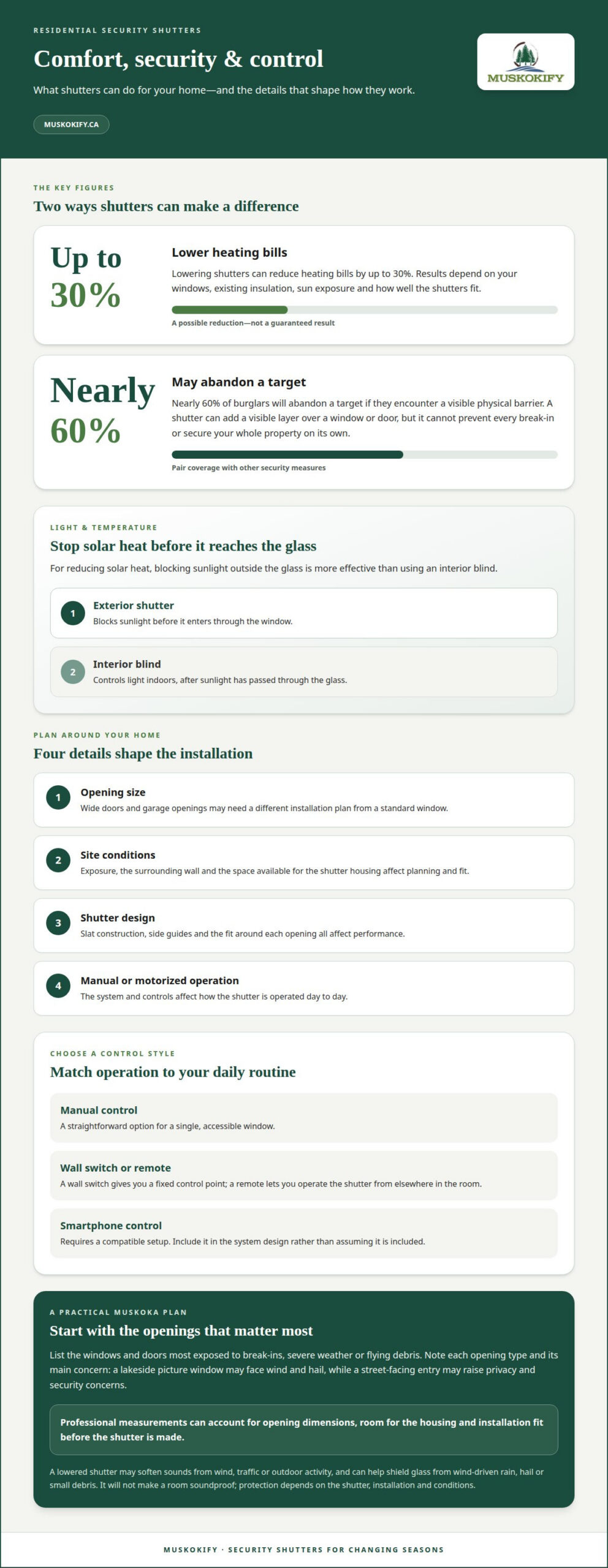
Shutters also help manage solar heat. Blocking sunlight outside the glass is more effective for reducing solar heat than using an interior blind, because the heat is stopped before it enters the room. Lowering shutters can reduce heating bills by up to 30 percent. Your home’s windows, existing insulation, exposure to sun, and shutter fit all influence the result. A south-facing bedroom, for example, may benefit from a different daily shutter routine than a shaded north-facing room.
Foam-filled slats can also reduce outside noise, adding another layer between the weather and your living space. A lowered shutter may soften sounds from wind, passing traffic, or outdoor activity, though it won’t make a room soundproof. Weigh this benefit alongside thermal insulation: a cottage near a busy road may have different priorities from a quiet property overlooking a wooded shoreline. The same considerations can matter for commercial openings, where noise and indoor temperature affect the space.
For Canadian winters, consider how the shutter will work as temperatures fall and conditions change. The opening’s dimensions, room for the shutter housing, and installation fit all affect how closely it covers the window. Professional measurements account for these details before the shutter is made. Discuss your priorities for insulation, light control, noise reduction, and locking as part of the design. This helps match the system to a bedroom, living room, or seasonal cottage.
Manual operation is another option to weigh against motorized control. Consider which windows you’ll open and close each day, how easily you can reach them, and whether you want consistent light control throughout the property. For example, you might close bedroom shutters at night, then raise the living-room shutters in the morning to welcome the winter sun. Planning operation, locking, and coverage helps make insulated shutters a practical part of your seasonal routine.
How residential security shutters protect your home
A lowered shutter creates a visible physical barrier over a window or door. Nearly 60% of burglars will abandon a target if they encounter a visible physical barrier. This statistic doesn’t mean shutters prevent every break-in, but it illustrates why covering vulnerable openings can support a broader security plan. For a seasonal home near Huntsville, for example, closing shutters before leaving can add a visible layer at exposed ground-floor windows.
During a storm, an exterior shutter sits between the weather and the glass. It can help shield a window from wind-driven rain, hail, or small debris, but the protection depends on the shutter, installation, and conditions. A home with large windows facing an open shoreline may have different exposure from one sheltered among trees. When prioritizing openings, consider which sides of your property face the prevailing weather.
Assess each entrance separately. A patio door used every day needs convenient access, while a basement window may stay closed for longer periods. A professional can assess the opening, surrounding wall, and shutter fit to plan coverage. For example, a ground-floor window beside a walkway may be a security priority, while a sheltered upper-floor window may face less risk of impact.
Shutters can help shield glass from vandalism by covering it with a physical barrier. At home, this may matter for windows facing a public path or driveway. A retail storefront uses the same basic approach to cover a display after closing. Shutters don’t replace secure door hardware, and protecting one opening doesn’t secure the entire property, so consider them alongside other measures.
To plan coverage, list the windows and doors most exposed to break-ins, severe weather, or flying debris. Note each opening type and its main concern: a lakeside picture window may face wind and hail, while a street-facing entry may raise privacy and security concerns. This information helps Muskokify assess the openings and plan a suitable layout, focusing coverage where your home needs it most.
Residential shutter automation and smartphone control
Motorized roller shutters use a motor instead of a hand crank to move along their guides. This can make daily operation easier when several openings need coverage, such as bedroom windows and a patio door. Manual controls are a straightforward option for a single, accessible window. The right approach depends on how often you’ll operate each shutter and whether its controls are easy for you to reach.
Control options depend on the motor and the system paired with it. A wall switch gives you a fixed control point near an opening; a remote lets you operate the shutter from elsewhere in the room. Smartphone control requires a compatible setup, so factor it into planning rather than assuming it is included. Decide whether you want to operate one living-room shutter independently or control several openings together.
Consider access as well as convenience. A wall-mounted control may suit a frequently used bedroom, while a remote can be practical for a high or hard-to-reach window. If smartphone operation matters, include it in the system design and clarify how the controls work. The motor, wiring or power arrangement, and control interface all need to suit the home and shutter installation.
Automation can also support bedroom light control. An exterior rolling shutter blocks light at the glass before it enters the room, helping create a darker bedroom. For example, a shutter over a street-facing bedroom window can close at bedtime and open in the morning to let in daylight. It controls light at the window rather than relying only on an interior covering.
Before installation, map each opening and how you use it. Note which shutters you want to operate manually, which would benefit from motorization, and where you’d prefer the controls. A cottage owner may prioritize convenient operation for windows used during seasonal visits, while a year-round home may have a different daily routine. Muskokify can plan motor placement, access controls, and wiring around those choices. Keep the system simple: choose controls that suit how you use each room, not features you don’t need.
Custom roll-up security shutters for windows and doors
Custom planning matches the shutter to each opening, from a bedroom window to a patio door. Four considerations help clarify the choices: measurements, shutter type, materials, and care.
Custom Fabrication and Measurements
Custom fabrication starts with measuring each window or door and accounting for the space around it. A shutter for a ground-floor window may need different dimensions from one covering a wide patio entrance. Measurements also guide housing and side-guide placement, helping the closed shutter cover the intended opening.
For homes or commercial properties, specifications may include colour, specialty coatings, locking channels, and custom logos. These details affect appearance and operation. Record which windows need coverage, whether winter use matters, and where a control or lock should sit. A clear schedule helps keep multiple openings distinct during manufacture and installation.
Shutter Types and Security Comparisons
Residential options include rolling shutters with manual or motorized operation, including designs with foam-filled slats. Rolling shutters cover windows and doors with a movable exterior barrier. Security film stays on the glass, while bars create a fixed barrier; reinforced doors address the door itself, not nearby windows.
Film may bubble, peel, or yellow after five to seven years of UV exposure and temperature swings. Unlike fixed bars, a shutter can be raised when you want an unobstructed view. The right combination depends on the opening and the level of access or weather exposure you want to address.
Materials, Ratings and Certifications
Aluminium is one material to consider for custom shutters, while slat construction and locking design also shape the system. Compare documented security ratings and certifications only when they apply to the complete shutter assembly, not just one component. Check what the rating tests and whether it covers the installed configuration.
Canadian building and fire-safety requirements depend on the property and opening. Don’t assume a shutter has a fire rating or can cover an exit. Identify applicable local requirements before specifying that opening, and keep product documentation with the project records.
Installation, Maintenance and Repairs
Muskokify serves homeowners and cottage owners in the Muskoka region, including Gravenhurst, Huntsville, Parry Sound, Midland, Tiny, Collingwood, Orillia, Barrie, Dorset, Haliburton, Mactier, and Coldwater. When planning installation, include the property location and the openings you want covered.
For upkeep, spray shutter tracks with water twice a year to clear dust and debris. Visually inspect the shutters every six months, checking that slats move smoothly. Security shutters may reduce home insurance premiums by 5% to 15%, depending on the provider. Ask your insurer how it treats your installed system and what documentation it needs.
Residential rolling security shutters for doors, garages, and wide entryways
A garage door or broad entryway needs a different plan from a standard window. A rolling shutter must cover the opening while fitting its width, height, and surrounding structure. Start by identifying its main purpose: a garage may need a secure barrier when you’re away, while a patio entrance may also need convenient daily access. The design should suit how you use the space, not just its dimensions.
Professional measurement and installation matter especially across wide spans. The installer assesses the opening and mounting surface, then plans where the shutter housing and side guides will sit. Oversized shutter installations can span up to 40 ft. A wide garage opening may therefore call for a system designed around its full width, with suitable support and operation. Accurate measurements help the shutter travel smoothly and cover the intended area when closed.
For a cottage garage or seasonal retreat, consider what you need from the shutter during long periods away. A closed barrier can cover the opening and help deter vandalism, while an exterior shutter can also shield it from wind-driven weather. Construction and fit affect how well the shutter covers the opening. If energy performance matters, discuss how the chosen design relates to insulation and the garage’s connection to the home.
Some rolling shutter slats have ventilation slots. These can admit a little light and air when the shutter is lowered but not fully closed, offering a different balance from a fully covered opening. Motorized security shutters are engineered to operate in temperatures as low as -40°C. That detail can matter in Canadian winters, particularly for an exposed garage or entryway where reliable operation is part of daily access.
Before manufacture, Muskokify considers the opening’s use, width, mounting area, preferred operation, and ventilation needs. For example, a wide garage used daily may call for a different operating approach from a cottage entry closed for the season. A well-fitted shutter can act as a physical barrier and help shield the space, but it doesn’t replace a secure garage door or address every source of energy loss. Match the design to the opening and its role in your home.
Muskokify: Security Shutters
Muskokify can help you plan security shutters for your home or cottage. Professional installation is useful when you want to cover several openings, protect a seasonal retreat, or plan shutters for a broad entrance. Start by identifying what matters most at each location: added privacy, a visible barrier, weather protection, or control over incoming light.
With security shutters, planning starts with the openings and how you use them. A street-facing window, a patio door, and a cottage garage each present different needs. Consider which ones you want covered, how often you’ll raise or lower the shutters, and whether the view should remain open during the day. Clear priorities help shape a solution for your property.
Installation planning considers how each shutter fits the opening and surrounding structure. A window beneath an overhang, for example, may need a different layout from a large door exposed to the weather. Share the opening’s purpose and your preferences for operation, appearance, and coverage. This helps align the design with everyday routines and the periods when a cottage may sit empty between visits.
Muskokify also offers Sunspace Sunrooms, Glass Railings, and Aluminum Railings. These can enhance other parts of a property: a sunroom creates an enclosed outdoor living area, while glass or aluminium railings define a deck or balcony. If your main concern is protecting windows or doors, focus the discussion on security shutters and the openings you want covered.
Before moving ahead, prepare a simple list of the doors and windows you want covered, their uses, and the result you’re seeking. For a seasonal home, note which openings need coverage while you’re away; for a year-round home, consider daily access and light control. You can contact Muskokify to discuss security shutters for your property.
Frequently Asked Questions
How long does installation take?
Installation duration varies by home and project. Muskokify can outline the expected schedule after reviewing the scope and planning the work. If timing matters because you’re arranging access to a seasonal cottage or coordinating other work, raise that early. Ask about the expected installation window and how the team will communicate schedule changes before work begins.
What are the disadvantages of roller shutters?
Roller shutters add visible hardware to your home’s exterior, so their appearance may affect the look of a heritage cottage or carefully designed façade. A motorized system also adds controls that should suit household routines. Before choosing, consider how the shutter will look when raised and lowered, and who will operate it. These practical details help balance security needs with the feel of your home.
Can they be fitted to a house that is already built?
Yes, security shutters can be installed on an existing home, including a cottage that wasn’t originally designed for them. The design needs to work with the home’s exterior, including its trim and architectural details. For a finished façade, discuss how the shutter housing will look when the shutter is raised. This helps you weigh the visual result alongside its intended function.
Rolling shutter or rolling grille?
Choose between them by deciding whether you want a more enclosed appearance or an open, visible barrier. A grille may suit an opening where visibility through it matters, while a shutter creates a more continuous cover. Consider the setting, too: an opening beside a bright garden may have different priorities from one facing a shared driveway. The right choice depends on the experience you want when the barrier is closed.
Where can you use security shutters?
Security shutters can provide added coverage for exterior openings, including windows and doors. For a seasonal cottage, you might prioritize the openings you want secured while the property is empty. In a year-round home, you may focus on areas where privacy matters most. Plan around how each room is used, rather than assuming every opening needs the same solution.
Why does custom fitting matter?
Custom fitting helps a shutter suit your home’s architectural details, rather than simply cover an opening. A cottage with distinctive trim, for instance, may need careful coordination between the shutter housing and the existing façade. Considering these details before finalizing the design helps you make an intentional choice. It also gives you a chance to discuss how the shutter will look when open.
Can motorized shutters be operated if the power is interrupted?
Operation during a power interruption depends on the system selected. If continued operation matters to you, discuss available controls and backup arrangements during planning. Consider who needs to operate the shutters and whether a manual option would be useful in your household. This is particularly relevant for a seasonal property, where you may want a clear operating plan for your visits.
What should you consider before scheduling installation?
Plan access to the work areas and identify household routines the installation needs to accommodate. For example, note whether a doorway is used throughout the day or whether furniture or stored items occupy the work area. Share these details with Muskokify while scheduling. For a cottage, consider arranging access with whoever manages the property when you’re away, so the installation plan reflects how the home is used.