
Manual vs Motorized Awnings: Compare Upfront Cost and Setup
The more convenient awning isn’t automatically the better fit. In a manual vs motorized awnings comparison, the right choice depends on how often you adjust the shade, whether you want to avoid wiring, and how easily you can operate a hand crank.
Both options can create a more comfortable shaded spot to enjoy a Muskoka afternoon. Manual operation uses a hand crank, while motorized operation adds button-operated convenience and requires electrical planning. Neither option removes the need to account for changing weather.
This guide explains how the two setups differ, what to consider before installation, and which details matter for your patio, deck, or cottage. You’ll also see how size, frequency of use, mobility, and exposure to sun and wind can shape the decision, so you can choose an awning that suits your space and the way you spend time outdoors.
Key Takeaways
- Choose a manual awning if you want a straightforward setup that doesn’t need a power supply; consider motorized operation when frequent adjustments matter more.
- Plan electrical access alongside installation if you’re considering a motorized model, so the setup works with your home’s exterior.
- Match the operating style to your space: a small area used occasionally may not need a motor, while a regularly used patio can benefit from easier operation.
- Look at weather sensors as an optional feature, not a substitute for responding to changing conditions and protecting your awning.
- Weigh the awning’s size, how often you’ll use it, and who will operate it before settling on a setup.
Weather sensors and automatic retraction
Weather sensors can add a layer of automation to a motorized awning. A wind sensor can trigger retraction when it detects gusts, reducing the time the awning remains extended in changing conditions. A sun sensor can respond in the opposite way, extending the awning as sunlight grows stronger. These features can help manage shade while you’re indoors or away from the patio.
Sensor response depends on the feature installed. A wind sensor reacts to wind, not every weather change; a sun sensor responds to sunlight, not gusts. Some motorized systems can also use timers or connect with smart home controls. Depending on the setup, you may operate the awning by remote, app, or voice control. Automation can coordinate these functions, but it doesn’t mean every model includes every option.
For a Muskoka cottage, think about the weather where the awning sits. An exposed lakeside deck may face gusts more directly than a sheltered patio. A wind sensor can retract the awning when gusts are detected, while a timer can schedule adjustments at selected times. Sensors can also reduce wear by limiting the time fabric and arms stay exposed to strong wind. They don’t replace paying attention to weather or retracting the awning when conditions call for it.
Compare common controls before choosing a setup:
| Option | Responds to | What it can do |
|---|---|---|
| Manual operation | Your decision | Lets you retract the awning by hand. |
| Remote control | Your command | Operates the motor from a handheld remote. |
| Wall switch | Your command | Controls movement from a fixed indoor location. |
| Smartphone app | Your command | Controls compatible motorized awnings through an app. |
| Wind sensor | Detected gusts | Can automatically retract the awning. |
| Sun sensor | Sunlight intensity | Can extend the awning as sunlight increases. |
| Timer | Set times | Can schedule an adjustment for a chosen time. |
| Smart home integration | Compatible controls | May connect awning operation with a smart home system. |
Choose sensors based on the exposure and control you need, then match them to the motorized awning’s operating options. For regional awning installations in Muskoka, sensor placement and the exposed side of your home are practical design considerations.
Motorized vs Manual Awnings: Which Is Right for You?
Choosing between manual and motorized retractable awnings means weighing how you want to operate the awning and what installation requires. A manual model uses a hand crank; a motorized model needs electrical access.
Building-code and property requirements can affect an awning installation. Check the requirements that apply to your municipality and property before work begins. Mounting conditions and the proposed installation can shape the plan.
Manual Awning Setup
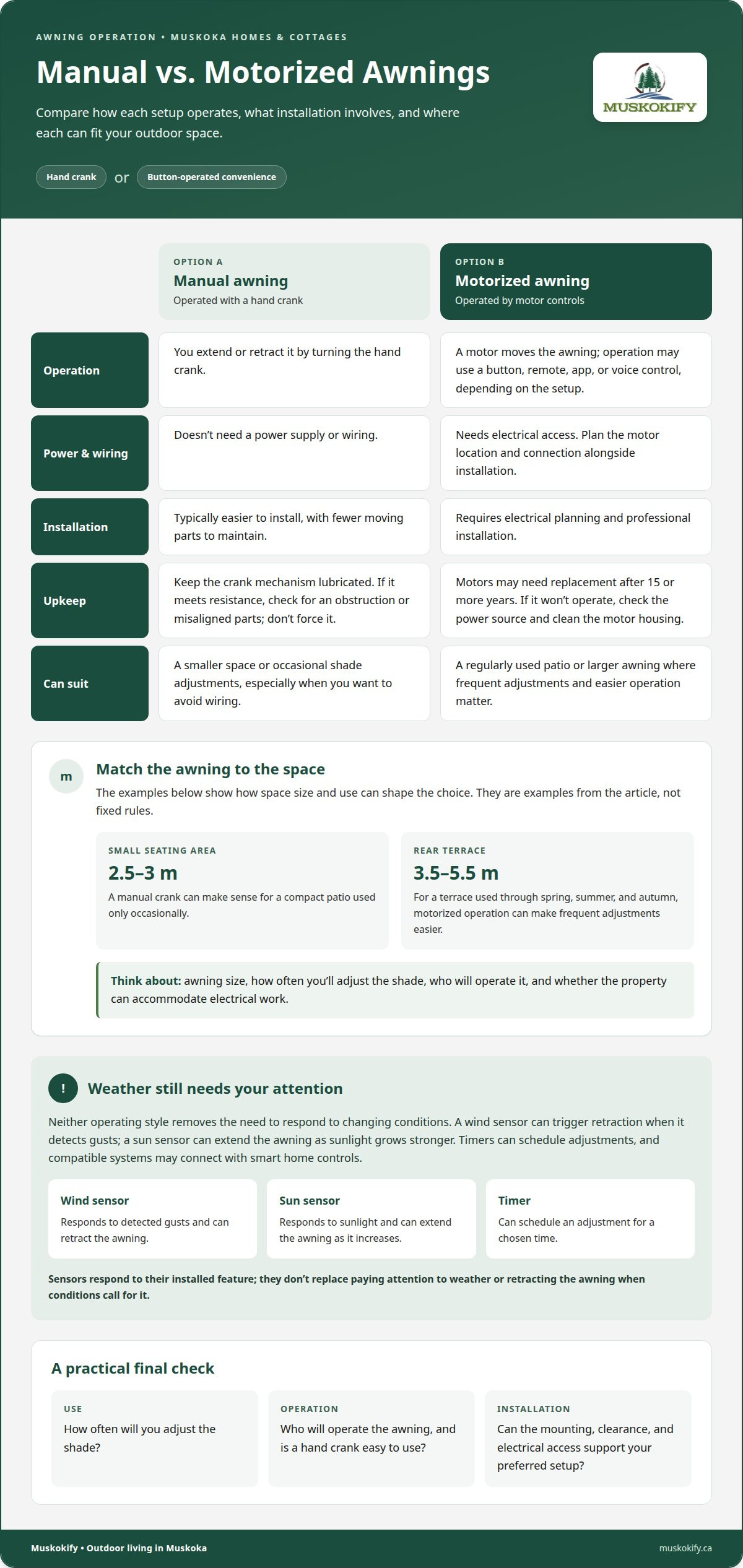
A manual awning uses a hand crank and doesn’t need a power supply or wiring. This may suit a cottage where you want shade without an electrical connection. A motorized model adds button-operated convenience and requires electrical planning. Consider your preferred control and how the awning will fit your home before choosing.
Installation and Maintenance
Manual retractable awnings are typically easier to install, with fewer moving parts to maintain. Keep the crank mechanism lubricated so it turns smoothly, and don’t force it if resistance appears. Check for an obstruction or misaligned parts first. Motorized models need professional installation and electrical access, and their motors may need replacement after 15 or more years.
For a motorized awning, plan the motor location and electrical connection together. The installer positions the awning for operation, while an electrician can plan the connection to the home’s supply. Manual models avoid this electrical step. With either type, the mounting surface, awning position, and clearance for the arms affect how smoothly it opens and closes.
If an awning stops moving smoothly, inspect the mechanism for an obstruction or misaligned parts. For a motorized model that won’t operate, check its power source and clean the motor housing. These basic steps can help identify a simple issue, but don’t force the crank or motor when movement meets resistance.
An existing manual awning may be converted to motorized operation, depending on its design and the motor options that fit it. Conversion isn’t automatic: the existing assembly must suit the intended motor, and electrical access is needed. A professional assessment can help determine whether conversion is practical or whether a different awning setup better suits the space.
To decide, consider who will operate the awning, how often you’ll adjust it, and what installation work the property can accommodate. If you’re planning an awning for your home or cottage, discuss your awning setup with the installation team.
Choosing an awning for small or occasional-use spaces
A compact patio used only a handful of times each year may not need motorized operation. For example, a 2.5-3 m awning over a small seating area can make sense with a manual crank. You extend it when shade is welcome, then retract it when you’re finished. Occasional use makes the simpler control a practical fit.
Think about the space’s size and how often you adjust its shade. A narrow cottage deck used for morning coffee has different needs from a broad terrace used throughout the day. Manual operation suits smaller areas and lighter use; motorized operation can be more convenient when you regularly adjust a larger awning.
For a rear terrace used through spring, summer, and autumn, a 3.5-5.5 m awning may see frequent adjustments. Motorized operation can make those changes easier, especially when you extend or retract the fabric several times during a day. A remote control replaces repeated cranking, which can matter when the awning spans a larger outdoor space.
Use these factors to match the setup to your routine:
- Compact space: Consider a manual crank for a small patio or cottage landing used occasionally.
- Regular use: Consider motorized operation for a terrace where you often shift shade as the sun moves.
- Frequent adjustments: A remote can simplify extending and retracting the awning during a gathering.
- Limited mobility: Button operation may be easier than turning a manual crank.
- Power outage concerns: A manual awning does not rely on electricity to operate.
Size alone doesn’t decide the answer. A small space exposed to changing sun may need frequent adjustments, while a larger deck used occasionally may not. Picture a typical day: consider when you’d extend or retract the awning and who would operate it. That routine can help you decide whether button-operated convenience matters.
Also consider how your outdoor space connects to the home. A patio beside a frequently used kitchen door may invite spontaneous shade adjustments. A seasonal seating area used occasionally may need fewer. Either way, the awning should fit the usable area without making everyday movement around the deck or patio awkward.
Before deciding, compare the awning’s size, your expected use, and the effort involved in operating it. A manual crank can suit occasional shade on a compact patio; a motorized model offers button-operated convenience for regular adjustments. Choose based on your routine, not simply the largest space you could cover.
Electrical requirements
The main setup difference is whether the awning operates by hand or uses a motor and power source. Consider electrical access alongside the controls you want and the awning’s location.
Manual and Motorized Setups
A manual awning operates with a hand crank and needs no wiring or power supply. It can suit a cottage deck where you want to avoid adding an electrical connection. A motorized model adds a motor, so electrical access becomes part of planning. Its operation can be more convenient if you adjust the awning often, while a manual setup keeps operation independent of household power.
Motorized awnings may use your home’s electricity or a solar panel. The project’s layout affects which power source makes sense: consider where the awning will sit and how the motor can receive power. Plan the connection before installation, rather than treating electrical access as a last detail. The mounting position, wiring route, and location of the control all need to work together.
Electricity Use
A motorized awning uses electricity when its motor operates. The amount depends on the motor and how often you extend or retract the awning, so there is no single usage figure for every model and routine. A manual awning uses no electricity for movement. If household power use matters to your decision, consider how frequently you expect to operate it.
Power planning also shapes everyday function. A home-powered motor needs an electrical connection at the awning, while a solar-powered setup uses a panel as its power source. The available location and chosen system determine the practical arrangement. Manual operation avoids that electrical connection, but you use the crank whenever you want to change the shade.
Think about how the controls fit your routine. If you expect to adjust the awning as the sun shifts across a Muskoka deck, button operation can make those changes easier. If you prefer a system that works without a power supply, a manual crank may suit you better. The choice depends on your preferred control and the electrical access at the installation site.
Before selecting a configuration, map out where the awning will mount, where its motor or crank will sit, and how you use the space. For a motorized model, include electrical access in the plan. For a manual model, consider whether the crank will be easy to reach during normal use.
Manual versus motorized awning comparison
A manual awning gives you direct control through a hand crank, while a motorized model moves at the press of a button. Manual operation doesn’t depend on household electricity; motorized operation reduces the effort involved in extending or retracting the awning.
Manual awnings suit people who prefer simple, independent operation. Their trade-off is physical effort, especially if you adjust the awning often. Motorized models make frequent changes easier, but depend on electrical access and a working motor. The best match comes down to who will operate the awning and how it fits your daily routine.
Compare the options across the situations that matter at home:
| Situation or feature | Manual operation | Motorized operation |
|---|---|---|
| Awning up to about 12 feet wide | Manageable for most adults to crank. | Reduces the effort of operating the awning. |
| Frequent adjustments | Requires turning the crank each time. | Button operation makes adjustments easier. |
| Power outage | Continues to work without electricity. | Some models allow manual operation. |
| Limited mobility | Cranking may be difficult for some users. | Remote operation can reduce physical effort. |
| Electrical access | Doesn’t need a power supply. | Needs electrical access for the motor. |
| Wind response | You decide when to retract the awning. | A compatible wind sensor can trigger retraction. |
| Control preference | Uses a hand crank. | Can use a button or remote. |
| Use pattern | Works well when adjustments are occasional. | Convenient when you adjust shade regularly. |
To choose, picture a typical afternoon on your deck. If you set the shade once and leave it, a hand crank may suit your routine. If the sun moves across the seating area and you adjust the awning repeatedly, button-operated control may feel easier. Also consider who will use it and which control feels comfortable for them.
For a Muskoka property, also consider the awning’s exposure and your preferred response to changing weather. A manual setup leaves each adjustment to you. A motorized model with a suitable sensor can respond automatically to detected wind. Neither operating style removes the need to account for weather when planning how you use the space.
Choose according to the control method, physical effort, and weather response that suit your household. For a tailored discussion of your awning setup, contact the installation team.
Muskokify: Motorized Screens
Muskokify helps you shape a more comfortable outdoor space with premium awnings and Motorized and Manual Screens. If you’re deciding between a hand crank and button-operated shade, consider how often you’ll adjust it and how you use your deck or patio. For a cottage where changing weather and lake views shape outdoor living, the right awning can complement the way you use the space.
For a broader seasonal enclosure, Sunspace Sunrooms offer another way to connect indoor comfort with the outdoors. Muskokify can help you consider which option suits your space and how you want to use it. Contact Muskokify to discuss your outdoor living plans.
Shape a more comfortable outdoor season
Your awning should suit the way you want to use your outdoor space, from quiet mornings overlooking the lake to long afternoons with family. Let your routine guide the choice, then consider how shade can complement your home’s design. The manual vs motorized awnings decision is one part of creating an outdoor area that feels connected, comfortable, and distinctly yours.
Muskokify can help you explore awnings alongside options such as Sunspace Sunrooms, Glass Railings, and Aluminum Railings. These features can support a cohesive approach to enjoying your property and its views. Start with the space you want to improve and the experience you want it to offer.
Contact Muskokify about awnings to discuss your plans. A thoughtful next step can bring your vision for outdoor living closer to reality.
Frequently Asked Questions
Final Take: Which Awning Delivers What You Really Need?
Choose a manual awning for occasional shade without electrical dependence; choose motorized operation if regular adjustments or reduced physical effort matter more. In Muskoka, picture how you’ll use the space on a sunny afternoon and who will operate the awning. Your routine is a stronger guide than appearance alone. Match the operating style to your preferred level of convenience.
How long do the motors last?
Motorized awning motors typically need replacement after 15 or more years. Their service life depends on use and the condition of the mechanism, so smooth operation matters. If movement becomes irregular or the awning stops responding, check the power source and motor housing before operating it again. For a seasonal cottage, include motor servicing in your long-term plans, especially if the awning gets frequent use during summer.
What about the electrical work?
A motorized awning needs electrical access, while a manual model doesn’t require wiring. For a new installation, plan where the motor will sit and how it will connect to your home’s supply. An electrician can handle the electrical connection as part of the installation planning. At a cottage with limited access to power near the deck, that practical detail may influence the operating style you choose.
What happens in a power cut?
A manual awning still works during a power cut because it doesn’t rely on electricity. Some motorized models can also be operated manually during an outage, but that depends on the model’s design. If your property experiences interruptions while you’re away, consider how you’ll retract the awning before leaving it unattended. The available manual override can be a useful feature to factor into your selection.
How do manual and motorized awnings compare?
Manual and motorized options differ in their components and setup: a manual model uses a crank, while a motorized one requires a motor and electrical planning. For a Canadian home or cottage, consider the awning’s dimensions, fabric, operating system, and installation requirements. Decide which functions you need before choosing a configuration for your space and intended use.
What should I consider when comparing manual and motorized retractable awnings?
Compare the awning’s size, fabric selection, mounting conditions, and whether it has manual or motorized operation. A motorized setup also requires a motor and electrical planning. For a useful comparison, consider the same dimensions and intended use, then compare the configurations.
What should I consider when installing a motorized awning?
Installation depends on the awning’s size, mounting surface, motor setup, and electrical work required at your home or cottage. An installation requiring additional wiring will involve different work from one without it. For planning, describe the intended location and whether electrical access is nearby.
What are the advantages and disadvantages of motorized awnings?
Motorized awnings offer convenient button operation, which can help when you adjust shade often or prefer not to use a hand crank. They also need electrical access and include a motor that may require servicing. Manual operation avoids dependence on household power, but requires physical effort each time you extend or retract the awning. Consider the operator, use pattern, and installation setting before choosing.