
Outdoor Solar Shades for Barrie Patios and Decks
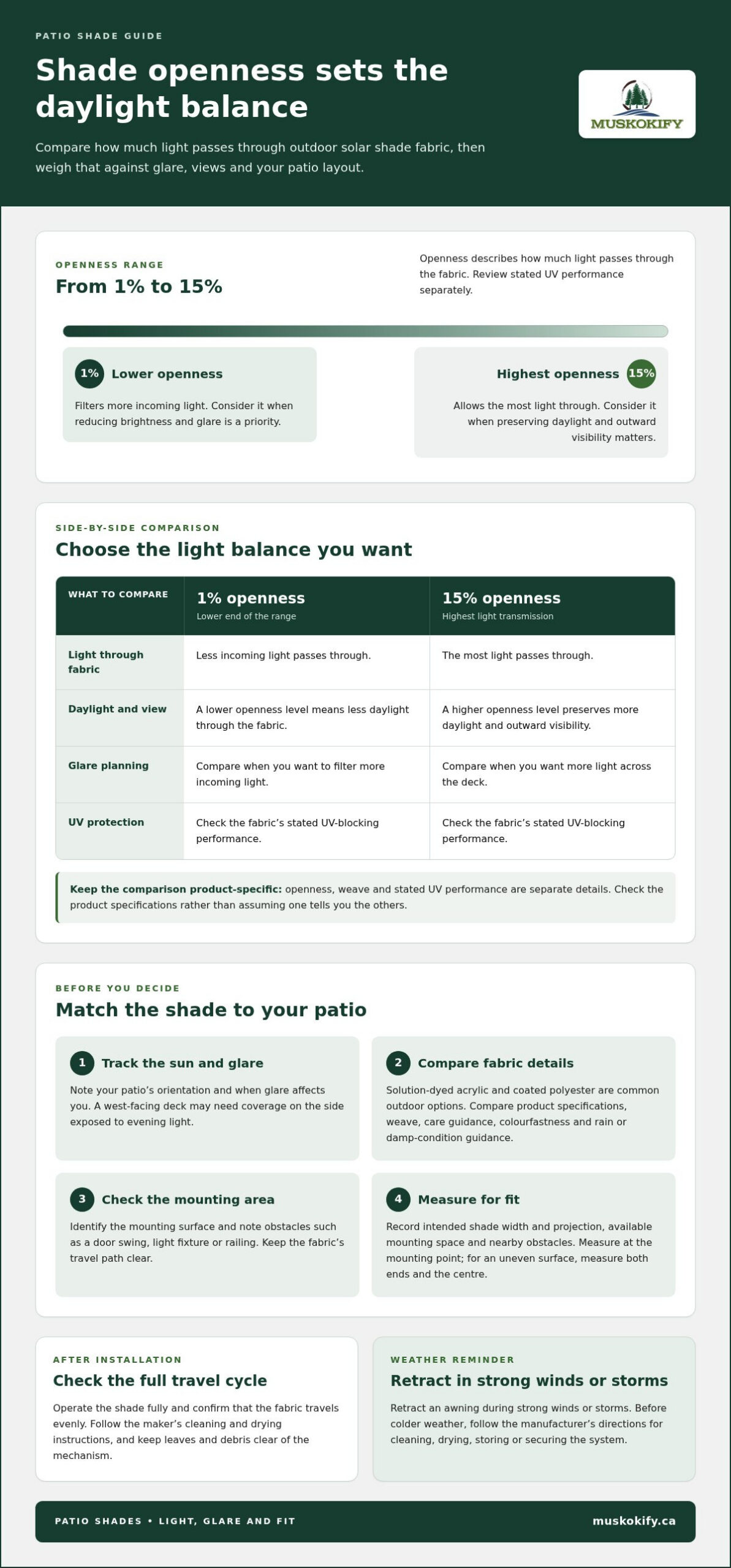
The best patio shade softens the sun without taking your Barrie view away. Retractable sun shades for patios can filter UV rays, reduce heat and glare, and adjust the balance between shade and daylight. Outdoor solar shades are available with openness levels from 1% to 15%; 15% allows the most light through.
You want a comfortable place to relax, not a dark barrier between your deck and the landscape. The right fabric, openness, colour and fit can shape how much light enters while preserving your connection to the outdoors.
This guide explains how patio shades manage sun and glare, what to consider when choosing colours and installation options, and how warranties and aftercare factor into long-term use. You’ll also learn how a professional site consultation can help match a shade solution to your home, deck layout and Muskoka-area conditions.
Key Takeaways
- Choose a shade openness level that balances glare control with daylight and views of your patio surroundings.
- Consider how fabric colour will look against your home’s exterior and affect the feel of your outdoor space.
- Plan installation around the deck’s layout and mounting surface so the shade fits and operates smoothly.
- Review warranty coverage and follow care guidance, including retracting awnings during strong winds or storms.
- Compare outdoor solar shades with other ways to add shade and comfort, then choose the option that suits how you use your deck.
UV protection, heat reduction and glare control
For a Barrie patio, choose a fabric with stated UV protection and weather-resistance details. Materials such as solution-dyed acrylic and coated polyester are common outdoor shade options; compare the product specifications, weave and care guidance before choosing.
UV and Weather-Resistant Fabrics
Fabric choice affects sun filtering, upkeep and how a shade handles outdoor exposure. Look for stated UV-blocking performance, colourfastness and guidance for rain or damp conditions. A tighter weave can provide more coverage, while a more open weave preserves daylight and views. For example, compare the specifications for an acrylic fabric and coated polyester rather than choosing by colour alone.
Check how the material is intended to be cleaned and stored. Barrie’s changing seasons make practical care details relevant: follow the maker’s directions for removing dirt, drying fabric and retracting the shade when conditions call for it. A fabric’s label and warranty terms can clarify which care steps protect its appearance and operation.
Also consider the shade’s openness level, which describes how much light passes through the fabric. Outdoor solar shades are available from 1% to 15% openness; 15% allows the highest level of light through. Use this range to compare daylight and view preferences, then review the product’s stated UV performance separately.
For a deck facing bright afternoon sun, note which seating areas need protection and whether you want to preserve the view beyond the railing. These details help narrow the fabric choice without assuming a particular colour or weave offers the same UV performance across every product.
Heat and Glare Control
A shade can reduce direct sun on seating, doors and nearby windows by intercepting sunlight before it reaches those surfaces. To manage glare, consider where the sun sits during the hours you use the patio. A west-facing deck, for example, may need coverage along the side exposed to evening light.
Balance light with comfort by matching fabric openness to the setting. A lower openness level filters more incoming light, while 15% openness lets the most light through. That choice affects brightness and outward visibility, so consider whether you mainly want a softer view, less glare at a table, or more daylight across the deck.
Before selecting a shade, note the patio’s orientation, nearby windows and when glare affects you most. These observations help define where coverage matters and make it easier to compare fabrics using product specifications rather than appearance alone.
Warranty, installation and aftercare
Installation and regular care affect how smoothly a patio shade operates. Before choosing a system for your Barrie property, understand its mounting requirements and care instructions, and review any product warranty terms.
There is no single rule that applies to every patio shade installation in Canada. Requirements in Barrie can depend on the work involved, municipal rules and property type. Condo owners should also review their building’s governing documents for exterior alteration rules.
Warranty coverage varies by product, so read the written terms for the fabric, frame, operating parts and motor. Note what each warranty covers, how long coverage lasts and which maintenance steps or weather conditions affect it. Fabric coverage, for example, may differ from coverage for a motor or mounting hardware.
Installation starts with the mounting surface. A shade attached to a wall, roof edge or deck structure needs a suitable, secure attachment point. Identify the surface and any obstructions, such as a door swing, light fixture or railing, before choosing the mounting position. Keep the fabric’s travel path clear so it can extend and retract without catching.
To measure your patio, record the intended shade width and projection, then note the available mounting space and nearby obstacles. Measure the opening at the mounting point, not just the deck boards below. If the wall or structure is uneven, record measurements at both ends and the centre. Share these details with your installer so the fit and clearance can be assessed accurately.
After installation, operate the shade through a full cycle and check that the fabric travels evenly. Follow the product’s care instructions for cleaning and drying, and avoid methods or cleaners the manufacturer excludes. Keep the mechanism clear of leaves and debris, especially after windy weather in Barrie.
Retract an awning during strong winds or storms to help protect its longevity. Don’t leave it extended simply because the sky looks clear, as conditions can change quickly. Before colder weather, follow the manufacturer’s guidance for cleaning, drying and storing or securing the system.
Keep the warranty document, installation details and care instructions together. If an operating issue appears, note what happened and when, then follow the product’s service process. A clear record can help distinguish routine care from a repair issue and support a useful conversation about the shade.
Retracting awnings in strong winds or storms helps protect their longevity. Treat this as a practical operating reminder: when those conditions arise, retract the awning rather than leaving it open.
Available colours
Colour shapes how a patio shade looks against your home, deck and surrounding landscape. Compare fabric samples with your siding, trim, railing and outdoor furniture. Charcoal beside pale siding creates a crisp contrast, while sand or warm grey can blend more quietly with natural wood.
Start with the fixed colours around your patio. Note the deck surface, exterior finish and visible roofline, then decide whether the shade should match or stand apart. A cottage with cedar-toned boards and dark window frames, for example, might suit a muted earth tone or charcoal. A light exterior may pair well with a softer neutral.
View fabric samples outside, not only on a phone or showroom screen. Sunlight can make a colour appear brighter, cooler or warmer than it looks indoors. Compare each sample against your home’s exterior in direct sun and shade to see how it works with the colours around it.
Think about the view beyond the deck, too. A saturated fabric may draw attention to the shade, while a quieter neutral can keep the focus on trees, water or the garden. If your patio faces Lake Simcoe or a wooded Barrie lot, hold samples near the railing and consider how each colour frames the outlook.
Use these comparison points when reviewing a fabric chart:
- Match: Choose a tone close to your siding or trim for a more integrated look.
- Contrast: Set a dark fabric against a pale exterior, or a light fabric against darker finishes.
- Repeat: Echo a colour already present in cushions, railings or outdoor furniture.
- View: Hold the sample beside the railing to see whether it competes with the scenery.
Colour also changes how prominent a shade looks across a broad deck. Strong contrast can make the fabric a feature, while a closer match can make it feel less visually dominant. Picture the shade fully extended above your usual seating area, then compare both effects against your home’s exterior.
Compare physical fabric swatches under the light where you use the patio. Keep your preferred options beside a photo of the exterior, then narrow them to tones that suit the siding, deck and view together. This gives you a clear basis for choosing from the available colours.
The R88 retractable awning is available in 18 colours, giving you a defined range to compare with your patio’s fixed finishes and outlook.
Blocking UV rays
Review UV performance separately from a fabric’s colour or openness. For a Barrie patio, compare each shade fabric’s stated UV-blocking claim, then consider how its coverage will sit over your seating and walking areas.
Start with the product label or specification sheet. Look for a clear statement about UV blocking, and note whether it applies to the fabric itself or the complete shade system. These claims describe different things: fabric performance does not account for uncovered edges, gaps or sunlight entering from the sides.
Map the areas you want covered before selecting a shade. Mark the table, lounge chairs and patio doors on a simple sketch, then note where the sun reaches them during the hours you use the deck. Afternoon light from the west, for example, may call for coverage across that exposed side, not just overhead.
Next, consider the screen’s position and dimensions. A shade that covers a dining table may leave nearby seating exposed as the sun shifts. Measure the intended coverage area and compare it with the system’s fabric width and projection. Check how the installed edges align with the space, since narrow uncovered strips can change the shaded area.
UV blocking also depends on choosing a product intended for outdoor use. Review the manufacturer’s care instructions and warranty terms alongside its performance statement. A label describing UV protection should be read with any conditions about fabric care, operation or exposure. Keep the product sheet so you can compare the claim with the shade installed on your patio.
Use this quick review before choosing:
- Read: Find the exact UV-blocking claim in the fabric or system specifications.
- Locate: Mark the seats, doors and other areas you want shaded.
- Observe: Track which direction sunlight reaches those spots at your usual outdoor hours.
- Compare: Check the stated coverage against the area and side gaps.
- Keep: Save the product and care information with your warranty documents.
A patio shade does not block every route sunlight can take. A fixed roof, open sides or changing sun angle can leave parts of the deck exposed. A west-facing table, for example, may receive direct light beneath an overhead shade late in the day. Match the shade’s placement to how you use the space, and treat its stated UV performance as one part of the coverage decision.
Before choosing a shade, bring your patio sketch, notes on sun exposure and preferred coverage area together. This makes it easier to compare UV claims with the planned placement, rather than choosing from a label alone. A well-matched system can create a more comfortable shaded area while keeping the Barrie landscape in view.
Outdoor solar shades for patios and decks
In Canada, common retractable patio shade options include overhead awnings and vertical exterior screens. They serve different roles, so start by matching the shade’s position to the way your patio or deck is exposed.
Retractable Shade Types
An overhead awning extends above an outdoor area, while a vertical screen lowers beside it. For a Barrie deck, consider whether you need cover above a seating area or a screen along an exposed edge. Doors, railings and nearby structures can also affect which format fits comfortably.
Think through how people move around the space. An awning should leave doors and walkways clear, while a vertical screen needs room to travel without catching on furniture. A cottage deck with a narrow path beside the dining table, for example, may call for careful placement along the open side.
Consider how the shade will look when retracted. An overhead system sits above the patio, while a vertical screen occupies the edge where it’s installed. Compare both positions from inside and outside the home, especially if preserving a view of Lake Simcoe or a wooded lot matters.
Weather Resistance
Retractable shades can provide sun control, but they aren’t automatically weather enclosures. Resistance to wind and rain varies by design, fabric and installation. Snow is another consideration in Barrie: don’t assume a shade can support snow accumulation. Review the product’s operating limits and seasonal instructions before use.
Consider the exposure at your project location. A sheltered patio beneath an existing roof faces different conditions from an open deck without overhead protection. Identify the direction of exposure, nearby walls and any roof cover, then use those details to assess whether a shade suits the setting.
Use these questions to compare options:
- Placement: Does the shade cover the area where you sit or eat?
- Clearance: Can it extend without interfering with doors, railings or walkways?
- Exposure: Is the installation sheltered, or open to the elements?
- Operation: Do the product’s limits fit how you plan to use it?
A retractable sun shade for patios should suit both the space and your expectations. If you want a shaded dining area, an overhead awning may be a natural fit; if low-angle sunlight reaches the deck edge, a vertical screen may better address that exposure. Compare your intended use with the system’s documented limits rather than treating every shade as all-weather protection.
Bring your layout and intended use to a shade consultation to discuss which format may suit your outdoor space. That conversation can help you plan a more considered fit for your Barrie patio or deck.
Muskokify: Sunspace Sunrooms
Muskokify helps homeowners in Barrie plan outdoor spaces around the way they want to enjoy the seasons. For adjustable shade, Muskokify offers premium awnings; for a more enclosed space, Sunspace Sunrooms create a distinct indoor-outdoor setting. Motorized Screens offer another way to manage an open patio, while Glass Railings or Aluminum Railings define the deck edge without blocking the view with a solid barrier.
Consider a sunroom when shade alone won’t provide the sheltered space you want. A cottage owner, for example, may prefer an enclosure for longer seasonal use, while a homeowner may want screens around an open deck. Contact Muskokify to discuss which approach suits your outdoor living plans.
Shape your patio around the way you live
Before choosing a shade, picture how you want to use your patio through the season. Morning coffee, an afternoon meal or an open view across the trees may each call for a different balance of shelter and daylight. Retractable sun shades for patios can be part of that plan, alongside the layout and features that connect your deck to your home.
Muskokify offers awnings for outdoor shade, along with Sunspace Sunrooms, Glass Railings and Aluminum Railings. If you’re considering a broader outdoor-living update, these options can help shape a space around the shelter, views and use you have in mind.
Bring your ideas and patio details together, then contact Muskokify about patio sun shades to discuss a suitable next step. Your Barrie patio can become a more comfortable place to enjoy the outdoors.
Frequently Asked Questions
What Customization Options Are Available for Retractable Awnings?
Customization can shape an awning’s placement, appearance and operation. Start by deciding which seating area or doorway needs shade, then consider the fabric, colour and whether you prefer manual or motorized operation. A west-facing Barrie deck, for example, may need coverage positioned for afternoon sun. Muskokify tailors outdoor living solutions to homes and cottages, so your layout and how you use the space can guide the design discussion.
Why Choose Motorized Retractable Awnings in Canada?
Choose a motorized option if button-operated adjustment suits your routine. It can be useful when the awning is difficult to reach or you often change the shade as conditions shift. Muskokify’s Motorized Screens operate at the touch of a button and provide protection from sun and rain. For a Barrie patio used throughout the day, consider whether that simple operation suits how often you want to adjust your outdoor coverage.
How do manual and motorized retractable patio shades compare?
Manual shades require direct operation, while motorized shades respond to button control. Your choice depends on access, operating preference and how often you expect to adjust the shade. A compact patio that needs occasional adjustment may suit manual operation, while a hard-to-reach position may make motorized control more appealing. Consider who will operate the shade and whether the control method feels practical for your home.
How should retractable patio shades be installed and maintained?
Plan installation around the mounting structure and the shade’s travel path. For a motorized system, include its operating setup in the plan. After installation, ask for a demonstration so you can see the full movement and learn the controls. Follow the product’s care instructions and keep them with your ownership records. These steps help homeowners in Barrie, Orillia, Midland, Tiny, Collingwood, Gravenhurst, Huntsville, Parry Sound, Dorset, Haliburton, Mactier and Coldwater manage their shade confidently.
What are the safety risks and warranty considerations for retractable patio shades?
Keep hands and loose objects clear while a shade moves, and don’t force it if operation seems obstructed. Read the warranty for the specific product and retain its paperwork with installation and service records. Coverage may differ between fabric, frame and operating components, so identify what each written term applies to. If the shade behaves unexpectedly, stop operating it and follow the manufacturer’s guidance before using it again.
Which retractable patio shade brands and retailers are available in Canada?
Sunspace Sunrooms and Canadian Shade are mentioned.