
Security shutters for patio doors in custom sizes
A patio door shutter can be more than a nightly routine: some rolling systems can be motorized and scheduled to close at a set time. Security shutters for patio doors can also be custom-fitted to the opening, creating a protective layer that rolls away when you want a clear view and easy access.
If you’re weighing security against the open feel of a Muskoka cottage, it makes sense to want both. The right design can help cover a broad glass opening while leaving the lake view unobstructed when the shutter is raised.
Learn how rolling shutters work, what custom sizing and aluminium construction can offer, and how to assess motorized operation and the practical details of an installation. These considerations help you picture a solution suited to your home and how you use it, whether you’re planning for a porch, veranda, or cabana.
Key Takeaways
- Consider motorized operation if you want shutters to close on a schedule, rather than relying on a nightly reminder.
- Match the shutter’s security purpose to its design; weather protection alone doesn’t necessarily mean burglary resistance.
- Plan custom sizing around the full opening, especially for wide, multi-panel patio doors.
- Think beyond the patio door: rolling shutters can also suit porches, verandas and cabanas.
- Before settling on a design, consider how the shutter will affect access, daylight and your use of the space.
What do rolling security shutters do?
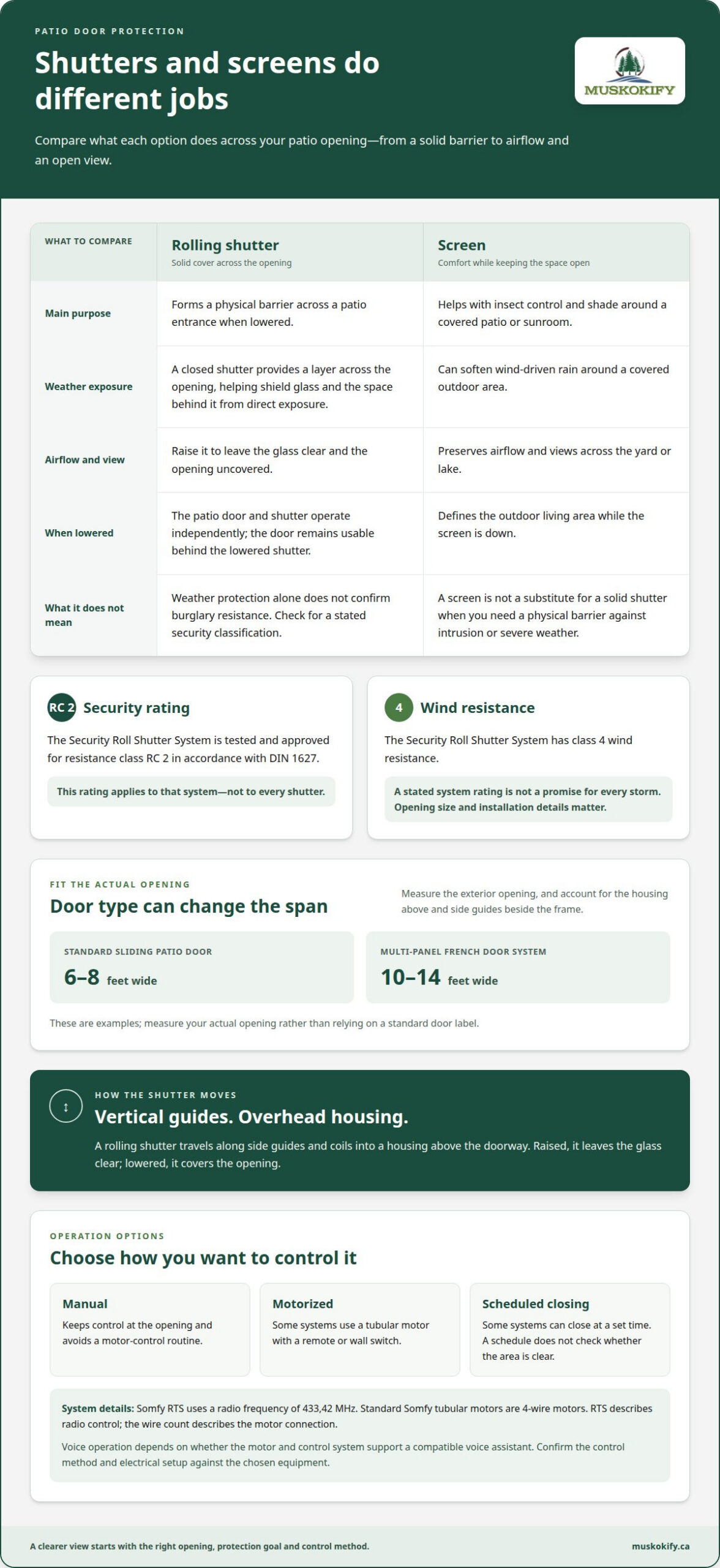
A rolling shutter travels vertically along side guides and coils into a housing above the doorway. Lowered over a patio door, it forms a barrier across the opening; raised, it leaves the glass clear. The patio door and shutter operate independently, so the door remains usable behind the lowered shutter. This arrangement can also suit selected windows and other openings.
Motorization changes how you operate the shutter. Some systems use a tubular motor controlled by a remote or wall switch, and some allow scheduled closing at a set time. That can help if you want a seasonal cottage opening covered each evening without walking to the patio door. A scheduled setting controls operation; it doesn’t determine whether the area is clear and ready to close.
Somfy RTS motors use a radio frequency of 433,42 MHz, while standard Somfy tubular motors are 4-wire motors. Those details describe different parts of the system: RTS refers to radio control, while the wire count describes the motor connection. For a motorized installation, the control method and electrical setup need to match the chosen equipment. A wall switch offers a fixed control point; a remote lets you operate the shutter from elsewhere in the room.
Voice-command operation depends on whether the motor and control system support a compatible voice assistant. A voice command is a control method, not a separate shutter function. If voice control matters to your routine, include it in system planning alongside remote, wall-switch, or scheduled operation. That keeps the discussion focused on how you want to close the opening, rather than assuming every motorized shutter responds to voice.
Motorized screens serve a different purpose from rolling security shutters. On a covered Muskoka patio or sunroom, a screen can define the outdoor living area, then rise to reopen the view. You might lower screens during a summer evening meal and raise them the next morning. Screens support enclosure and comfort; shutters provide a solid rolling barrier across the doorway.
Manual operation keeps control at the opening and avoids adding a motor-control routine. Motorized operation can suit a wide doorway or one you close regularly, especially when scheduled closing fits your evening routine. Compare the practical details: where will you operate it, how often will it move, and do you want set-time control? These answers help narrow the operation style before you select a design.
For an opening-specific overview, explore shutter systems for doors. Whether you’re planning a patio entrance or another access point, decide first which opening needs coverage and how you want to operate it. That gives the design discussion a clear starting point, from a simple wall switch to a motorized schedule.
Why Patio Door Shutters?
A patio door is a large opening between your home and the outdoors, so consider both access and weather protection. Distinguish the role of shutters from screens before deciding what suits your living spaces.
Protection from Intrusion
A lowered shutter adds a physical barrier across a patio entrance, which can make unauthorized access more difficult. Its security value depends on the shutter’s design and resistance rating, not simply its ability to cover glass. For example, the Security Roll Shutter System is tested and approved for resistance class RC 2 in accordance with DIN 1627. That rating applies to that system, not to every shutter.
Protection from Weather and Debris
Wind, rain, snow and airborne debris can reach exposed doors and covered outdoor areas. A closed shutter provides a layer across the opening, helping shield the glass and the space behind it from direct exposure. The Security Roll Shutter System has class 4 wind resistance. Treat this as a stated system rating, not a promise that every shutter handles every storm condition. Opening size and installation details matter.
Combined Storm and Security Protection
One shutter may address both weather exposure and physical security, but those are distinct performance goals. Not all storm shutters are designed to resist burglary. Look for a system with a stated security classification as well as relevant weather-resistance information. For instance, the Security Roll Shutter System’s RC 2 approval and class 4 wind resistance describe separate aspects of its performance.
Screens provide a different kind of protection. They can help reduce direct sunlight and keep insects out while softening wind-driven rain around a covered patio or sunroom. They also preserve airflow and views across the yard or lake. A screen is not a substitute for a solid shutter when you need a physical barrier against intrusion or severe weather.
Start with the conditions around the opening. A cottage patio door exposed to wind and drifting snow may call for a different balance than a sheltered sunroom used mainly for shade and insect control. Then consider whether the opening needs to remain usable while the shutter is closed and how you’ll access the outdoor area. These details distinguish a screen’s comfort benefits from a shutter’s protective role.
If you’re planning a patio entrance, explore security shutter options for doors with the opening, exposure and protection goals in mind. That gives the design discussion a practical focus, whether you’re protecting a seasonal retreat or improving a frequently used living space.
Custom sizing for standard and oversized openings
Yes, a shutter can be installed over an existing patio door. The opening’s width and height, space above for the housing, and clearance beside the frame all affect the fit.
Standard sliding patio doors are typically 6 to 8 feet wide, while multi-panel French door systems can span 10 to 14 feet. Those examples show why measuring the actual exterior opening matters more than relying on a standard door label. A shutter must cover the opening while leaving room for its housing and side guides.
For a useful measurement plan, record the opening’s width and height at several points. Note anything that could affect installation, such as trim, projecting handles, or a nearby wall. The narrowest width and lowest height help identify clearances, while the area above the door indicates where the housing could sit. These details matter in older cottages, where openings may not be perfectly even.
Custom sizing also has system limits. The Security Roll Shutter System is available with an element width of 2700 mm and can cover openings up to 113 square feet, or 10.5 square metres. Its shutters are sized to the opening and manufactured within the maximum size for each profile. Muskokify’s brand information also identifies oversized shutter installations up to 40 ft spans, illustrating that larger projects need sizing suited to the selected system.
Material and profile affect the fit as well as the shutter’s appearance. A roll-up design needs space for its housing above the opening and guides along the sides. The shutter profile, opening dimensions, and installation conditions work together; a wide patio entrance may need a different configuration from a single door. Custom sizing means matching these elements to the project instead of assuming one profile suits every opening.
Colour and exterior finish affect how the shutter looks against siding, trim, or a cottage façade. Powder-coat finishes can provide a coloured surface, while anti-graffiti coatings are a separate finish consideration. These options vary by manufacturer and product line, so consider finish alongside curtain material and profile. A carefully chosen colour can help the closed barrier complement the home’s exterior.
A manufacturer’s dealer network can connect product selection with opening measurements and available customization. For homeowners, a useful next step is to provide clear dimensions, describe the door configuration, and note finish preferences. This gives the dealer a practical basis for matching a standard or oversized opening to a suitable shutter system, including its housing and side-guide clearances.
Aluminium shutters for patios, porches, verandas and cabanas
Roll-down shutters travel vertically and coil into a housing, while accordion shutters fold along the sides of an opening. For a patio door, compare the space each style needs, how it locks, and whether you prefer a compact overhead housing or a side-folding alternative.
Aluminum Slats and Locking Mechanisms
The Security Roll Shutter System uses roll-formed aluminium slats with a coverage width of 37 mm and nominal thickness of 9.5 mm. These connected slats form a curtain that travels through side guides, then coils above the opening. When considering an aluminium shutter, look at the profile and locking method together. The slats create the covering surface; the lock helps secure the lowered assembly.
Accordion shutters work differently. Rolladen Accordion Shutters use a Secure Lok double locking system. This named mechanism distinguishes them from roll-down systems, which retract overhead instead of folding sideways. For a sliding patio door, consider where the folded panels or shutter housing would sit and how each arrangement affects the doorway and surrounding exterior.
Patio Shutter Installation Styles
A roll-down installation places a housing above the patio door, with guides along both sides. The guides keep the moving curtain aligned as it lowers. The door and shutter remain separate systems, so the patio door can still operate behind the lowered shutter. Before choosing this style, consider overhead clearance, side-guide placement, and whether trim or nearby structures could affect the fit.
An accordion installation needs room beside the opening for its folding panels. That may suit a patio door where overhead space is limited, but the panels occupy space at the sides when open. For example, compare the clear wall area beside a sliding door with the available space above it. Most single-door patio shutter installations are completed in one day, though the opening and installation conditions shape the work.
Shutters for Outdoor Living Spaces
Aluminium roll-up shutters can enclose patios, porches, verandas, and cabanas. Lowered, the curtain covers the opening; raised, it allows the space to open for fresh air and access. This flexibility can suit a Muskoka porch used for sheltered meals in cooler weather and open-air gatherings on warm evenings. The same approach can cover an outdoor cabana entrance.
Plan each opening around how you use the space. A veranda connected to a sliding door may need a clear route for everyday access, while a cabana may be closed for longer periods. Check where the housing and side guides sit and how the shutter affects movement through the area. These practical details help match the aluminium system to the structure.
Roll-Down and Accordion Shutters
Choose roll-down shutters if you prefer a curtain that retracts into an overhead housing. Choose accordion shutters if side-folding panels suit the opening better. Both styles cover a doorway, but their storage locations differ: one uses space above the door, while the other uses space beside it. That distinction matters near a garage wall, narrow walkway, or patio furniture.
For a patio door, compare the opening’s layout with the way you enter and exit. A wide sliding door may leave limited room for accordion panels, while a low roofline may constrain an overhead housing. Then consider the locking arrangement: Rolladen Accordion Shutters use Secure Lok double locking, while the selected roll-down system has its own profile and operation. Matching these details helps you choose a practical aluminium barrier.
Security shutters for patio doors and other openings
Rolling shutters can cover patio doors, selected windows and other openings, with different profiles serving different needs. For the Security Roll Shutter System, the maximum coverage is 113 square feet, or 10.5 square metres. The clear takeaway: match the system’s rated coverage and purpose to each opening, rather than assuming one shutter suits every part of a home.
The drawbacks are practical: a closed shutter blocks the glass and view, while its housing and side guides occupy exterior space. It can also affect emergency exit plans, so account for how people leave the room and applicable code requirements before choosing an installation.
For a patio door, the shutter housing sits above the opening, with side guides running alongside it. The door and shutter operate independently, allowing the patio door to remain operable behind the lowered shutter. This arrangement can protect the opening without changing the door itself. Before planning installation, consider the housing position, guide placement, available access, and how the door serves daily living.
Windows may also suit shutters, but each opening needs an appropriate size and profile. The Security Roll Shutter System’s maximum coverage provides a concrete limit for planning larger areas. A window and a broad patio entrance can differ in width, height, and surrounding space, so treat them as separate design tasks. Measure the opening and consider the shutter’s position when raised and closed.
Insulation is another consideration. Foam-filled insulated slat profiles are available for the system, but the effect on energy bills depends on the home, door, and orientation. The profile alone does not establish potential savings. A north-facing patio door and a sheltered opening, for example, may respond differently. Consider how the door and home are configured rather than assuming a reduction in energy use.
Ratings also describe specific performance, not every possible condition. The Security Roll Shutter System is tested and approved for resistance class RC 2 in accordance with DIN 1627, and has hail resistance class 7. Those ratings can help distinguish security and hail performance, but they don’t make every shutter suitable for every opening. Check the exact system and rating when planning coverage.
Transparent polycarbonate roll shutters offer another option for patios, porches, verandas, and cabanas. Their clear rolling curtain can protect an opening while maintaining visibility and natural light. This differs from an opaque shutter, which conceals the glass when closed. Choose according to the space’s purpose: a clear enclosure can preserve a view, while a solid shutter provides a covered barrier.
For a seasonal cottage, decide which openings need security, which need insulation, and which should retain daylight. Then consider emergency exit needs, local code requirements, opening dimensions, and the intended use of each living space. This approach helps you select a shutter type for the actual opening, rather than treating every door and window as interchangeable.
Muskokify: Security Shutters
Muskokify helps you plan Security Shutters around your home and how you use it. A seasonal cottage may have different priorities from a year-round residence, so describe how the entrance fits your daily routines and outdoor living plans.
Bring your preferred look and operation into the conversation, along with any other exterior projects you’re considering. Muskokify also offers Sunspace Sunrooms, Glass Railings, and Aluminum Railings to help shape a cohesive approach to your property’s outdoor spaces.
Contact Muskokify to discuss your patio shutter project. Start with the opening you want to address and what you’d like the finished space to support.
Plan a more protected patio entrance
Your patio door shapes how you move between your home and the landscape outside. Start your shutter plan with a practical decision: how should this opening work when the shutter is raised, lowered, or closed for a season? Consider the view you want to keep, the access you need each day, and how the entrance fits your outdoor living plans.
With those priorities in mind, security shutters for patio doors become part of a considered design rather than an isolated addition. Muskokify can help shape the next step around your home and how you use it. Share which opening you want to address and what matters most, whether that’s a clear view, convenient operation, or a stronger barrier.
Contact Muskokify about patio shutters to discuss a design direction for your space. A well-planned entrance can help you feel more at ease while keeping your patio connected to the outdoors.
Frequently Asked Questions
Can it be motorized to close automatically at night?
Yes, some motorized shutter systems can be scheduled to close at a set time. Somfy tubular motor systems may offer that function, while remote and wall-switch controls provide direct operation. You could schedule a cottage shutter to close in the evening, then use its control when plans change. Voice-command operation depends on system compatibility, so don’t assume every motor supports it. Muskokify describes its Security Shutters as button-operated.
What Does It Cost?
The cost depends on the opening, shutter design, materials, controls, and installation conditions. A wide patio entrance, custom dimensions, or motorized operation can change what the project requires. Request a quote based on the actual opening and selected system. A project-specific estimate can account for the product and installation, rather than relying on a general figure that may not fit your cottage or home.
What types of security shutters are available for patio doors in Canada?
Common options include roll-down shutters, accordion shutters, and transparent polycarbonate rolling shutters. A roll-down curtain retracts into a housing above the door; accordion panels fold beside it. Transparent versions can retain more daylight and visibility than opaque curtains. For example, a lakeside sunroom may benefit from a clear view, while a seasonal cottage entrance may call for an opaque barrier. Choose according to the opening and how you use the space.
How much do security shutters for patio doors cost in Canada, including installation?
There isn’t one useful installed price for every Canadian patio door. The quote depends on opening dimensions, shutter profile and material, manual or motorized controls, and installation conditions. A broad opening or limited space around the frame may require a different setup from a straightforward doorway. Request a project-specific quote to understand the product and installation together; a generic product figure won’t tell you what your opening needs.
What materials and locking systems provide the best patio door security?
Look for a system with a stated security classification, rather than judging protection by material alone. For example, the Security Roll Shutter System has RC 2 resistance approval under DIN 1627, while Rolladen Accordion Shutters use a Secure Lok double locking system. These are distinct products and specifications, not a universal ranking. Consider the opening, desired security function and locking design together when deciding which system suits your home.
Do patio door security shutters meet Canadian building and fire safety codes?
Code suitability depends on the project and applicable local requirements; don’t assume every shutter installation meets them automatically. A shutter must not compromise a required exit route or prevent occupants from leaving safely. Consider whether a bedroom or living area relies on the patio door for escape. Include the opening’s role and local building and fire-safety requirements in your planning before selecting a system or installation location.
How are patio door security shutters installed and maintained?
Installation typically positions a housing above the door and guides along the sides, with the exact arrangement shaped by the opening. Keep the area around the guides clear so the curtain can travel without obstruction. For routine care, visually check for dirt or objects in the guides and note any change in movement or control response. Follow the care instructions supplied with the specific system, since cleaning and service needs vary by product.
Do security shutters for patio doors provide insulation, noise reduction, or storm protection?
Some systems offer insulated slat profiles, and certain products have stated weather-resistance ratings. For example, the Security Roll Shutter System offers foam-filled insulated slat profiles and class 4 wind resistance. These specifications don’t establish a specific energy saving or noise reduction for your home. Orientation, door construction and exposure all affect the experience. Match the selected product’s documented features to your priorities, such as reducing exposure at a wind-facing cottage entrance.