
5 Retractable Screen Maintenance Tips for Cleaning and Care
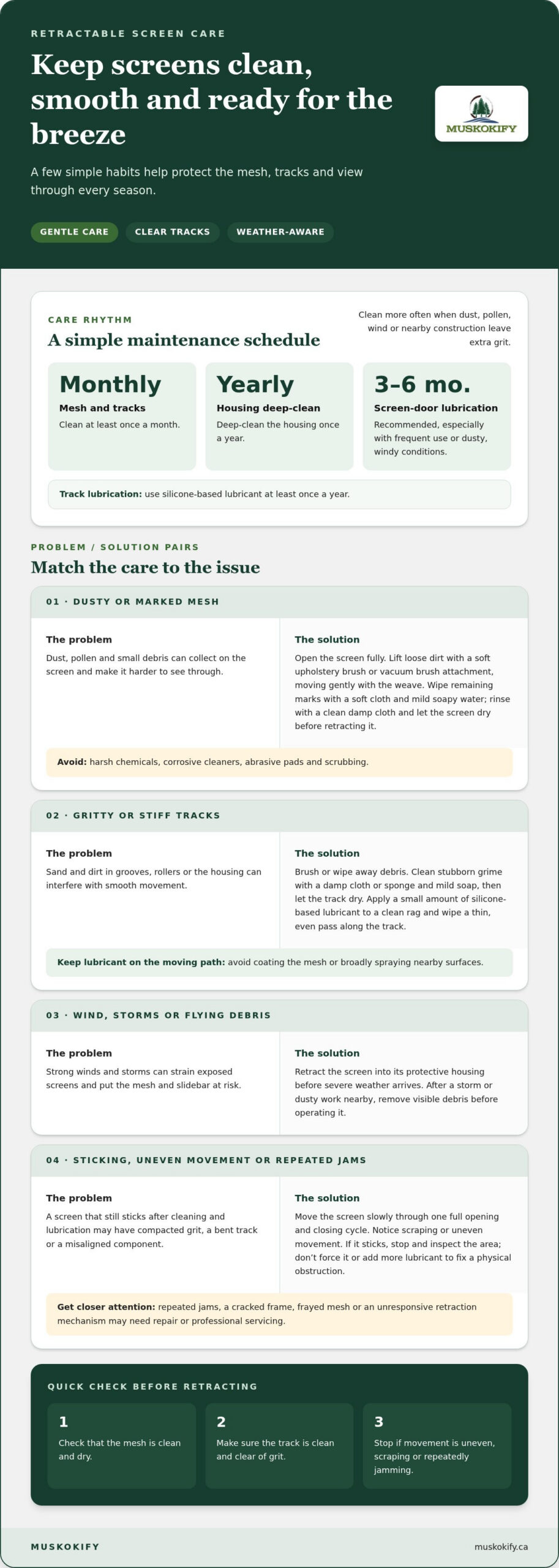
Good retractable screen maintenance tips start with gentle cleaning: remove loose dust with a soft brush or vacuum brush attachment, then wipe the mesh with a damp cloth or mild soap and water. Clean the tracks at least once a month, and avoid harsh cleaners or scrubbing that can damage the screen or finish. Keep the screen retracted during strong winds and storms.
This simple care helps keep screens ready for breezy afternoons, whether you’re opening up to a Muskoka lake view or enjoying a quiet evening on the porch. But mesh and tracks aren’t the whole story. Motorized vinyl screens need careful handling, too, and changes in how a screen retracts can be an early sign that it needs attention.
This guide covers cleaning mesh and tracks, applying lubricant, preparing screens for severe weather, checking for smooth retraction, and caring for motorized vinyl. You’ll also learn what to look for when a screen jams, wrinkles, or stops moving smoothly, helping you keep your outdoor space comfortable and your view clear.
Key Takeaways
- Use a soft upholstery brush to lift dust from the mesh without pulling or snagging it.
- Apply silicone-based lubricant to clean tracks to support smooth screen movement.
- Retract screens fully before strong winds, storms, or snowy, icy weather.
- Watch for wrinkles, folds, uneven movement, or repeated jams as signs that the screen may need attention.
- For motorized vinyl screens, use the supplied handle, check the power supply and remote batteries, and follow the manufacturer’s guidance for tension adjustments.
1. How Do You Clean a Retractable Screen Door?
These retractable screen maintenance tips begin with a gentle pass over the mesh. Open the screen fully so you can see dust, pollen, and small debris clearly. Use a soft upholstery brush and move downward, following the weave without pressing hard. A vacuum with a brush attachment can also lift loose dirt. Keep the nozzle from pulling or snagging the fabric. Clean the screen and tracks at least once a month, and deep-clean the housing once a year. In dusty or polluted areas, clean more often.
For remaining marks, dampen a soft cloth with mild soapy water and gently wipe the mesh in small areas. Don’t scrub. Remove soap with a clean, damp cloth and let the screen dry before retracting it. Avoid harsh chemicals, corrosive cleaners, and abrasive pads, which can weaken mesh fibres or harm the coating and painted frame. If you’re unsure how a cleaning solution will affect the material, test it on a small, less visible spot first.
Clean the tracks separately and carefully. Use a cloth, cotton swab, or gentle compressed air to remove sand and dirt from grooves, rollers, and the inside of the housing. For stubborn grime, use a damp cloth or sponge with mild soap. Let the track dry, then apply lubricant to a rag and wipe it along the track. This helps the screen move smoothly without coating the mesh in product.
Lakefront exposure, nearby construction, and windy weather can leave extra grit on a screen. Inspect the mesh and tracks more often in these conditions, particularly after a storm or dusty work nearby. After a major weather event, remove visible debris before operating the screen. If you store the screen for winter, clean it first so dirt doesn’t remain on the mesh during storage.
Small holes or tears may be repairable with a mesh patch. If only the mesh is damaged, rescreening may be an option instead of replacing the whole unit. Cracks in the frame, frayed mesh, repeated jams, or uneven movement need closer attention. One of the most useful retractable screen maintenance tips is to stop operating a screen if damage spreads or the frame is cracked. For Barrie homeowners, a professional assessment can help determine whether the mesh needs repair or the screen needs replacement.
Use mild soap and water on the mesh. Harsh chemicals can weaken fibres or damage the coating. Clean tracks just as gently, avoiding harsh chemicals and scrubbing that could harm the aluminium finish. For stubborn grime, use a damp cloth or sponge with mild soapy water. Once the track is clean and dry, apply lubricant to a rag and wipe it along the track to help the screen open and close smoothly.
Build track care into seasonal use: clean tracks when screens return to use, and give them extra attention after winter or nearby construction. Screens exposed to salt water or other highly corrosive agents in beachfront or industrial areas should be cleaned more regularly.
2. Lubricating tracks
Clean tracks help a retractable screen move smoothly, but lubrication also matters. Use a silicone-based lubricant on the tracks at least once a year. For screen doors, lubrication every 3 to 6 months is recommended, especially with frequent use or windy, dusty conditions. Barrie’s seasonal changes can bring windblown grit and pollen, so watch for changes in movement as you open and close the screen.
Before applying lubricant, remove loose debris with a soft brush and make sure the track is clean. Grit trapped under lubricant can interfere with the rollers rather than help them move. Check the full length of the track, including corners and narrow grooves. Clean any dirt and let the track dry before applying silicone. This preparation keeps the lubricant from coating debris.
Choose a silicone-based lubricant, such as a dry silicone spray labelled for this purpose. Follow the product directions and apply a small amount to a clean rag rather than flooding the track. Wipe along the track in a thin, even pass. This helps keep lubricant on the moving path and away from the screen mesh. Avoid spraying broadly across the doorway or surrounding surfaces.
Focus on the parts that guide movement. Wipe lubricant along the track where the rollers travel, following the screen’s full path. Don’t force lubricant into the housing or onto components that are difficult to reach. If the manufacturer’s instructions identify specific moving parts, follow those directions. Designs vary, so the track, rollers, and retraction mechanism may not all need the same treatment.
After applying lubricant, operate the screen slowly through a full opening and closing cycle. Listen for scraping and notice whether it moves evenly. If it still sticks at one point, stop and inspect that section for compacted grit, a bent track, or a misaligned component. More lubricant won’t fix a physical obstruction. Wipe visible excess from the track before it attracts dust.
Keep a simple maintenance note with the application date and any movement issues. The record can help you remember annual service and spot recurring stiffness. If the screen begins to jam despite a clean track and fresh silicone, don’t keep forcing it. Repeated resistance can point to a mechanism problem that lubrication alone won’t solve.
For stubborn grime, use a damp cloth or sponge with mild soapy water. Deep-clean all parts, including the housing, as part of annual maintenance. If a jammed or misaligned retraction mechanism does not move smoothly or stops working, it needs professional servicing. Small holes, rips, or frayed edges in the mesh may be repaired with mesh patches or repair kits.
3. Retracting screens in severe weather
Strong winds and storms can strain exposed retractable screens. Retract the screen into its protective housing before severe weather arrives to shelter the mesh and slidebar from gusts and flying debris. If a storm develops while the screen is open, retract it only if you can do so safely. Don’t leave it extended simply to preserve airflow. Making retraction part of your weather routine helps protect the screen’s components from avoidable exposure.
When the forecast for Barrie points to strong winds or a storm, close and retract the screen before conditions worsen. Check that the mesh has entered the housing fully and isn’t caught along the track. A screen left partly open can remain exposed to wind. If you notice resistance during retraction, don’t force the panel. Stop and check for visible debris or obstruction before trying again.
Snow and ice call for a different seasonal routine. In cold weather, fully retract the screen into its housing to help prevent ice from building on the mesh or slidebar. Keep it there through snowy or icy conditions. Ice around an exposed panel can interfere with movement and make the screen difficult to operate as temperatures change. Avoid pulling at a mesh panel that appears frozen in place. Wait for conditions to clear before checking its movement.
For Canadian winter storage, clean screens before removing them, then store them upright or completely flat in a safe, dry place. This helps reduce the risk of frame warping while the screen is out of use. Keep stored components away from damp areas and places where other objects could press against them. When spring returns, inspect the frame and mesh before reinstalling or using the screen. Look for dirt, visible damage, or signs that the frame has changed shape.
A seasonal check can help you catch problems before regular use resumes. After a major storm, inspect the screen, tracks, and housing for debris or visible damage. Gently clear loose material, then check whether the screen retracts evenly. Don’t force a jammed mechanism or replace a damaged component without identifying the cause. Repeated resistance, a cracked frame, or deteriorated mesh can signal a need for repair. Prompt attention can help avoid further strain on connected parts.
These steps help protect the screen through exposed seasons and winter. Retract it before strong winds, keep it housed through snow and ice, and store removed screens carefully. The screen’s condition, frame, and operating mechanism all affect how well it serves your space over time. A seasonal routine won’t prevent every issue, but it helps limit unnecessary exposure and makes changes in movement easier to notice.
4. Checking screen retraction for folds
A retractable screen should move into its housing smoothly, without creases, wrinkles, or folds. If it sticks, sags, or retracts unevenly, stop and inspect the panel and track for visible debris. Gently remove loose obstructions, then try the screen again without forcing it. Repeated jams or uneven movement can point to worn rollers, magnetic strips, or a damaged screen panel.
Watch the mesh as it retracts, not just the handle or slidebar. A fold that appears in the same place each time may indicate that the panel isn’t travelling evenly. Check whether the screen stays level across its width and enters the housing completely. If one edge trails behind, don’t pull harder. Force can worsen a fold or strain the retraction mechanism.
Inspect the track from end to end. Look for a small stone, leaf fragment, or compacted grit that could interrupt the screen’s path. Clear visible debris with a soft brush or cloth, then test the movement again. Don’t pour cleaning chemicals into the track or apply extra lubricant as a first response. A physical obstruction or misaligned part won’t be corrected by adding products.
If the screen sags, check whether the mesh looks loose, frayed, or damaged. Note any change in the panel’s shape, and see whether it retracts evenly after you clear the track. If the mesh deteriorates or the screen repeatedly jams, its rollers, magnetic strips, or panel may need replacement. These symptoms can help identify which part needs attention, but avoid dismantling the housing to investigate internal components.
Note where the fold or resistance occurs. For example, record whether the screen catches near the top of the track, halfway across, or as it enters the housing. This observation can help distinguish a recurring obstruction from a broader retraction problem. Also note whether the issue began after strong winds or a storm, when debris may have entered the track.
If the screen still sticks, sags, or retracts unevenly after you remove visible debris, stop using it and arrange professional servicing. A jammed or misaligned mechanism can require adjustment beyond routine cleaning. Retractable screens should also receive a professional inspection at least once a year. Keep the panel completely retracted if it won’t travel smoothly, and don’t pull directly on the mesh to make it move.
5. Maintaining motorized vinyl screens
Motorized vinyl screens need care for both the clear panels and the drive system. Dust, pollen, and fine debris can collect on the vinyl and along the screen’s path. Remove loose dust with a soft cloth or vacuum brush attachment, using gentle pressure. Clean regularly, especially during pollen season in Barrie or after nearby construction. Follow the screen manufacturer’s cleaning instructions, since vinyl products can have different care requirements.
Choose cleaning products carefully. Avoid harsh chemicals, abrasive scrubbers, and household cleaners that could haze or discolour vinyl. Some polishes and surface treatments can affect the panel’s appearance, so don’t apply them unless the manufacturer approves them for your screen. Use a mild cleaning solution and a soft cloth, then wipe away residue with a clean, damp cloth. Let the vinyl dry before retracting it.
Operate the screen with its provided handle or control rather than pulling directly on the vinyl. Pulling the panel can put uneven strain on the fabric and retraction system. Watch it as it moves: it should extend and retract without catching, twisting, or stopping partway. If the panel looks slack or no longer retracts properly, its tension may need adjustment. Follow the manufacturer’s instructions or arrange professional servicing instead of adjusting the mechanism by guesswork.
If the motorized screen doesn’t respond, start with simple checks. Confirm that its power supply is connected, then check the remote’s batteries. Try the control again and observe whether the motor makes a sound or the screen moves. If power and batteries aren’t the issue, stop repeated attempts. A jammed or misaligned mechanism may need professional service, and forcing the screen could worsen the problem.
Keep a short maintenance record with cleaning dates and any change in operation. Note examples such as slower movement, uneven extension, or vinyl that remains creased after retracting. A record can help you describe the issue clearly during service. Have the screen inspected professionally at least once a year, and consult the manufacturer’s guidance if tension adjustment is needed.
The key takeaway: treat vinyl gently, keep the operating path clear, and don’t force a motor that stalls. Regular cleaning protects the panel’s clarity, while prompt attention to unusual movement can help prevent added strain on the mechanism. For help with motorized screen care or servicing, contact Muskokify about your screen.
Muskokify: Sunspace Sunrooms
Muskokify helps Barrie homeowners create more comfortable outdoor spaces with Sunspace Sunrooms and motorized screens. If a screen is repeatedly jamming or its mesh is deteriorating, a new screen may better suit your space and how you use it. For a porch or deck exposed to changing weather, a Sunspace Sunroom can create a more sheltered place to enjoy the view. Explore motorized and manual screens to see screen options for your home or cottage.
Whether you’re planning a quieter place to relax or a clearer connection to the landscape, choose an enclosure that suits your space and routine. Contact Muskokify or visit muskokify.ca to discuss your project.
Make screen care part of your outdoor routine
Make screen care part of the seasonal rhythm of your Barrie home. Check screens before opening them in spring, maintain them through summer, and plan for winter storage or protection. This helps you spot changes before they interrupt a quiet evening outdoors. Keep the manufacturer’s instructions nearby, especially for motorized vinyl, and treat unusual movement as a reason to pause rather than force the screen.
These retractable screen maintenance tips can help you decide when routine care is enough and when a screen needs professional attention. If you’re planning a broader update, Muskokify offers Sunspace Sunrooms, Glass Railings, and Aluminum Railings to create a more comfortable outdoor space while keeping the landscape in view.
Ready to discuss screen care or your outdoor living plans? Contact Muskokify about your project, and take the next step toward enjoying your space with confidence.
Frequently Asked Questions
How Do You Clean a Retractable Screen Door?
Use a soft brush or vacuum brush attachment to lift dust, then wipe the mesh with a damp cloth. For pollen or remaining marks, use mild soapy water and wipe gently. Test the cleaning method on a small, less visible area first to check how the screen material responds before cleaning the full panel.
How do you clean and lubricate retractable screen tracks and rollers?
Remove grit from the track and roller path before adding lubricant, so debris doesn’t get trapped against moving parts. Use a cotton swab for narrow corners a cloth can’t reach. Once the track is clean and dry, wipe a small amount of lubricant along it with a rag. Open and close the screen gently to check whether it moves evenly.
What lubricants are safe for retractable screen mechanisms?
A silicone-based lubricant is a suitable choice for retractable screen tracks. Apply it sparingly to the track with a cloth, rather than spraying the mesh or filling the housing. If the screen’s manufacturer gives specific product directions, follow them for its mechanism. Avoid experimenting with a lubricant if you’re unsure whether it suits the screen’s components.
What maintenance should be done before winter in Canada?
Before snow and ice arrive, retract the screen fully into its housing to protect the mesh and slidebar. If you remove the screen for winter, clean it first and store it upright or completely flat in a safe, dry place. Check the frame for cracks and the mesh for damage before storage. In spring, inspect it again before returning it to regular use.
How can you repair small tears in retractable screen mesh?
Repair small tears promptly with a mesh patch or repair kit.