
Permanent Patio Awning Costs and UV Protection in Ontario
Yes, a permanent awning can shade your patio and reduce direct UV exposure. The protection depends on the covering material, the awning’s size and position, and how much sunlight reaches the space from the sides. In Ontario, the cost of a permanent awning for your patio depends on its dimensions, materials, mounting requirements and design.
That distinction matters on a bright Muskoka afternoon, when shade can make time outdoors more comfortable without hiding the lake or surrounding landscape. This guide explains what affects awning costs, how to assess UV protection, and how fixed awnings compare with retractable options. It also covers practical considerations for your home or cottage, from sun and weather exposure to the fit of the awning and its effect on your views.
Key Takeaways
- Compare awning designs by size, materials, mounting needs and customization, since these shape the project scope.
- Plan around your patio’s sun exposure, structure and local permit requirements before settling on a design.
- Choose fabric and frame materials with care, and include regular cleaning and maintenance in your long-term plan.
- Weigh the convenience of manual or motorized operation against how often you want to adjust shade and sunlight.
- For more complete outdoor comfort, consider whether an awning or an enclosed living space better suits your Ontario home or cottage.
Awning installation costs in Ontario
Installing an awning in Ontario involves decisions about your patio, mounting surface and preferred design. Reviewing these details helps you plan the installation and understand what the work involves.
Installation Price Factors
The installation plan depends on the awning’s dimensions, frame and covering materials, operating method, and mounting conditions. A broad canopy over a seating area, for example, requires different measurements from a smaller awning above a doorway.
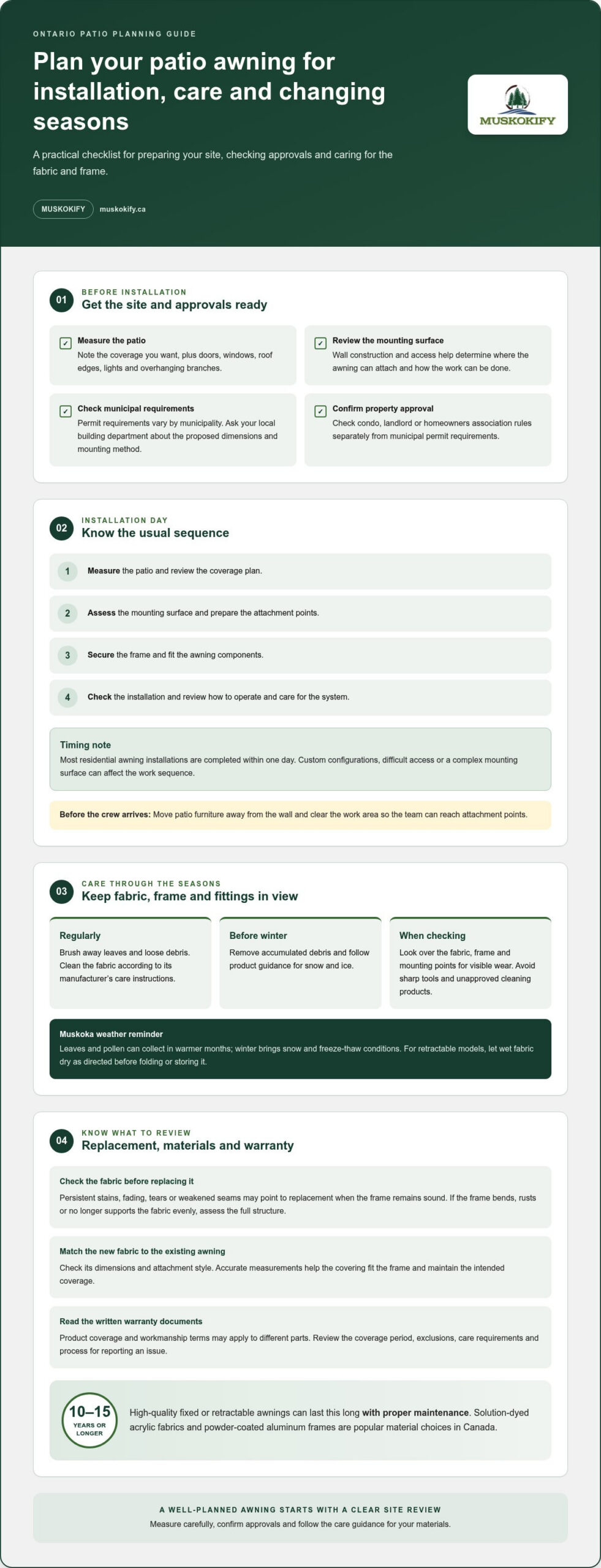
Consider the wall construction and access to the installation area. The installer needs to identify a suitable attachment location and account for nearby doors, windows and roof edges. Before discussing the design, measure the patio and note obstacles such as exterior lights or overhanging branches. These details help define the project scope and installation approach.
Installation Process and Duration
Installation generally starts with measuring the patio and reviewing the proposed coverage. The installer then assesses the mounting surface, prepares the attachment points, secures the frame and fits the awning components. Finally, they check the installation and explain how to operate and care for the system.
Most residential awning installations are completed within one day, depending on project complexity. Custom configurations, difficult access or a complex mounting surface can affect the work sequence. Before the scheduled day, move patio furniture away from the wall and clear the work area. This gives the installation team room to position materials and reach the attachment points.
Installation Warranties
Read the written warranty documents for the awning and installation before work begins. Product coverage and workmanship terms may apply to different parts of the project, so identify which document covers the fabric, frame, operating mechanism and installation work.
Review the coverage period, exclusions, maintenance requirements and process for reporting an issue. Product instructions may, for example, specify particular cleaning or care practices. Keep the warranty documents, operating instructions and maintenance guidance together so you can easily find details about care or coverage later.
Permits and Property Approvals
Do you need a building permit to install a permanent patio awning in Canada? In Ontario, requirements vary by municipality, so contact your local building department with the proposed dimensions and mounting method. The awning’s design and attachment details can help officials assess the project.
Condo, landlord or homeowners association approvals may also apply. If you rent, get your landlord’s written approval before changing an exterior wall. Condo owners can review their governing documents and speak with the property manager about board approval. Homeowners association rules may address exterior appearance or placement. Treat property approvals and municipal building permits as separate steps, and address each before scheduling installation.
Awning lifespan and fabric replacement
High-quality fixed or retractable awnings can last 10-15 years or longer with proper maintenance. To support a longer service life through Ontario’s changing seasons, inspect the fabric and frame regularly, and respond to dirt, moisture and wear early.
Fabric and frame materials
Solution-dyed acrylic fabrics and powder-coated aluminum frames are popular awning materials in Canada. Acrylic fabric is coloured during fibre production, while powder coating forms a finished layer over the aluminum frame. Your material choice affects appearance, upkeep and how the awning suits your patio.
Chemical finishes are applied to acrylic fabrics to increase resistance to UV exposure, according to the Európai Unió. This treatment doesn’t eliminate the need for care: tree debris, dust and moisture can still soil the surface. When planning maintenance for a permanent awning for your patio, consider both the fabric and frame, not just the visible covering.
Maintenance through Canadian seasons
How do you maintain a permanent patio awning in Canadian weather? Brush away leaves and loose debris, clean the fabric according to its manufacturer’s care instructions, and inspect the frame and mounting points for visible wear. Before winter, remove accumulated debris and follow the product guidance for snow and ice.
In Muskoka, leaves and pollen can collect on an awning during warmer months, while winter brings snow and freeze-thaw conditions. Don’t scrape the fabric with sharp tools or use cleaning products without checking the care instructions. Let wet fabric dry as directed before folding or storing a retractable model, since trapped moisture can cause odours or staining.
When to replace fabric
Fabric replacement may make sense when the covering has persistent stains, fading, tears or weakened seams but the frame remains sound. Inspect the whole surface, including seams and edges, and check whether the awning still opens, closes and sits evenly. A small patch of dirt calls for cleaning, not necessarily replacement.
Compare the replacement fabric’s dimensions and attachment style with those of the existing awning. Accurate measurements help match the new covering to the frame and maintain the intended coverage. If the frame bends, rusts or no longer supports the fabric evenly, assess the complete structure before replacing only the fabric.
Custom sizing and fabric choices
Custom awnings are shaped to the patio and mounting area, so record the required width, projection and any obstructions before selecting materials. Note doors, windows, roof edges and nearby branches. These details help define the coverage and fabric dimensions needed for a clean fit.
Choose a colour and fabric finish that suit your home or cottage exterior, then consider how the awning will look against the Muskoka landscape. A well-planned combination keeps the patio visually cohesive and makes future fabric care easier to manage. When planning outdoor updates as part of a broader residential renovation, reviewing projects by custom home builders like TimberworX Construction Group can provide helpful inspiration for aligning exterior additions with your home’s overall design.
Manual and motorized awning options
Choose an operating method based on how often you adjust the shade, who will use the patio, and how easily you can reach the awning. Manual operation keeps the control at hand, while a motor lets you operate it with a button. Either approach can suit a patio, depending on your routine and the installation details.
Manual operation
A manual awning typically opens and closes with a hand-operated crank. Turn the crank to extend or retract the canopy, then stop when it reaches the position you want. This straightforward option suits a patio where the operating point is easy to reach and you don’t expect to adjust the shade repeatedly throughout the day.
Before choosing manual operation, picture a typical afternoon at your cottage. If the sun moves across the seating area, consider whether you’ll want to adjust the canopy as the light changes. Think about who will operate it and whether the crank location is convenient. An accessible control point makes routine adjustments simpler, especially when furniture or a railing sits near the wall.
Motorized operation
A motorized awning opens or closes with powered controls, reducing the effort needed to adjust it. This can be useful when the awning is difficult to reach, spans a broad seating area or needs frequent adjustment as the sun moves. Motorized Screens are another option for outdoor comfort, but screens and awnings serve different purposes.
Plan the control method and power needs before installation. The selected awning design determines which operating options apply, so align the electrical plan with the product rather than assuming every model uses the same setup. A switch can suit a fixed seating area; a remote can be convenient when you want to adjust the canopy from elsewhere on the patio.
How to choose between them
Consider how you’ll use the space through a Muskoka summer. A manual system may suit occasional changes, while powered operation can make repeated adjustments easier. Think about the patio layout, the awning’s reach, control location and who will operate it. These practical details often matter more than choosing the most elaborate mechanism.
Also consider what happens if the power supply is unavailable or the controls need attention. Understand the operating instructions before relying on motorized movement, and learn the manual procedure if the selected system includes one. For either option, keep controls clear of furniture and follow the product’s care guidance. Review the available awning options alongside your patio layout to make a choice that feels natural to use.
Permanent fixed awnings compared with retractable awnings
Fixed and retractable awnings offer different approaches to shade, weather exposure and changing daylight. Choose based on how you use your patio through Ontario’s seasons.
What types of permanent patio awnings are available in Canada? Fixed awnings provide a stationary canopy, often with aluminum or steel framing, while retractable awnings can be extended or put away. The right fit depends on whether you value steady coverage or flexibility.
Fixed Frames and Year-Round Protection
A fixed awning stays in position, creating consistent shade without daily adjustment. Its frame can use durable aluminum or steel, and the structure offers year-round protection, according to the market information. Consider how the canopy will suit your home’s exterior, patio layout and preferred view of the surrounding landscape.
Before selecting a fixed design, review the mounting area, roofline and water flow around the patio. A canopy extending over a dining area, for example, can keep that space shaded throughout the day. Since it cannot be pulled back to admit more direct sun, consider how permanent coverage will affect indoor light through nearby windows.
Water, Structural, and Snow Risks
What are the risks of water leaks, structural damage or snow buildup on a permanent awning? Poorly directed water can collect near the wall or enter gaps, while weak attachment points may strain under the canopy’s load. Snow adds weight, so follow the awning maker’s care instructions and remove snow as directed.
Inspect the frame, fasteners and wall connection as part of seasonal upkeep. Look for movement, corrosion, sagging fabric or water marks near the mounting area. If water runs toward a doorway instead of away from it, address the drainage path before the problem persists. Don’t climb onto the canopy to clear snow; use safe methods recommended for the specific design. For general exterior repairs or help inspecting mounting surfaces around the home, experienced services like American Handyman can assist homeowners with routine maintenance and property upkeep.
A retractable model gives you more control over sun and shade. Retract it when you want natural light or ventilation, then extend it for patio coverage. This flexibility can suit a cottage where sunlight shifts across the deck or you want an open view in cooler weather. A fixed awning keeps its coverage in place without repeated operation.
Choose by considering the seasons and how you use your outdoor space. A fixed canopy may suit a frequently used seating area where steady shade is the priority. A retractable option may work better for a patio where you alternate between full sun, shade and an open view. Compare the mounting location, water flow, exposure and care instructions before deciding. In either case, regular visual checks can help you spot changes early and keep the awning aligned with your home and patio routine.
Do outdoor awnings provide UV sun protection?
Yes, an awning creates shade and reduces direct sun exposure on a patio. Its protection varies with the fabric, coverage, sun angle and exposure from the sides.
UV Protection and Cooling Benefits
A shaded seating area can feel more comfortable on a sunny Ontario afternoon. By blocking direct sunlight overhead, an awning also shades patio furniture and nearby doors or windows. The effect depends on the canopy’s position, projection and fabric, as well as the sun’s changing angle.
Check the fabric details before choosing a covering. Solution-dyed acrylic fabrics are a popular awning material in Canada, and chemical finishes can increase acrylic’s resistance to UV exposure, according to the Európai Unió. Review the fabric information for details about UV performance, colour care and cleaning.
Shade doesn’t block sunlight from every direction. For example, low evening sun can reach beneath a canopy from the west-facing side. Consider the patio’s orientation and where you sit during peak sun, then plan the design and coverage around the areas you use most. Don’t treat an awning as complete protection from sun exposure.
Weather and UV Exposure
How well do permanent awnings withstand snow, wind, rain and UV exposure? Fixed awnings are permanent structures intended for year-round protection, but performance varies by design, materials, mounting and site exposure. Follow the product’s instructions for weather limits and seasonal care.
Ontario conditions can shift from summer rain to winter snow. Check how the awning directs water away from the wall and patio, and keep drainage paths clear of leaves. During snow, follow the manufacturer’s instructions on accumulation and removal. Don’t assume a fixed canopy can carry unlimited weight.
Wind also puts pressure on an awning and its mounting points. Inspect the frame, fabric and attachment area for movement or visible wear, especially after severe weather. For a retractable model, follow its operating guidance during strong winds rather than leaving it extended by default.
UV exposure affects fabric over time, while dirt and moisture can make routine care more demanding. Brush off debris, clean the covering according to its care instructions, and let it dry as directed. In a tree-lined Muskoka setting, check for leaves and pollen during the outdoor season.
For guidance on choosing shade and coverage for your patio, discuss your awning project.
Muskokify: Sunspace Sunrooms
Muskokify helps you shape a more comfortable outdoor living space with solutions tailored to your home or cottage. If an awning provides shade but you want greater shelter from changing weather, consider whether a Sunspace Sunroom better suits the way you use the space. Glass Railings and Aluminum Railings can preserve sightlines around a deck, while Motorized Screens offer another way to manage outdoor comfort.
Start with your priorities: open views across the lake, more protection around a seating area, or a transition toward a sunroom. The right direction depends on your property and how you want to enjoy the seasons. Contact Muskokify to discuss your outdoor living project.
Shape a patio that feels like yours
Your patio should suit the way you live, from quiet mornings overlooking the lake to long summer evenings outdoors. Before choosing a permanent awning for your patio, picture how you want the space to feel and what you want to see from it. A clear vision can guide decisions about coverage, appearance and how the structure relates to your home.
Note the patio’s orientation, the views you want to preserve and the areas where shade would make the biggest difference. These details provide a useful starting point for discussing an awning design suited to your property and outdoor routine.
When you’re ready to explore the next step, contact Muskokify about your patio awning. Give your outdoor space a thoughtful beginning, and imagine the seasons ahead with a little more comfort.
Frequently Asked Questions
How long will installation take?
Most residential awning installations are completed within one day, depending on project complexity. Before installation, clear the patio and ensure the exterior wall is accessible. If the awning will sit near a light, downspout or window, point these features out during the layout review. This preparation helps the installer assess the work area and position the awning in relation to nearby features.
What does an awning do?
An awning creates a shaded area beside your home, making a patio more comfortable for outdoor meals or relaxing. It can also help shield nearby doors and windows from direct sun. Picture where you place your table or chairs, then consider how overhead shade might improve that spot. An awning doesn’t enclose the space, so the patio stays open to fresh air and the surrounding landscape.
What should I consider before choosing an awning design?
Start with the patio layout and how you plan to use it. Note where people walk, where furniture sits and which doors need to remain clear. Then consider the home’s exterior and how the awning will look from inside and outside. If your patio overlooks a lake or wooded view, think about how the canopy’s position can frame the scenery while providing useful shade.
What materials and frames are best for a durable patio awning?
The best choice depends on the awning’s exposure, the care you’re comfortable providing and how its frame will attach to your home. Review the product’s care instructions and material information before choosing. Consider the patio’s surroundings too: a cottage beneath trees may need more frequent debris removal than an open, exposed deck. Match the design to the setting and follow the manufacturer’s upkeep guidance.
How do permanent awnings compare with retractable awnings and pergolas?
A fixed awning provides consistent overhead coverage, while a retractable model lets you change how much open sky is above your patio. A pergola with a louvered roof offers adjustable shade through its roof design. Consider how often you want to alter the sunlight and whether you prefer a fixed silhouette or a more adaptable feature. The patio layout and your preferred view can help guide your choice.
What size and projection should I choose for a patio awning?
Measure the area you want covered, then note nearby windows, doors and walkways. Patio awnings commonly project between 1.5 and 4 metres, with about 3.5 metres identified as a common projection. Treat that as a planning reference, not a required dimension. For a clearer picture, outline the intended shaded area with removable markers and check that it leaves comfortable room to move around.
How are permanent patio awnings installed and attached safely to a house?
An installer measures the planned coverage, assesses the exterior wall and positions the frame for attachment. The attachment method needs to suit both the wall and awning design. Before work starts, point out hidden utilities, exterior fixtures and areas where water runs off the roof. In Ontario, building permit requirements vary by municipality, so contact your local building department about the proposed installation and its location.