
Wind Proof Retractable Screens: The 2026 Waterfront Buying Guide
Investing in a heavier mesh will not stop your patio screens from blowing out when sudden squalls sweep across open water. If you spend your summers on the lake, you already know the frustration of watching ordinary screens pull free from their side tracks during an afternoon storm, letting insects swarm your porch while you worry about costly motor damage. True wind resistance requires captive edge retention rather than standard gravity channels. That is why engineered wind proof retractable screens have become essential for exposed waterfront living.
You shouldn’t have to sacrifice your panoramic water views behind heavy storm shutters or fixed glass just to escape unpredictable gusts. In this waterfront buying guide, you’ll discover how engineered wind-resistant retractable screens protect your lakeside patio from sudden weather shifts while keeping your sightlines completely open. We examine certified track retention mechanisms, automatic wind sensors, and structural mounting requirements so you can choose the ideal custom creation for your shoreline home.
Key Takeaways
- Understand why captive edge retention keeps wind proof retractable screens locked firmly in their side channels while standard screens blow out during summer squalls.
- Learn how automatic wind sensors and IP67 waterproof-certified motor systems protect screen assemblies from sudden gusts when storms roll in over open water.
- Discover how engineered structural profiles support continuous openings up to 40 feet wide without compromising your lake views.
- Find out why professional site consultation and laser-level squaring are essential to prevent mesh binding in high-wind waterfront environments.
- Follow a practical checklist to evaluate prevailing lake winds, opening dimensions, and track mechanics tailored to your specific cottage property.
What Makes Retractable Screens Truly Wind Resistant?
True wind-resistant screens use captive edge retention technology, mechanically locking the fabric edges inside structural side channels rather than relying on unanchored mesh weight.
Waterfront living exposes outdoor spaces to rapid weather shifts. When gusts sweep across open bays, standard drop screens fail because basic floating splines simply sit inside open channels. Without positive mechanical locking, moderate winds pull the mesh outward. This releases insects into your sitting area and leaves the fabric fluttering violently. Genuine wind proof retractable screens manage both positive wind pressure pushing against your patio and negative pressure suction pulling fabric away from the building framing.
The Mechanics of Edge Retention Tracks
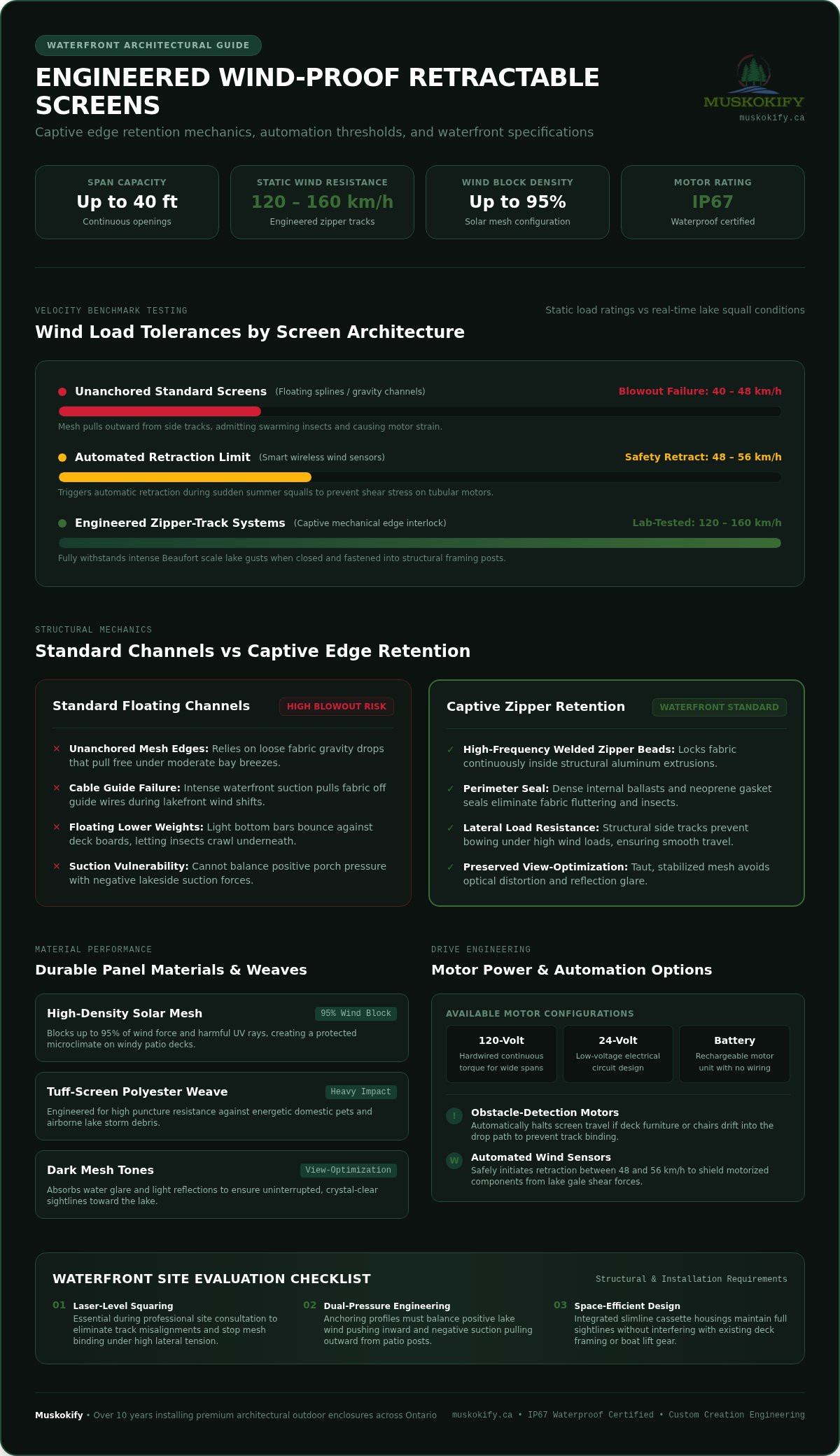
Modern wind resistance relies on continuous mechanical interlocks. High-frequency welded zipper beads run down the entire height of the mesh, securing it inside heavy-gauge aluminum extrusions. This stops fabric blowout even during sudden waterfront squalls. Unlike basic floating weights, engineered bottom rails use dense internal ballasts and neoprene gasket seals. This prevents the lower bar from bouncing against deck boards or letting bugs crawl beneath. Structural side tracks resist bowing under lateral load, keeping the mesh taut and protecting your view-optimization.
Understanding Wind Ratings and Testing Standards
Screen performance varies dramatically depending on mechanical anchoring and track design:
- Unanchored standard screens: Often fail or pull out of side guides at wind speeds between 40 km/h and 48 km/h.
- Engineered zipper-track systems: Lab-tested to withstand static wind loads exceeding 120 km/h up to 160 km/h when closed and fastened into solid structural posts.
- Automated protection limits: Wireless sensors safely trigger screen retraction when sustained winds cross 48 km/h to 56 km/h, preventing excessive shear stress on the tubular motor.
Traditional screened porch designs relied on fixed mesh nailed to wooden frames, which blocked airflow control and required seasonal repairs. Modern motorized screens use durable panel materials that handle intense Beaufort scale lake gusts without tearing, giving you complete climate protection with touch-of-a-button flexibility.
Key Features to Compare Before Buying Wind-Resistant Screens
Selecting the right wind proof retractable screens means balancing heavy-duty engineering with effortless daily operation. Waterfront exposure places continuous physical strain on exterior fixtures. Evaluating structural edge retention, fabric weave density, drive mechanisms, and automated weather controls ensures your investment delivers lasting comfort rather than seasonal headaches.
Track Retention Systems: Zipper vs Cable Guides
Side retention design separates true storm-rated systems from decorative shades. Cable guide systems look sleek and minimalist, making them a viable choice for sheltered inland patios or covered garden loggias. However, open lakefronts generate intense suction forces that pull unanchored fabrics right off guide wires. For exposed waterfront properties, captive zipper retention channels remain the gold standard, sealing the perimeter against gale gusts and persistent blackflies.
Screen Mesh Options: Balancing Wind Block and Visibility
Mesh selection directly controls air porosity, thermal comfort, and optical clarity:
- High-density solar mesh: Blocks up to 95% of wind force and harmful UV rays, creating a microclimate on breezy days.
- Tuff-screen polyester weaves: Provides exceptional puncture resistance against energetic pets and airborne lake debris.
- Dark mesh tones: Delivers superior view-optimization by absorbing reflections, giving you a crisp, clear view of the water.
Motor Power and Smart Automation Options
Power configurations directly influence reliability when screens must operate under environmental tension. You can outfit motorized screens with 120-volt hardwired motors, 24-volt low-voltage options, or rechargeable battery packs. For wide lakefront bays facing high pressure on the Beaufort wind force scale, 120-volt motors deliver the continuous torque required to raise and lower tensioned fabric smoothly. Built-in obstacle-detection motors halt travel if deck chairs drift into the drop path, preventing track binding. When paired with smart wind sensors that automatically retract the mesh during sudden squalls, your outdoor space stays protected even when you aren’t at the cottage. To determine the right track and motor combination for your property, book a professional site consultation to assess your shoreline conditions.
Designing Screen Layouts for Lakefront Cottages and Patios
Waterfront properties across Muskoka, Georgian Bay, and Lake Simcoe deal with extreme microclimates. Open water allows storm fronts to gather speed, driving winds directly against shoreline structures with 30% to 50% more pressure than inland lots experience. Proper layout planning ensures your wind proof retractable screens withstand severe weather without compromising the architecture of your cottage.
Positioning Screens Against Prevailing Waterfront Winds
Layout success starts by identifying windward versus leeward exposures on your porch. Prevailing winds blowing across open water create direct positive loads on outward-facing openings, while side elevations experience strong negative suction. Integrating screens alongside solid cottage walls or timber returns breaks up high-velocity crosswinds naturally. This planning also resolves downdrafts deflected off steep, two-storey rooflines and upper boathouse sundecks before turbulence reaches your outdoor living area.
Spanning Large Openings Without Sacrificing Stability
Expansive sightlines define modern cottage living, but wider bays require serious structural forethought:
- Reinforced intermediate posts: Splitting continuous wall spans protects tracks from excessive deflection during heavy storms.
- Calibrated internal roller tubes: Large spans feature stiff, oversized internal roller drums to eliminate fabric sagging and ripple lines.
- Heavy extruded bottom rails: Weighted bottom bars cut screen deflection by up to 68% compared to lightweight hollow rails.
For extensive entertaining spaces, engineered motorized screens can bridge openings of up to 40 feet in continuous spans. These setups rely on heavy-gauge extruded aluminum housings fastened directly into solid header beams or structural rim joists to maintain rigidity.
Combining Retractable Screens with Pergolas and Sunrooms
Integrating screens into existing structures requires a space-efficient design that respects seasonal shifts. Cassette housings can mount flush inside the framework of custom pergolas, keeping motorized components hidden until deployed for evening pest defence. You can also pair drop screens with full Sunspace sunrooms or the WeatherMaster Vertical 4-Track system. This combination lets you enjoy breezy, insect-free afternoons, and then quickly close the vinyl panels when fall chills and driving rains arrive.
Preparing for winter in Ontario means planning for snow loads and freezing moisture. Sealed aluminum cassettes protect retracted mesh from wind-driven snow, while integrated moisture management prevents meltwater from freezing inside the retention channels during the harsh spring freeze-thaw cycle.
Professional Installation vs DIY Kits for Wind-Exposed Spaces
Waterfront wind loads ruthlessly expose structural weak points. While generic retail packages market easy weekend setups using plastic clips and light rails, these products lack the engineering required for open lakeshores. Genuine wind proof retractable screens function as structural additions to your porch envelope. They require exact calibration to hold heavy wind pressures without binding or ripping free from the building face.
The Engineering Precision Required for Track Alignment
Zipper retention tracks demand absolute mechanical precision across three planes. A plumb variance of just two millimetres along a twelve-foot drop track causes the captive zipper edge to wedge inside the aluminum housing. That friction triggers safety stops or burns out internal drive motors. Experienced installers use digital laser squaring to align tracks perfectly, compensating for seasonal deck movement and unlevel flagstone surfaces caused by the Ontario freeze-thaw cycle.
Substrate Anchoring and Wind-Load Distribution
A wind-rated screen is only as dependable as the framing beneath it. The 2024 Ontario Building Code governs wind load calculations and structural post anchoring for exterior enclosures across Ontario municipalities. Fastening heavy-gauge tracks directly to decorative cedar trim or hollow cladding invites structural failure during high winds. Secure installations demand engineered anchoring into solid building elements:
- Solid timber headers and rim joists: Heavy lag screws distribute horizontal wind forces straight into primary framing rather than cosmetic boards.
- Stone pillars and masonry: Specialized mechanical masonry anchors hold side tracks rigid against outward suction pressures.
- Structural aluminum framing: Machine-threaded fasteners secure tracks into support posts without loosening during continuous vibration.
Professional installation also incorporates integrated moisture management behind the cassette housing, deflecting driving rain away from your siding to prevent rot. Licensed installers ensure all 120-volt hardwired connections feature IP67 waterproof-certified electrical seals, shielding sensitive electronic components from horizontal lake spray. To ensure your exterior screens meet regional building codes and withstand brutal shoreline weather, schedule a professional site consultation before starting your project.
How to Choose the Ideal Wind Proof Screen System
Selecting the ultimate outdoor enclosure requires looking beyond standard catalogues. Waterfront living calls for systems designed around your daily habits and your cottage’s unique exposure to squalls. Investing in tailored wind proof retractable screens transforms an ordinary deck into a serene, three-season retreat where you control airflow, insect intrusion, and sunlight.
Step-by-Step Selection Checklist for Homeowners
Work through these practical steps before finalizing your outdoor design:
- Record directional exposure: Identify which deck openings face prevailing offshore squalls and which remain protected by tree lines or natural land contours.
- Select your operating drive: Choose 120-volt motorized systems for effortless push-button operation on large bays, or manual spring-assist tracks for smaller, remote entryways.
- Pick your mesh weave: Decide between tight solar weaves for intense thermal shade and lighter open fabrics that prioritize natural breezes while blocking gnats.
- Determine your housing profile: Choose exposed surface-mount cassettes for retrofits, or recessed hidden housings built directly into timber headers during a remodel.
- Coordinate factory finishes: Select from premium durable colour coatings that complement your exterior window trims and stonework.
Enhancing Your Entire Outdoor Living Envelope
A truly functional cottage layout combines several architectural solutions into one seamless perimeter. Pairing retractable drop screens with cottage security shutters provides an extra layer of seasonal defence. While your screens guard against afternoon breezes and summer mosquitoes, motorized rolling shutters lock down your exterior porch bays during harsh winter months and severe off-season ice storms.
Below the screen line, view-optimization remains the highest priority for Muskoka waterfront properties. Replacing obstructive wooden balusters with topless luxury glass railings keeps your lake horizons open and clean. When built with laminated glass panels, these railings act as an immediate ground-level wind break without cutting off light transmission or water reflections.
Every cottage shoreline possesses distinct topography, wind corridors, and structural requirements. Booking a professional site consultation ensures your opening spans, structural headers, and wind load engineering align perfectly, delivering a custom creation tailored for decades of dependable lakeside enjoyment.
Transform Your Lakeside Porch for All-Season Peace of Mind
Protecting your open-air porch from harsh shoreline weather doesn’t mean sacrificing the views you cherish. With captive zipper tracks, automated wind sensors, and solid structural anchoring, custom wind proof retractable screens keep your living area free from gale gusts and pests while maintaining open sightlines across the water.
At Muskokify, we bring over 10 years of precision exterior installation experience across Ontario cottage country. As an authorized Sunspace Sunrooms dealer serving Muskoka and surrounding lake regions, our custom-engineered screen systems are built to endure severe waterfront weather exposure and seasonal freeze-thaw cycles. Whether you’re upgrading an existing porch frame or planning a new lakeside pavilion, our team ensures every track is laser-squared for smooth, reliable performance.
Ready to reclaim your shoreline views in comfort? Schedule your professional site consultation with Muskokify today and create an outdoor living space tailored to your lifestyle.
Frequently Asked Questions
Can wind proof retractable screens stay down during heavy storms?
Yes, engineered wind proof retractable screens can remain deployed during moderate squalls if they feature captive zipper-track retention. However, leaving them down during severe gale events is not recommended. While the locked mesh handles high static pressure, flying storm branches or excessive pressure differentials can stress your framing. Retracting the fabric into its protective headbox during violent weather peaks preserves the mechanical assembly for years to come.
How much wind can a motorized retractable screen withstand before retracting?
Certified zipper-track installations withstand static wind loads up to 120 km/h to 160 km/h when closed. Despite this high tolerance, automated wind sensors trigger retraction earlier, typically between 48 km/h and 56 km/h. This automated threshold prevents severe lateral shear forces from straining the internal drive motor and fabric seams, keeping the screen protected even if a squall hits while you are away from the cottage.
What happens if wind blows the screen mesh out of its track?
If an extreme gust dislodges an engineered captive zipper edge, modern guide funnels allow the system to self-correct during the next cycle. You simply roll the screen completely up into its aluminum cassette, which reseats the zipper bead into the upper track entry. However, if standard non-retained screens blow out, the floating spline usually tears or bends the channel, demanding manual repairs and track realignment.
Are wind-resistant retractable patio screens effective at keeping out blackflies and mosquitoes?
They offer exceptional pest defence compared to conventional screens. Because high-wind designs use continuous zipper channels welded along the fabric borders, there are no side gaps for tiny insects to squeeze through. Combined with a dense bottom gasket that forms a tight barrier against your deck boards, these systems completely block stubborn cottage pests like midges, blackflies, and mosquitoes from entering your porch enclosure.
Can motorized screens be recessed into my porch ceiling or beams?
Yes, recessed ceiling cavities provide a clean architectural finish. During the framing stage of a cottage porch or covered deck, builders create dedicated pockets inside structural headers or timber rim joists. The protective aluminum headbox sits entirely flush inside the ceiling, keeping motorized components hidden from sight. When retracted, only your view remains, leaving sightlines clear across Lake Simcoe, Georgian Bay, or Lake Muskoka.
Do retractable screens require special winterization in Ontario cottage country?
Winterization is straightforward and takes minimal effort. Before the first deep freeze, ensure the mesh is completely dry and brush away any lingering pollen or pine needles. Retract the screen fully into its powder-coated protective cassette so blowing snow and ice cannot accumulate on the roller. Powder-coated aluminum extrusions resist corrosion from snowmelt, easily handling the demanding freeze-thaw cycles in regions like Parry Sound and Haliburton.
Is a manual retractable screen as wind-resistant as a motorized screen?
A manual system matches the wind rating of a motorized unit if both share the exact same captive zipper-track hardware. The main difference lies in span capacity and daily convenience. Manual pull-downs work best for narrower bays under twelve feet, as wider manual units become heavy to pull evenly against track friction. For large waterfront bays, motorized systems deliver consistent tension and balanced deployment without manual effort.