
Best Deck Railing Materials: Muskoka Buying Guide 2026
Why spend a summer overlooking Lake Muskoka if your deck railing blocks the view? If you’re wondering what is the best material for deck railings, the answer depends on what matters most to you: open sightlines, less upkeep, a traditional look, or a railing suited to seasonal weather.
Choosing between glass, aluminum, wood, and other options can feel like a trade-off. You want a railing that feels safe and complements your home, without adding more maintenance than you’re ready for. This guide compares common materials by visibility, care, durability, and how they suit properties across Muskoka and nearby communities, from Gravenhurst to Huntsville and Parry Sound. You’ll also find practical points to consider before planning installation, including your deck’s structure, exposure to moisture and freeze-thaw cycles, and applicable building-code requirements. With a clear view of the differences, you can choose a design that protects your deck and keeps the landscape in sight.
Key Takeaways
- To decide what is the best material for deck railings, weigh your priorities for views, privacy, visual warmth, and upkeep.
- Compare glass, aluminum, and wood by how each material shapes your deck’s appearance and suits your property.
- Look beyond the panel: the railing system, installation, and project conditions all affect how it performs.
- Use a four-step process to assess your priorities, exposure, material options, and design before planning installation.
- Explore how custom glass or aluminum railings can suit your Muskoka property, backed by Muskokify’s more than 10 years of glass railing experience across Ontario.
What Is the Best Material for Deck Railings? Start With Your Priorities
On a Muskoka cottage deck, a railing can frame the view of the lake, or become a more noticeable visual boundary. But not every property is waterfront, and a railing that suits a wooded lot or a town home may serve you better than one chosen for an open panorama. So, what is the best material for deck railings? It’s the option that fits your deck, its exposure, the look you want, and the upkeep you’re comfortable with.
Choose your railing by balancing the view, appearance, privacy, and maintenance with your deck’s practical needs. Durability matters, but so do transparency, visual warmth, and how the railing complements your home.
Which railing materials should you compare?
Start with glass and aluminum, two options Muskokify designs and installs. Glass can support view‑optimization where you want the scenery to remain prominent; the panel layout and supporting posts still affect how open the railing looks. Aluminum offers a clean-lined alternative, with a more visible frame. Wood and steel are useful comparison categories too, each bringing a distinct visual character to a deck.
Look beyond the main material. Panel design, post placement, rails, and mounting all shape the finished appearance. For example, a glass panel with visible framing can feel different from a design with less visual interruption. Muskokify’s glass railing systems offer one way to explore a more transparent look, while the overall design can be tailored to the deck and its surroundings.
What does ‘best’ mean for your deck?
Choose your leading priority before comparing styles. Do you want to preserve a lake or tree-line view? Reduce routine upkeep? Create more privacy? Add the warmth of a traditional material or match the architecture of your home? Rank these preferences, then consider how the deck is used and exposed to rain, snow, and seasonal temperature changes. A sheltered deck and an exposed lakeside one may call for different design considerations.
Keep appearance separate from practical requirements. Your preferred colour or level of transparency is a design choice; the deck’s structure, intended use, and applicable building code requirements affect planning. Depending on the project, Guard rails may be subject to building permits and local requirements. A professional site consultation can help assess the deck, including its rim joists and mounting conditions, before a railing design is finalized.
With those priorities clear, you’ll have a more useful basis for comparing how each material looks and performs on your property.
Glass vs. Aluminum vs. Wood: Compare Deck Railing Materials
A clear comparison helps turn a broad choice into a practical one. Use this table to see how glass, aluminum, and wood may suit different views and architectural styles. The right fit depends on the whole design, not just the material.
| Material | View | Visual character | Upkeep | May suit |
|---|---|---|---|---|
| Glass | Offers transparency for lake, forest, or garden views; panel layout affects how open it feels. | Light, contemporary, and visually discreet. | Plan for routine cleaning; actual care depends on the system and site conditions. | Decks where preserving the scenery is a priority. |
| Aluminum | Creates a more defined boundary than clear panels. | Structured, streamlined, and suited to a coordinated architectural finish. | Consider the finish and the deck’s exposure when planning care. | Homes where a clear railing line and a clean look matter. |
| Wood | Solid rails and pickets create a more noticeable visual boundary. | Familiar, natural, and traditionally styled. | Care needs depend on the material, finish, and weather exposure. | Decks where natural warmth and a classic appearance take priority. |
When does glass make sense for deck railings?
Glass can keep a view of Lake Muskoka, a tree line, or a garden in sight rather than dividing it with repeated pickets. That transparency supports view‑optimization, but it doesn’t make every design identical. Panel size, posts, rails, mounting, and glass construction all influence the finished appearance and performance. Explore Muskokify’s glass railing systems as you consider how openness and framing could work on your deck.
When should you consider aluminum or wood?
Choose aluminum if you prefer a defined railing line and a coordinated finish that complements your home’s architecture. It offers a distinct visual structure without the natural grain of wood. Wood may suit you if you want a familiar, traditional deck appearance and the warmth of a natural material. For a clean-lined metal option, review the available aluminum railing options and consider how the posts and rails will look against your home.
So, what is the best material for deck railings? Start with the view you want, then compare the look and care considerations against your property’s exposure. Glass, aluminum, and wood each create a different experience; your preferred balance is the deciding factor.
Will Your Deck Railing Hold Up to Muskoka Weather and Everyday Use?
Glass may look delicate beside a sturdy timber deck, but railing glass isn’t the same as ordinary window glass. Safety glass is made for specific applications, and the right choice depends on the railing design and its requirements. Just as important, the posts, connections, mounting, and installation work together as one system.
A railing’s safety depends on the complete system, its installation, and the conditions at your deck, not on material alone. That’s why the question “what is the best material for deck railings” should include more than a comparison of glass, aluminum, and wood.
How should you think about safety glass?
Tempered glass is heat-treated to make it stronger than ordinary glass. If it breaks, it tends to crumble into smaller pieces rather than sharp, large shards. Laminated glass bonds two layers with a plastic interlayer, which helps hold the glass together if it breaks. Some railing configurations use tempered glass, while others use laminated glass. The appropriate type depends on the system and its design.
Muskokify’s topless glass railings use 10 mm heavy-duty tempered safety glass. That specification applies to this configuration; it shouldn’t be assumed for every glass railing. The complete system must suit the deck and applicable building code requirements. A professional site assessment can account for the deck structure, mounting points, and project conditions.
What maintenance and exposure questions matter?
Think about the setting through every season. A deck beside a wind-exposed shoreline may face different conditions from a sheltered deck among trees. Rain, snow, moisture, and the freeze‑thaw cycle can all affect how railing components and connections perform over time. These factors call for careful design, not a blanket claim that one material always holds up best.
Consider how you’ll use the deck, too. Is it a seasonal cottage gathering place or an outdoor area you use often? How much privacy do you want? Glass keeps the view visible, but you may notice water spots or fingerprints more readily on clear panels. Aluminum creates a more defined boundary, while wood brings a natural visual texture. Each offers a different balance of appearance and upkeep.
During a site consultation, Muskokify considers the deck’s exposure, intended use, and railing layout to help shape a suitable design. Before choosing, decide what you’re comfortable cleaning, how open you want the view to feel, and how the railing should complement your home. Those answers help guide the material choice without treating any option as maintenance-free.
How to Choose the Right Deck Railing Material for Your Property
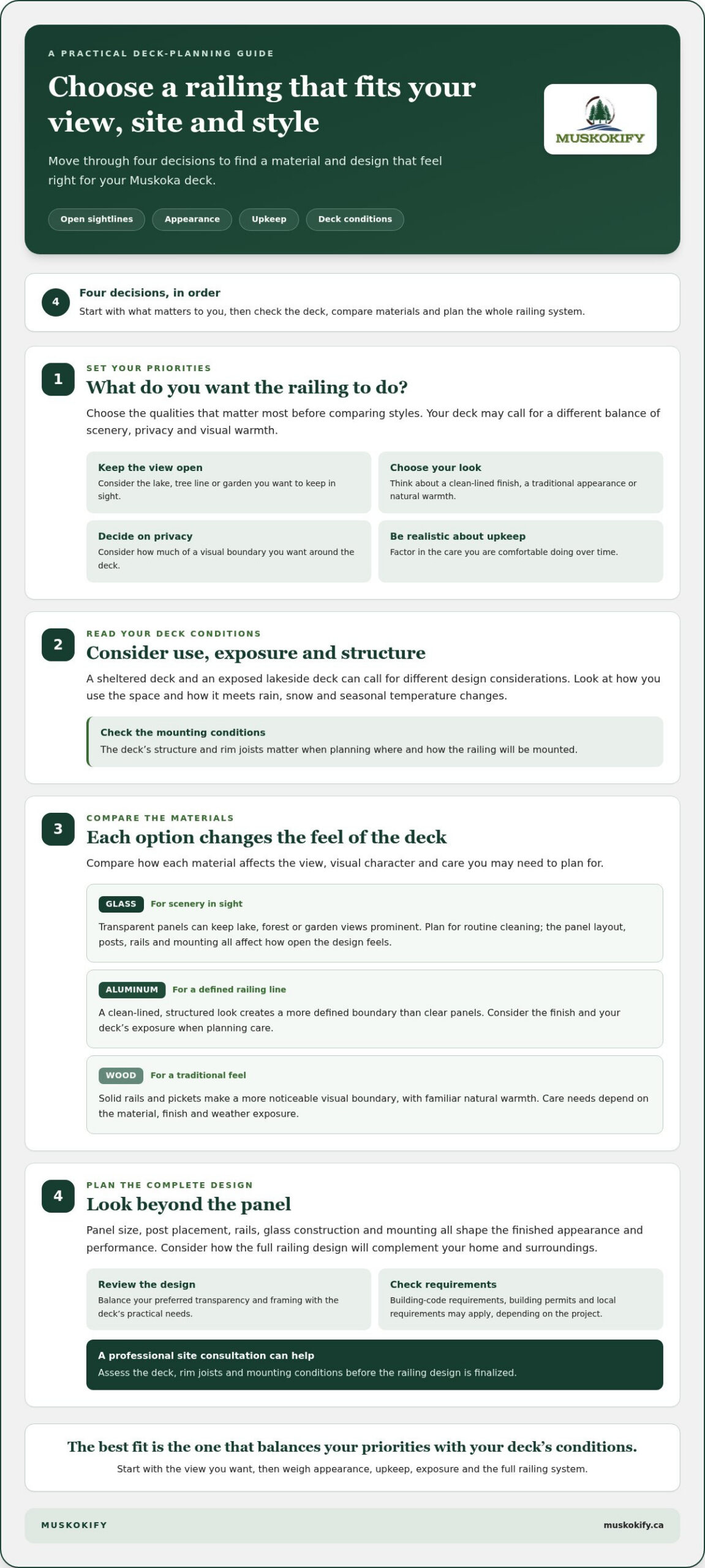
A clear selection process helps you move from inspiration to a railing plan that suits your deck. Start with how you want the space to feel, then account for the structure and conditions at your project location.
Set your priorities, assess exposure, compare materials, then plan the design and mounting.
- Identify your priorities. How important is an uninterrupted view compared with privacy, a defined boundary, or the visual warmth of a natural material?
- Assess exposure. Consider wind, moisture, seasonal use, and whether the deck is sheltered or open to the elements.
- Compare materials. Weigh how glass, aluminum, or wood fits your preferred appearance and upkeep expectations.
- Plan the design. Review the deck layout, structure, rim joists, and intended mounting points before settling on a system.
Match railing material to your view and architecture
If preserving a scenic outlook is your first priority, consider glass. Clear panels can keep a lake, forest, or garden in view, while panel layout and framing influence how open the railing feels. For a more defined line, compare aluminum profiles and finishes with your cottage’s roofline, exterior details, and deck design. If you’re collecting ideas, Glass Deck Railing Ideas for Cottages can help you picture different ways glass might complement a cottage setting.
Plan the site details before choosing a system
A railing plan should respond to the actual deck, not just a preferred material. Note where people enter and move through the space, where the railing will mount, and how the structure and surrounding exposure may shape the design. A professional site consultation brings these details together, helping align the railing layout with the deck and its surroundings.
Bring your priorities into the design conversation: the view you want to preserve, the amount of privacy you prefer, and the look you want alongside your home. Muskokify’s glass and aluminum railing designs can be tailored to the project, with the site assessment helping guide the system and layout.
Ready to turn your priorities into a plan for your deck? Discuss your railing project with Muskokify.
Explore Custom Glass and Aluminum Deck Railings in Muskoka
Glass and aluminum can both suit a Muskoka deck, but they create different experiences. Glass supports a clearer sightline when you want to keep the lake, treetops, or open landscape in view. Aluminum gives the railing a more defined presence and a clean-lined look. Neither is the universal answer. The right choice reflects your priorities, your home’s architecture, and the conditions at your property.
Muskokify has more than 10 years of experience selling and installing glass railings across Ontario, and also designs and installs aluminum railing systems. A professional site consultation helps connect your preferred look with the layout and structure of your specific deck.
What can a custom railing design address?
Small design decisions shape the view and character of a railing. Panel selection, post placement, mounting, and finish all influence how the system looks beside your home and across the surrounding scenery. For example, a layout with fewer visual interruptions may support view-optimization, while a more prominent frame can create a stronger boundary. The design should balance those goals with the deck’s structure and intended use.
Rather than choosing a configuration based on appearance alone, consider how it will sit against the cottage exterior and where you spend time on the deck. Muskokify tailors railing designs to the property, so details can be considered in context rather than treated as one-size-fits-all choices.
What happens during a professional consultation?
At the project location, the conversation can cover your deck layout, how you use the space, the view you want to keep, and the visual style you prefer. The site assessment also helps inform mounting locations and how the railing plan relates to the deck’s structure. These details guide design and installation planning for the specific property.
Before the conversation, think about what matters most: an open view, a more defined edge, or a railing that complements the home’s lines. If you’re weighing what is the best material for deck railings, sharing those priorities helps focus the design discussion on your needs rather than a general ranking of materials.
Bring your ideas and questions together, then plan your railing project with Muskokify. A considered design can make your deck feel secure and complete while keeping the setting that drew you outdoors in view.
Choose a Railing That Feels Right for Your Muskoka Deck
The answer to what is the best material for deck railings depends on the view you want, your home’s style, and the upkeep you’re comfortable with. Glass can keep the scenery in sight, aluminum creates a clean, defined line, and wood offers a familiar, natural look. Your deck’s structure, exposure, railing design, and installation matter just as much as the material.
Muskokify designs and installs glass and aluminum railing solutions for homes and cottages, with more than 10 years of experience selling and installing glass railings across Ontario. A professional site consultation can help shape a plan around your deck, preferred view, and architectural details.
Ready to make your deck feel more like your own? Discuss your deck railing project with Muskokify. With your priorities and property in mind, you can move towards a railing that complements your home and makes time outdoors even more enjoyable.
Frequently Asked Questions
What is the best material for deck railings?
There’s no single best material for every deck. If you’re deciding what is the best material for deck railings, start with your priorities: glass suits an open view, aluminum creates a defined, streamlined look, and wood offers a traditional appearance. Consider your deck’s exposure, privacy needs, and the upkeep you prefer. The complete railing system and its installation also matter, so assess those alongside the material.
Are glass deck railings safe?
Glass railings can be designed with safety glass as part of a complete railing system. Tempered glass is heat-treated to increase its strength, while laminated glass bonds layers with an interlayer. The right glass and installation depend on the system and the project’s requirements. Include the applicable building code and the specific deck in the planning process, rather than relying on a general answer to determine whether a design is suitable.
Is aluminum a good material for deck railings?
Aluminum can be a good fit if you want a clean, structured railing appearance. Its suitability depends on the deck’s exposure, the finish and profile you prefer, and how the system mounts to the structure. Compare the construction and care guidance for the specific railing system instead of assuming all aluminum railings perform alike. Consider how the lines and finish will complement your home or cottage, too.
How much maintenance do glass deck railings need?
Clean glass panels when water marks, dust, or fingerprints begin to affect your view. How often you’ll want to clean them depends on weather, exposure, and how noticeable marks feel to you. Think about whether you’re comfortable caring for visible panels and whether transparency is worth that attention. Ask for care guidance for the selected system, and don’t assume glass is maintenance-free or follows a fixed cleaning schedule.
What happens if deck railings are exposed to Muskoka winters?
Include seasonal use, moisture, and the freeze-thaw cycle in your railing plan. These conditions alone don’t make one material the best choice for every property. The complete system, installation, and deck’s exposure all affect the design decision. Consider whether your deck is sheltered or open to wind and weather, how you use it through the seasons, and how the railing will connect to the deck structure.
Do deck railings need to meet building code requirements in Ontario?
Building code requirements may apply to deck railing projects, and the details depend on the project and applicable rules. Don’t rely on a general online answer to establish the required design for your deck. Include code requirements and any building permits in your planning, and make sure the railing design addresses your project’s conditions. A professional site consultation can help bring the deck layout and railing plan into the same conversation.
Can glass and aluminum be combined in deck railings?
Glass panels and aluminum components can be considered together in a railing design. The balance depends on how much transparency you want, the visual style you prefer, and the system configuration. Glass can preserve sightlines, while aluminum elements create a more defined frame. Review the complete design, including panel layout and mounting, to see how it will suit your home or cottage. Muskokify serves property owners in Gravenhurst, Huntsville, Parry Sound, Midland, Tiny, Collingwood, Orillia, Barrie, Dorset, Haliburton, Mactier, and Coldwater.