
How to Secure a Cottage in the Off-Season: A Practical Guide
A locked door is only one part of a safer cottage. Knowing how to secure a cottage in the off-season means thinking in layers, especially when snow covers the road, storms roll across the lake, and your Muskoka property may sit empty for weeks.
It’s easy to overlook an unsecured window during a rushed departure. Winter weather can also hide damage or make a problem harder to spot. A consistent routine helps you check vulnerable entry points and leave with greater peace of mind.
This guide walks you through a practical plan, from your final inspection to arranging check-ins. You’ll learn how to secure doors and windows, reduce visibility of valuables, choose monitoring measures, and account for seasonal risks. It also explains how physical protection, including security shutters, can complement your other measures. Whether your cottage is in Gravenhurst, Huntsville, Parry Sound, Midland, Tiny, Collingwood, Orillia, Barrie, Dorset, Haliburton, Mactier, or Coldwater, a clear plan can help you feel more prepared until your next visit.
Key Takeaways
- Build your plan around entry points, visibility, monitoring, and scheduled checks, with a clear role for each layer.
- Use a departure routine to check openings, valuables, lighting, and key contacts before leaving.
- Compare cameras, alarms, lighting, physical barriers, and property checks to understand what each can and can’t do for a seasonal cottage.
- Record existing concerns during your final walkthrough, then confirm every door and window is closed.
- Consider fitted security shutters as a physical layer designed for your cottage’s openings and lakeside setting.
Why off-season cottage security needs more than a locked door
Learning how to secure a cottage in the off-season starts with looking beyond the lock. A sound plan combines preparation before you leave, ways to monitor the property, and physical protection for doors, windows, and other openings. Each layer addresses a different concern, from unauthorized entry to damage that can develop while the cottage sits empty.
That matters in Muskoka, where winter weather can cover familiar paths and a cottage may be a long drive from your everyday routine. If a problem starts between visits, you may not notice it right away. Security measures can reduce risk, but no single measure promises complete protection. The aim is to make your property harder to access unnoticed and easier to check while you’re away.
What changes when your cottage sits empty?
A long absence can stretch the time between noticing a concern and responding to it. An open or damaged window may create an entry concern. Separately, snow load, frozen pipes, or a leak can threaten the building even when nobody has entered. These risks need different responses, so don’t treat security as only a question of theft.
Consider a small leak that starts during a cold spell. If it goes unseen, water may continue reaching the same area until a scheduled visit or your return. A check-in can help bring an issue to your attention sooner, though it can’t prevent every problem. Before leaving, note existing concerns and decide how someone will observe the property through the season.
Why one security device is rarely a complete plan
A camera may show activity, and an alarm may send an alert, but neither strengthens a loose door or confirms that a window is secured. Physical barriers address access. A consistent routine helps you close and secure the cottage before leaving. Periodic checks can reveal changes, including weather-related damage. Together, these steps cover more than any one device can.
Layered cottage security combines secure entry points, sensible routines, monitoring, and scheduled checks. Use that idea to guide your choices rather than relying on a single device. For a broader overview of common approaches, Home security measures include both physical hardware and personal practices.
You can’t control every winter condition or guarantee that nothing will happen while you’re away. You can create a clear plan that reduces avoidable gaps and makes changes easier to notice. Start by organizing the steps, from inspecting the cottage to arranging follow-up checks.
How to build a layered cottage security plan before winter
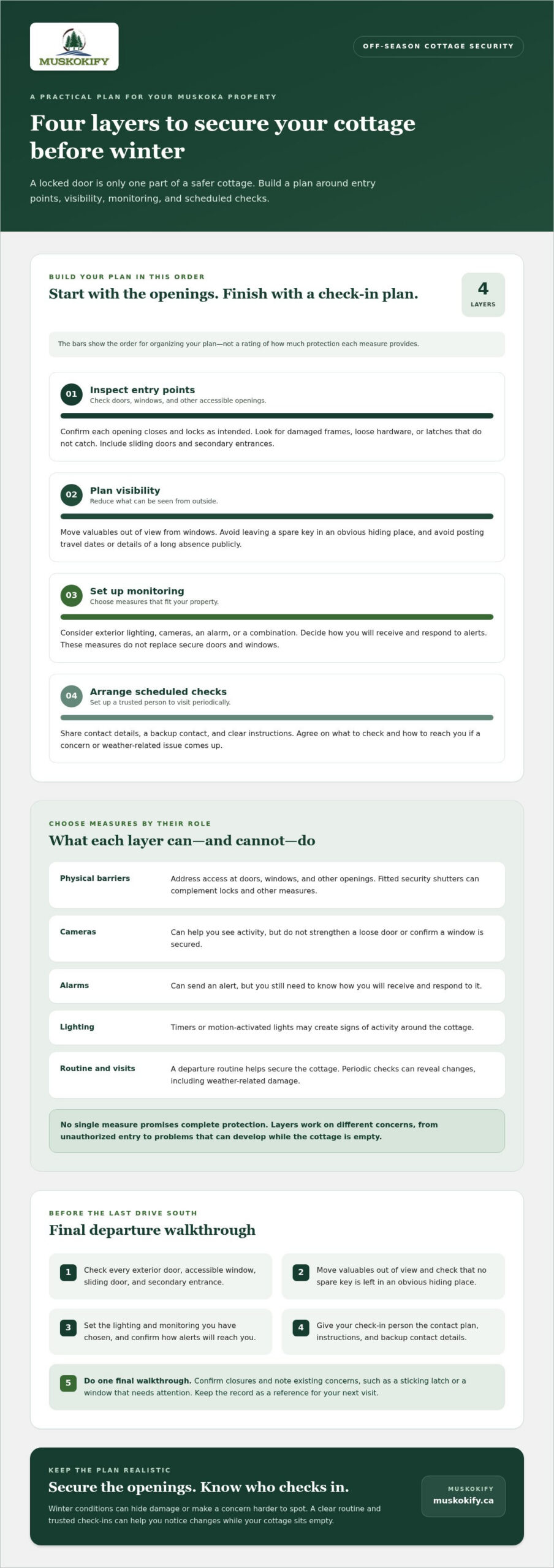
A reliable plan starts before the last drive south from the lake. Work through four layers in order: inspect entry points, plan visibility, set up monitoring, and arrange scheduled checks. This sequence helps you catch simple oversights before departure and decide how someone will keep an eye on the property through winter.
Write down your plan and share practical details with anyone helping: who has access, how to reach you, and what to do if they notice a concern. Keep the steps realistic for your cottage’s location and winter road conditions. A plan should reduce risk, not assume that any single measure can prevent every problem.
Start with doors, windows, and visible entry points
Walk around the cottage and check every exterior door, accessible window, and other opening. Confirm that each one closes and locks as intended. Look for damaged frames, loose hardware, or a latch that doesn’t catch, and arrange to address these issues before leaving. Include sliding doors and secondary entrances, not just the front door.
Keep valuables out of view from windows, and don’t leave a spare key in an obvious hiding place. For openings that need an added physical barrier, fitted security shutters can complement locks and other measures. See security shutters for cottage openings as one option, with the design suited to the opening and the cottage’s setting.
Plan visibility, monitoring, and trusted check-ins
Decide what makes sense for your property: exterior lighting, cameras, an alarm, or a combination. Timers or motion-activated lights may create signs of activity, while cameras and alarms can support monitoring. They don’t replace secure doors and windows. A device is only useful if you know how you’ll receive and respond to alerts.
Arrange periodic visits with someone you trust. Share your contact details, a backup contact, and clear instructions for reporting an issue. Agree on what they should check and how they’ll reach you if weather or access conditions raise a concern. Avoid posting travel dates or details of a long absence publicly while you’re away.
Before departure: finish the entry-point inspection, move valuables out of sight, set the lighting and monitoring you’ve chosen, and give your check-in person the contact plan. Do one final walkthrough to confirm closures and note existing concerns, such as a sticking latch or a window that needs attention. That record gives you a useful reference at your next visit.
This ordered routine is a practical starting point for how to secure a cottage in the off-season. If you’re considering a fitted shutter layer, learn about Muskokify’s security shutters.
Cottage security measures compared: cameras, alarms, and physical barriers
Each security measure does a different job. A camera can help you see activity, an alarm can signal a possible event, and a physical barrier can add protection at an opening. Use this comparison to decide what fits your cottage, then combine measures to account for their limits. If you’re weighing how to secure a cottage in the off-season, start with the openings and conditions that matter most at your property.
| Measure | Role | Limitation | Fit for a seasonal cottage |
|---|---|---|---|
| Physical barriers | Add a layer at doors or windows. | They don’t report activity or identify what’s happening. | Useful for openings that need added protection while the cottage is empty. |
| Alarms | Signal a triggered sensor or system event. | They depend on setup and a plan for receiving and responding to alerts. | Consider them if you can manage notifications while away. |
| Cameras | Record activity or send alerts, depending on the system. | They don’t physically secure an opening; footage may not be available if power or connection fails. | Can support remote awareness where the system works reliably. |
| Lighting | Illuminates selected areas and can make activity more visible. | It doesn’t close or reinforce entry points. | May suit entrances or areas you want visible during darker winter hours. |
| Scheduled checks | Give someone a chance to notice changes in person. | They only show the property’s condition at the time of a visit. | Helpful when you can arrange visits and share clear instructions. |
What cameras and alarms can, and can’t, do
A camera may let you review a recording or receive an alert. An alarm may notify you when a sensor is triggered. Neither makes a weak latch stronger or stops a window from opening. Remote monitoring also depends on the system’s power, connection, settings, and how you’ve chosen to receive alerts. Think through what happens if one of those parts is unavailable, and don’t treat a notification as a substitute for sound entry points.
Where shutters fit into a layered plan
Security shutters add a physical layer at suitable openings. Their role depends on the opening, how the shutters fit, and how the project is designed for the cottage. A broad opening may call for a different design approach than a standard window, so consider its dimensions and setting rather than assuming one solution suits every elevation. Security shutters for cottage openings can complement locks, lighting, monitoring, and scheduled checks, but they aren’t a standalone guarantee.
Match the measures to the gaps you’ve identified. If you rely on a camera, consider its power and connection. If a location is difficult to monitor remotely, scheduled visits may add useful eyes on the property. The goal is a considered combination: physical protection at vulnerable openings, awareness of activity, and a practical way to notice changing conditions.
Your off-season cottage departure checklist for Muskoka
A final checklist turns your security plan into a consistent routine, even when you’re eager to get on the road. Complete the tasks you control first, then give your trusted local contact clear instructions. A dated record of the cottage’s condition gives you a useful reference if you need to compare what you see on a later visit.
Complete a final walkthrough before leaving
Walk through the cottage in a set order, such as from the upper floor to the main level and then around the exterior. Confirm each closure yourself rather than relying on memory. Use this checklist as a final pass:
- Entry points: Close and check exterior doors, accessible windows, and other openings. Note any latch, frame, or hardware concerns.
- Valuables and keys: Store portable valuables out of sight, and remove spare keys from obvious outdoor hiding spots.
- Lighting: Set any timers or exterior lights you’ve chosen for the property.
- Monitoring: Confirm that your chosen alarm or camera system is active and that you know how it sends alerts.
- Contacts: Leave your trusted contact your current number, a backup contact, and clear instructions for reaching you.
- Condition record: Take dated notes or photos of existing concerns, such as a sticking door, a damaged screen, or a mark on a window. Keep the record somewhere you can find it later.
Before locking up, make one last circuit. Check the closures again, confirm the agreed monitoring setup, and compare the cottage with your notes. Record anything that has changed since your earlier inspection, so you don’t mistake a pre-existing issue for a new one.
Make winter check-ins useful and consistent
Choose a check-in schedule that suits the cottage’s distance, access, and winter conditions. Agree on the timing with your trusted contact, and make each visit practical rather than vague. Ask them to report visible changes, difficulty reaching the property, signs of damage, or an opening that appears unsecured. A visit provides observations at that time, separate from the tasks you completed before leaving.
Give your contact one easy-to-find set of details: how to reach you, who to call if you’re unavailable, and what steps you’ve agreed they should take if they notice a concern. Avoid unclear instructions that require them to guess. If your plans or contact information change, update the details promptly.
This routine gives you a clear answer to how to secure a cottage in the off-season, while making it easier to spot changes between visits. If you’re considering shutters as a fitted physical layer, see Muskokify’s security shutter options.
Add a fitted security-shutter layer to your cottage protection plan
After considering locks, lighting, monitoring, and check-ins, decide whether shutters would add a useful physical layer at selected openings. They don’t replace those measures or guarantee that a cottage will stay secure. Their role is more specific: to add a barrier where the opening, building, and seasonal use make that approach suitable.
Start by identifying the openings you want to address. A wide window facing a quiet stretch of shoreline may call for a different design than a smaller opening near a frequently used entrance. Consider how each shutter will fit the cottage’s architecture and how you’ll use the space during the seasons you visit. A considered design can complement the building rather than feel like an afterthought.
Consider where shutters support your plan
Look at the openings alongside your existing locks and monitoring. Shutters may complement those measures at selected windows or other suitable openings, adding a physical layer without replacing regular checks or secure entry points. Explore cottage security shutters in Ontario as part of a wider plan for an unattended property.
Consider the cottage from both the road and the lake. The building’s layout, sightlines, and architectural details can inform where shutters make sense. Their appearance and fit matter too: a suitable installation should feel considered on the cottage, not simply added wherever space allows.
Plan a project around your cottage and its openings
Muskokify designs and installs security shutters for residential properties and cottages. The project design can account for the dimensions of each opening and the layout of the property, including broad spans that need a tailored approach. Muskokify specializes in oversized shutter installations up to 40-foot spans. That can be relevant for cottages with large openings, though the right design depends on the specific project.
Before planning a project, make a short list of the openings you’re considering and note what you want the shutter layer to add to your existing plan. Photos or measurements can help describe the setting, while the design should respond to the actual cottage and its openings. This keeps the project focused on fit, function, and how the shutters will sit alongside your other security measures.
A well-planned shutter installation can be one part of a considered approach to seasonal protection. Keep your locks, monitoring, and scheduled checks in place, and treat shutters as an additional layer rather than a promise of complete protection.
Make your next cottage visit a chance to plan ahead
On your next visit, take a fresh look at the openings you might want to address. Note their dimensions, surrounding trim, and any architectural details that could affect how a shutter fits. Consider how you move through the cottage during the seasons you use it, too. These observations can help shape a design that feels suited to the building rather than added as an afterthought.
If you’re thinking about how to secure a cottage in the off-season, use those notes to identify the questions you want a shutter project to answer. Which openings matter most? How should the shutters complement the cottage’s appearance? What details would help the design work with your property’s layout? A clear starting point makes it easier to explore options that reflect your priorities.
For cottages in Gravenhurst, Huntsville, Parry Sound, Midland, Tiny, Collingwood, Orillia, Barrie, Dorset, Haliburton, Mactier, and Coldwater, Muskokify designs and installs security shutters for residential properties and cottages.
Frequently Asked Questions
Is a camera enough to secure a cottage in the off-season?
No. A camera can help you review a specific area, but it can’t show what’s happening beyond its field of view or confirm whether an opening is secure. If you use one, consider what it can see at night, in snow, or when branches move in the wind. A camera is most useful when its view answers a practical question about your property.
Can I monitor my cottage remotely during winter?
Yes, if your system and connection allow remote access. Before you leave, check that you can sign in from the device you’ll use while away, and learn how to review an alert’s date and time. If more than one person may need access, decide who can view the system and keep account details private. These steps can make remote access easier to manage.
How often should someone check on an empty cottage?
There’s no single interval that suits every cottage. Consider how far it is from home, how accessible the property stays through winter, and whether recent conditions have changed. A check after a major storm or a period of difficult access may be useful if it’s safe to reach the property. Keep the plan flexible rather than treating a fixed calendar as proof that all is well.
What should I do if I notice damage during a cottage check-in?
Put personal safety first and don’t approach damage that could involve unstable structures, exposed wiring, or another hazard. If you suspect a break-in, stay out and contact police. For other visible damage, take notes or photos from a safe place, record when you found it, and tell the owner or the person responsible for next steps. Avoid moving items or starting repairs until the situation is assessed.
Should I tell anyone that my cottage will be empty?
Share access information only with people who need it to carry out an agreed task. Keep a simple record of who has a key or access code, and update it if arrangements change. If you give someone temporary access, make clear whether they may enter the cottage or should only inspect from outside. This helps prevent confusion and keeps access details with the people you trust.
Do security shutters replace cottage door and window locks?
No. Before lowering a shutter, close and latch the window or door it covers. Follow the shutter’s operating instructions, and make sure anyone who may use it understands the controls. For an opening you rarely visit in person, add its shutter and lock to your inspection notes so you can check both separately. This helps you avoid assuming that one closed layer means every part is secured.
Can winter weather affect cottage security systems?
It can affect what a system can see or sense. Snow buildup, ice, or windblown debris may obstruct an outdoor camera’s view or cover a sensor. During a visit, look for anything blocking the equipment and note visible damage without climbing or reaching into unsafe areas. Check that the view still covers the intended approach, since a shifted camera may record activity somewhere other than the area you meant to watch.
To plan a fitted security shutter layer for your cottage, contact Muskokify about your project.