
Bug-free patio solutions for screened shade and airflow
The most practical bug-free patio solutions pair a well-fitted screen with good airflow. Screening helps keep insects out, while moving air across the seating area can make it less appealing to flying bugs. In Muskoka, this balance lets you enjoy lake views and summer breezes without making the patio feel closed in.
You already know the trade-off: open patios feel airy, but bugs can interrupt a quiet evening outdoors. The right setup can help reduce that frustration while keeping your space comfortable and connected to the landscape.
This guide compares screened patios, mosquito netting, and outdoor tents, then covers ways to make your yard and seating area less inviting to insects. You’ll also learn how to choose a screening approach that suits your patio, supports airflow, and preserves the view.
Key Takeaways
- Pair patio screening with thoughtful airflow to help keep insects out without making your outdoor space feel closed in.
- Compare fixed screens, mosquito netting and outdoor tents to find an approach that suits your patio and how you use it.
- Reduce common mosquito attractants by clearing standing water and keeping outdoor areas tidy.
- Refresh water in pet dishes and birdbaths regularly to help limit places where mosquitoes can breed.
- For a more integrated outdoor enclosure, consider how Sunspace Sunrooms could support comfortable patio living.
1. Screened patios, pergolas, and ceiling fans
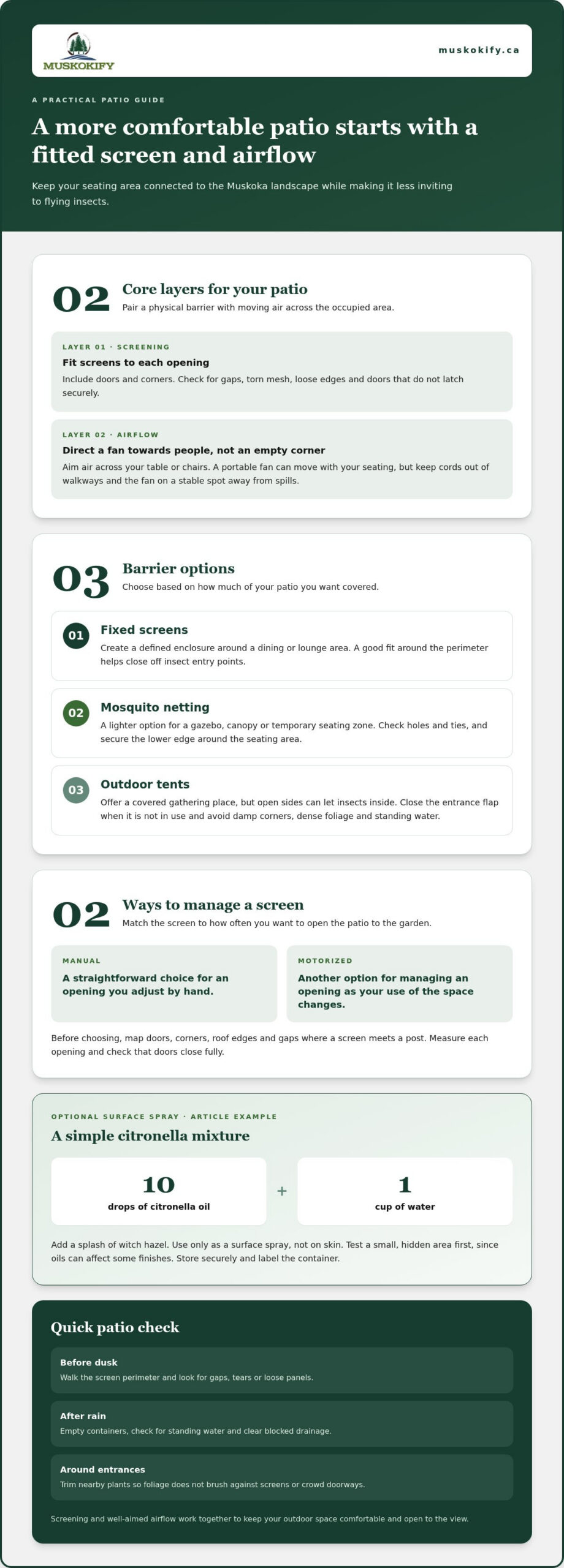
A screened patio creates a clear boundary between your seating area and the backyard. Choose screening that fits each opening, including doors and corners. Loose edges and unlatched doors can leave entry points, so walk the perimeter before dusk and look for gaps, torn mesh, or screens that no longer sit securely. Fixing small openings helps the enclosure work as intended.
Start with how you want to use the space. A fully screened patio suits meals, reading, and quiet evenings with fewer insect interruptions. A pergola offers overhead shade while keeping the sides open to the landscape. That design preserves views across a Muskoka lake, but it won’t create the same barrier as screening. Match the structure to your priorities: airflow, insect protection, or a balance of both.
Air movement can make an outdoor seating area less appealing to flying insects. Position an outdoor fan so its airflow reaches the table or chairs, rather than an empty corner. Under a pergola, consider nearby trees, open sides, and the seating arrangement. Adjust the fan’s direction when you move furniture or use the space differently.
Portable fans offer another option when there’s no fixed fan. Place one beside a dining table or lounge chair and direct airflow across the occupied area. Move it as the sun shifts or guests gather elsewhere. Keep cords out of walkways and choose a stable spot away from spills. A portable fan is easy to reposition, but it won’t replace screening where insects enter through open sides.
Citronella lamps can add a soft pool of light to an evening table. Treat them as one part of your setup, not a substitute for screens or airflow. Set lamps on stable surfaces, away from fabrics and busy walkways. Position outdoor lighting to serve the seating area without drawing insects toward an open doorway. Follow citronella product label directions and keep the products away from children and pets.
For a homemade citronella spray, mix 10 drops of citronella oil with one cup of water and a splash of witch hazel. Use the mixture only as a surface spray, not on skin. Test it on a small, hidden area first, since oils can affect some finishes. Store it securely and label the container. This example gives you a practical option, but a screened patio and moving air remain the main structural steps.
Check the yard around your patio for standing water. Empty containers, clear blocked drainage, and clean debris from rain gutters. These steps help reduce places where mosquitoes may breed. Trim plants near entrances so foliage doesn’t brush against screens or crowd doorways. Combine yard maintenance with screening, well-aimed fans, and carefully placed lighting for a more comfortable outdoor space.
2. Screens, mosquito nets, and outdoor tents
Choose a barrier that suits how you use your patio. Fixed screens create a defined enclosure around a dining or lounge area. Mosquito netting offers a lighter option for a gazebo, canopy, or temporary seating zone. Outdoor tents can provide a covered gathering place in a garden, but open sides still let insects inside. Decide whether you need a full perimeter barrier or coverage around one activity, such as outdoor dining.
Map the openings around your seating area first. Note doors, corners, roof edges, and gaps where a screen meets a post. Measure each opening before choosing a screen or netting panel. A loose panel can leave gaps, while a tight fit can make entry and exit awkward. Check that doors close fully and netting won’t drag across the ground as people walk through.
For a seasonal setup, inspect netting before its first use. Look for holes, loose ties, damaged seams, and fabric that has pulled away from its frame. Repair small tears before insects find them. Secure the lower edge around the seating area, especially near table or chair legs. After a windy evening, check that panels remain in place and haven’t shifted away from the opening.
A tent works best when you treat its open sides as potential entry points. Keep the entrance flap closed when people aren’t passing through. Cover food and drinks to avoid spills and sweet odours that can draw insects. Move the tent away from damp corners, dense foliage, and standing water. Clear leaves from its base so the area is easier to inspect and clean.
Some patio owners use plants as a supporting measure. Lavender and basil have scents that may repel bugs, so place pots near seating rather than behind a screen. Drain containers and remove water from saucers to avoid creating breeding sites. Keep plants clear of doorways and netting. Smoke from eucalyptus or rosemary in a fire can deter bugs, but it isn’t a replacement for a physical barrier.
Match your screen style to the way you enter and use the space. A fixed panel suits an opening that rarely changes. A movable screen can make more sense where you want to open the patio to the garden. Motorized and manual screens offer two approaches to managing an opening. Consider which entry points you want covered and how often you’ll adjust the screen.
Keep your setup working with a simple inspection routine. Before guests arrive, close each screen and check its edges. After meals outdoors, clear crumbs and wipe spills from tables. At the end of the season, clean and dry removable netting before storing it. These steps won’t prevent every insect, but they help maintain a more comfortable outdoor living area as your patio use changes.
3. What are the most common patio problems in Canada and how can they be prevented?
Mosquitoes are a common patio nuisance in warm weather. Standing water, even in small containers, can provide places for them to breed. Inspect your yard regularly during summer, especially after rain. Look beneath patio furniture, beside steps, and around garden planters. Empty buckets and water-filled gardening containers, and check toys, tarps, and other items that can hold rainwater. Practical bug-free patio solutions start by removing potential mosquito breeding sites.
Birdbaths, pet dishes, fountains, and pools need their own routine. According to the Public Health Agency of Canada, replace water in outdoor pet dishes and bird baths at least 2 times weekly to help reduce mosquito habitats near a patio. Cover hot tubs, pools, and fountains when they’re not in use. Covers help keep leaves out and limit exposed water. Clear debris from water features, then refresh birdbath water every few days.
Dense plants and long grass can make patio edges harder to maintain. Keep grass cut and trim plants near paths, doors, and seating areas. Clear foliage that crowds a walkway or brushes against a screen. This makes the space easier to inspect and helps you spot pooled water after rain. Leave entrances clear so guests can move between the patio and garden without brushing past overgrown plants.
Leaves and clutter can hide damp spots around your outdoor space. Store unused buckets upside down, and check beneath planters after a storm. Move cushions before inspecting chair frames and deck corners. Clear leaves from low areas where water might collect. These quick checks help you find overlooked water sources and keep the seating area ready for use. Add them to your regular patio cleanup instead of waiting for mosquitoes to appear.
Build prevention into the seasonal rhythm of a Canadian backyard. In spring, remove debris around seating areas. During summer, check for standing water regularly. In autumn, clear leaves from containers and low spots before they trap moisture. After heavy rain, walk the patio perimeter and look for new puddles. These habits address conditions that encourage mosquito breeding and make the outdoor area easier to maintain.
Follow a simple inspection route to avoid missing corners. Start near the house, then check planters, steps, and outdoor furniture. Look inside garden containers and under covers. Empty collected water and cover features that remain unused. A short, repeatable walk helps you catch changes early. Also look for torn screens or gaps near doors, since physical barriers work best when intact.
Combine these steps with screening and airflow. A screen can limit insects entering the seating area, while yard maintenance addresses nearby breeding conditions. Keep removing standing water, trimming plants, and covering unused features. Together, these bug-free patio solutions make outdoor meals and quiet evenings more comfortable without relying on a single measure.
Focus each check on collected water and places where it can remain. Cover hot tubs, pools, and fountains when they are not in use to prevent standing water where mosquitoes can breed. Include birdbaths and water-filled gardening buckets in your inspection, and empty them to remove potential breeding sites. If water collects again, empty it during your next check. A simple routine makes these steps part of regular patio care, rather than something you do only after mosquitoes become noticeable.
Water is only one part of making a backyard less inviting to bugs. Keep grass cut and plants trimmed, and look at the patio and yard together so water checks and plant upkeep become part of the same routine. Cover unused water features, empty birdbaths and water-filled gardening buckets, and maintain the grass and plants. Repeating these basic actions helps address standing water and overgrown areas while keeping prevention manageable.
4. Your patio
Start with the surfaces you touch and use. Patio tables, chair frames, and cushions can collect crumbs, spills, mildew, and leaves. Clear food scraps after meals, then wipe sticky spots from tabletops and armrests. Pressure-wash suitable outdoor furniture once a year to remove mildew and mould. Check the maker’s care directions first, especially for painted finishes, woven materials, and cushions that shouldn’t be soaked. Let cleaned furniture dry before replacing cushions or setting out food.
For a furniture-cleaning spray, dilute vinegar with 3 parts water. Apply it with a cloth, then test a small, hidden area first. That test can reveal whether the mixture affects a finish. Avoid spraying delicate fabric until you know how it reacts. Don’t combine cleaning products. Use a separate cloth for the table and chair arms, then rinse or wipe surfaces as appropriate for the material.
According to the Public Health Agency of Canada, replace water in outdoor pet dishes and bird baths at least 2 times weekly to help reduce mosquito habitats near a patio. Give the dishes a quick clean when refreshing them, and place them away from your main seating area. For patios with decorative containers, tip out rainwater after use. Bti pellets can target mosquito larvae in standing water. Follow the product label for placement and use.
For non-drinking water, a few drops of olive or vegetable oil can suffocate mosquito larvae. Keep this method away from pet dishes and birdbaths. Remove water when it’s no longer needed rather than leaving a container to collect more. If you use a spray on furniture, test a small area first to help avoid staining or damage. A hidden spot under a chair or table can show how the surface responds.
Lighting can shape the patio atmosphere and influence where insects gather. Try yellow or amber outdoor LED lights near seating. Place them so you can see the table and paths without shining them directly through an open doorway. Smoke from a fire pit can deter bugs from an outdoor living space. Burning wood, eucalyptus, or rosemary may also help. Keep the fire area separate from cushions and fabric, and follow the fire pit’s operating instructions.
A monthly walk-through can catch small patio issues before they become a nuisance. Spend 10 minutes checking beneath chairs, around planter bases, and beside the table. Look for food debris, damp corners, or spray marks on furniture. Note any surface that needs a different cleaning method. If you try mouthwash around seating, test it on a small furniture area first, since sprays can stain or damage finishes.
Make these care steps part of preparing the patio for guests. Wipe the dining surface, check the cushions, and refresh outdoor pet dishes before people settle in. If you’re considering a more tailored enclosure for your patio, discuss your patio project.
Keep pressure-washing outdoor patio furniture once a year as part of the mildew and mould routine, while treating insect prevention as another part of patio upkeep. The page recommends changing birdbath water every few days to help prevent mosquitoes. It also recommends lavender and basil among plants whose scents may repel bugs, and placing garlic cloves in potted plants to deter mosquitoes and other bugs. These suggestions can sit alongside the existing habit of emptying water from containers when it is no longer needed.
For a planted boundary near patio zones and seating areas, the page describes using scallion, mint, and marigold containers as 3-foot borders. The page also reports that spraying mouthwash around patio seating areas reduced bug activity for a few hours in the authors’ experience. Treat that report as an observation from the authors, not as a guarantee of a particular result. Choose among the listed plant and container approaches as appropriate for the patio, and keep checking seating areas and nearby pots as part of the regular walk-through.
Muskokify: Sunspace Sunrooms
Muskokify can help create a more sheltered outdoor living area with Sunspace Sunrooms and Window systems. A sunroom extends your living space and creates a defined transition between your home and the Muskoka landscape. Motorized Screens offer a way to manage openings while keeping the space connected to the outdoors. Glass Railings and Aluminum Railings can complement nearby deck areas while preserving the view.
Consider these options when your current patio setup doesn’t suit how you want to gather, relax, or enjoy the scenery. The right combination depends on your home, project location, and how you use the space. Contact Muskokify to discuss your patio plans.
Shape an outdoor space around your view
Your patio should feel connected to the landscape, not cut off from it. The best bug-free patio solutions start with how you want to use the space: open to the lake breeze, screened for evening meals, or sheltered for more time outdoors. Consider the view you want to preserve, the openings that need coverage, and how the space should work through Muskoka’s changing seasons.
Muskokify offers Sunspace Sunrooms, Glass Railings, and Aluminum Railings to help shape outdoor areas around comfort and visibility. A sunroom can create a more sheltered living area, while glass or aluminium railings can define a deck without dominating its design. Choose the next step that fits your home, cottage, and plans for the patio. Contact Muskokify to discuss your patio options and start planning an outdoor space you’ll be glad to spend time in.