
Motorized Privacy Screens in Orillia with Custom Installation
A lakefront patio should feel connected to the water, not exposed to every nearby sightline. Motorized privacy screens in Orillia can be custom-installed to suit your outdoor space, giving you adjustable coverage while keeping the option of an open view. Picture enjoying a quiet morning on the deck, then lowering a screen when the patio feels too exposed. The right design starts with how you want the space to look and feel, along with the openings you want covered.
Planning also means considering the home itself. An older cottage, a covered porch and an open deck each raise different design questions. This guide explains what to consider, from fit and placement to operation and seasonal use. It also compares screens with retractable awnings and fixed screens, helping you match the solution to your priorities. By the end, you’ll have a clearer idea of what to discuss when creating a more private, comfortable outdoor space without losing sight of the lake.
Key Takeaways
- Plan a custom installation around your screen opening, mounting conditions and how you use the outdoor space.
- Balance privacy with lake views by considering screen placement and the sightlines you want to preserve.
- For a lakefront home, think through exposure, nearby views and how the screens will fit the structure.
- Compare motorized screens with awnings and fixed screens based on the kind of shade, privacy and flexibility you need.
- Muskokify’s Motorized Screens and Sunspace Sunrooms can help shape an outdoor area around your home and how you want to enjoy it.
Dealer installation and custom quotes
A custom quote should reflect the opening, its supporting structure and how you plan to use the patio. For an older Orillia home, careful measurements and a clear description of the finish help translate your preferences into a practical installation plan.
Custom Sizing and Finishes
Older homes may have openings that vary in width or height, even within the same porch. Measure each opening at the top, middle and bottom, and record the smallest measurement for the installer to review. Note sloped sills, uneven trim and projecting hardware. The screen must fit the actual opening without interfering with doors or nearby fixtures.
Choose colours and finishes with the home’s exterior in mind. Compare a frame colour with the siding, trim and railing rather than relying on a small sample alone. Custom privacy and shade screens also call for a clear description of their intended use. List the openings that need coverage, where you want privacy and which views should remain open. These details give the quote a useful design starting point.
Discuss screen installation details in relation to the opening and finish you have in mind.
Installation and Project Timing
Professional installation involves reviewing the opening, planning the mounting approach, fitting the screen and checking its movement. Before the installation, move patio furniture away from the work area and point out features such as a door swing, light fixture or railing. An older porch with uneven trim may need a different fitting approach from a new, square opening.
How long does installation take, and what maintenance do motorized screens need? The work duration depends on the number of openings, their condition and the installation plan. After fitting, keep the screen and its accessible tracks free of leaves and dirt. Use the care instructions supplied with the system, and don’t force it if movement becomes uneven.
What warranties and service coverage do Orillia screen installers offer? Review the written product and installation terms to understand which components are covered and how to request service. Keep those documents with your installation records so you can refer to the applicable terms if a screen or motor needs attention.
Permits and Local Rules
Are permits required to install outdoor privacy screens in Orillia? Whether a permit is needed depends on the proposed work, not simply on the screen. Describe the attachment points and any changes to the existing structure when determining the requirements for your project.
What building and zoning rules apply to patio screens in Orillia? Relevant requirements depend on the property and proposed work. Record the screen’s location, the structure it attaches to, and whether the project changes the patio’s layout or enclosure. These specifics help frame a clear review of building and zoning requirements without assuming every patio project follows the same path.
Privacy while maintaining outdoor visibility
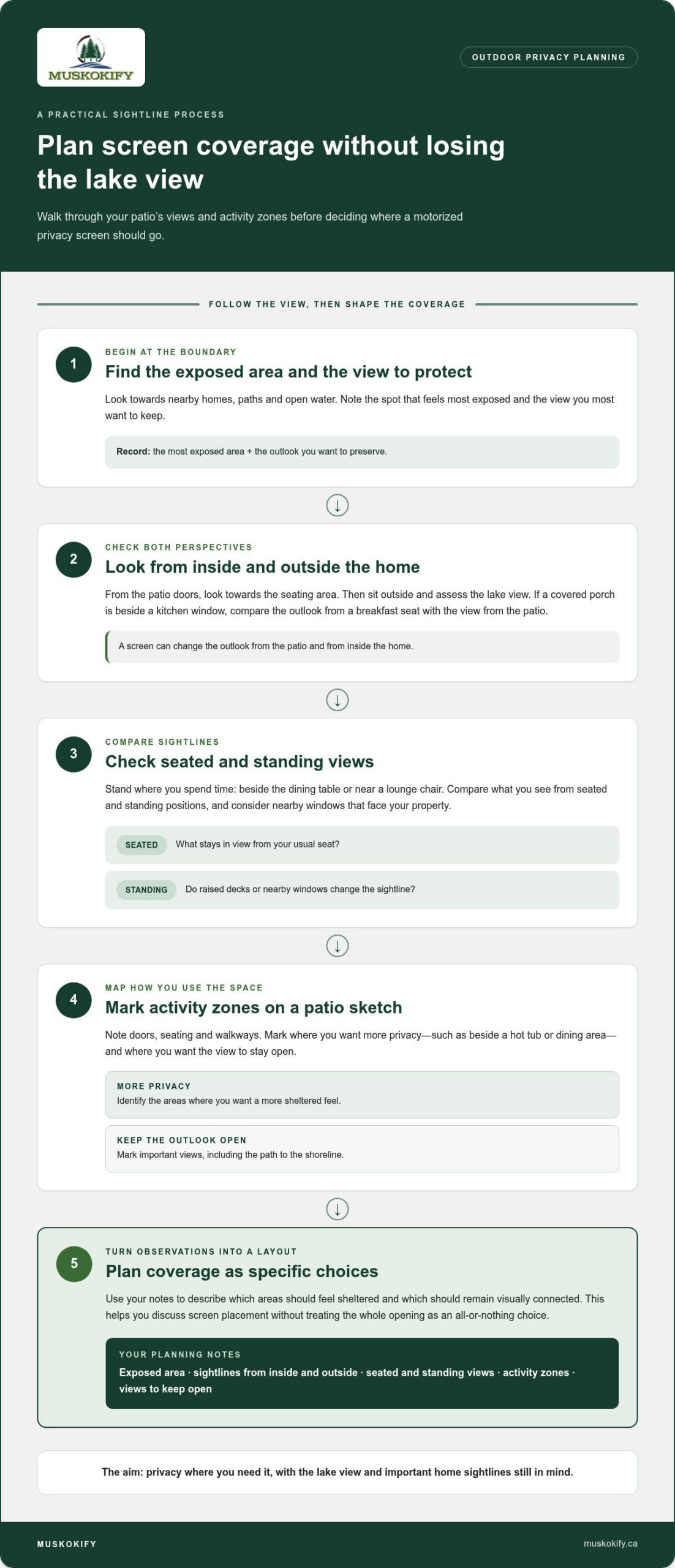
Privacy and visibility depend on where you stand, what you want hidden and the view beyond your patio. A screen that feels discreet from a deck chair may look different from inside the home. Assess both perspectives before deciding how much of an opening to cover. Look through the patio doors towards the seating area, then sit outside and assess the lake view.
Think about sightlines at different heights. A neighbour’s view from a raised deck can differ from the view across a ground-level yard. Stand where you spend time, such as beside an outdoor dining table or near a lounge chair. Consider, too, which nearby windows face your property. This walk-through helps identify the areas that need more privacy without screening every part of the outlook.
Plan screen coverage around the activities in each part of your outdoor space. You might want more privacy beside a hot tub or dining area while leaving the path to the shoreline visually open. Mark those zones on a patio sketch. Note doors, seating and walkways, then describe which areas should feel sheltered and which should remain visually connected.
Consider how the screen affects the view from inside, too. A covered porch may sit directly outside a kitchen window, so screening the full opening could change the outlook from both rooms. Compare the view from a breakfast seat with the view from the patio. This simple check can help you avoid placing coverage where it would interrupt an important view through the home.
For a useful privacy review, make observations in a consistent order. Start at the property boundary, then move to the patio entrance and your usual seat. Look towards nearby homes, paths and open water. Record the most exposed area and the view you most want to protect. These notes clarify the balance you’re seeking before you settle on a screen layout.
- Check the patio from inside and outside the home.
- Compare sightlines from seated and standing positions.
- Mark activity zones, such as dining or a lounge area.
- Identify the views you want to keep open from key rooms.
With those observations, you can discuss coverage as a series of specific choices rather than a single all-or-nothing screen. If you’d like to discuss your layout, talk through your screen requirements.
Installing motorized screens in a lakefront home
A lakefront installation should begin with the structure, not the screen fabric. Identify the deck, porch or covered patio opening you want to screen, then note the posts, beams and trim around it. A screen beneath a roofed deck, for example, may need different mounting points from one fitted between freestanding posts. These details shape the fit and how the screen sits within the home’s exterior.
Lake views also influence placement. A screen across the entire lake-facing opening may obscure more scenery than you want, while a screen on a side opening can address a neighbour’s sightline. Stand at your usual seat and note the view, then check it from the dining table and doorway. These positions help clarify which openings need coverage and which should stay clear.
During a site review, discuss how you use the opening and what surrounds it. A lakeside dining area may need adjustable coverage along one side, while a covered porch might call for screens on several openings. Point out railings, light fixtures, door swings and nearby furniture. These features can affect where a screen fits and whether it can move without interference.
Plan the motor and control location as part of the layout. Consider where you’ll operate the screen, such as beside a patio door or near the seating area. If the installation includes several openings, decide whether you want to operate each screen separately or coordinate their use. The arrangement should reflect how you move through the space, rather than putting controls somewhere easy to overlook.
Orillia’s seasonal changes make a clear operating plan useful. In summer, you might lower a screen when the sun reaches a lakeside table, then raise it for an open view. In spring or autumn, you may prefer to screen only the side that feels exposed. A motorized screen adjusts coverage, but it does not turn an open patio into an insulated room. Match its role to the structure and the conditions you want to manage.
Before installation, prepare a short site brief with these details:
- The openings to screen and the views to preserve.
- Mounting surfaces, nearby trim and possible obstructions.
- Where you want the controls and how you expect to use them.
- Seasonal conditions that affect your patio, such as direct sun or exposure.
Sharing these observations keeps the design focused on your lakefront routine. It also gives the installer practical context for discussing screen placement, operation and how the finished system fits your home.
Motorized screen operation
Motorized screens let you adjust coverage without manually raising or lowering the screen. On an Orillia patio, you might lower one as afternoon sun reaches the seating area, then raise it to restore an open lake view. The motor and control arrangement should suit the opening and your routine.
Available motor options include 120 volt, 24 volt and battery motors. The right choice depends on the screen location and the power arrangement for your home. A covered patio near an accessible power source may call for a different setup than a cottage opening where wiring access is limited. Consider the finished appearance, too, especially where visible wiring could affect the exterior.
Before selecting a motor, map how you move through the space. If you usually enter through one patio door, a control near that route may be convenient. For several screened openings, decide whether you expect to operate each screen separately. The number and placement of screens can shape the control plan, so discuss how you’ll use each opening during a typical day.
Operation is most useful when it responds to changing conditions. Lower a screen when direct sunlight falls across a dining table, then raise it when you want an unobstructed shoreline view. If wind changes your comfort, adjust the screen to suit the conditions and follow the system’s operating guidance. A screen provides adjustable coverage, not a substitute for a permanent wall or enclosed room.
For a seasonal cottage, consider how you’ll use the motor when opening and closing the property. Keep the control accessible, and make sure everyone using the patio understands the basic operation. If you leave the property for an extended period, follow the manufacturer’s instructions for the screen and motor. Don’t force the screen if it stops moving as expected.
Use this checklist when comparing motor setups:
- Choose among 120 volt, 24 volt or battery motor options.
- Identify the power access and preferred control location for each opening.
- Decide whether multiple screens should operate separately.
- Review the supplied instructions for normal operation and care.
These choices connect the motor to how you use your outdoor space, rather than treating operation as an afterthought. A clear plan can make it easier to move between shade, privacy and an open view as the light changes across your Orillia property.
How do motorized privacy screens compare with retractable awnings and fixed screens?
Start with the area you want covered. A motorized screen runs across a vertical opening, helping manage side privacy, sunlight and views. A retractable awning extends overhead to shade a patio or deck. A fixed screen stays in place, providing consistent coverage rather than adjustable screening.
For example, a west-facing Orillia patio may need shade as afternoon sun reaches the seating area. An awning can shade the space from above, while a motorized screen can cover a side opening. If nearby homes overlook the patio, a screen may address that sightline more directly. Consider the direction of the sun and neighbours’ views before choosing.
A fixed screen suits an opening where you want a steady boundary, such as a porch used mainly for dining. It won’t retract to reopen the view. A motorized screen offers more flexibility: raise it for an unobstructed lake outlook, then lower it when privacy or shade matters. This adjustability makes operation part of the decision, not just appearance.
These options serve different purposes, so compare them with how you use the space. Awnings provide overhead shade, screens cover vertical openings, and fixed screens keep an opening screened. If your main concern is direct sun above a table, consider overhead coverage. If you want to manage a neighbour’s sightline, focus on the exposed side.
- Choose a motorized screen when you want adjustable coverage across a vertical opening. For instance, lower it for privacy during dinner, then raise it to enjoy the shoreline view.
- Choose a retractable awning when overhead shade is the priority. It can cover a seating area from above, while the patio sides remain open.
- Choose a fixed screen when you prefer consistent coverage at one opening. It suits a porch where you don’t need to change between screened and open views.
Some patios may benefit from more than one approach. An awning can shade the area above a dining set while a screen addresses a side view. The right combination depends on the structure, mounting locations and the space you want to keep open. Sketch the patio and mark the sun-facing edge, neighbouring sightlines and lake-facing view before discussing options.
For a design conversation based on your patio layout, discuss your screen and shade options.
Muskokify: Sunspace Sunrooms
Muskokify can help you plan Motorized Screens for a patio where privacy, shade and lake views need to work together. If you’re considering a larger outdoor-living change, Sunspace Sunrooms can create an enclosed space with a different level of shelter. Glass Railings and Aluminum Railings can also define decks and patios while preserving an open outlook.
Choose your next step based on the project: discuss Motorized Screens for adjustable coverage, or explore Sunspace Sunrooms for an enclosed extension. Sharing the openings you want to screen, the views you want to preserve and how you use the space gives the design conversation a practical starting point.
Contact Muskokify to discuss your Orillia project or visit muskokify.ca.
Shape an outdoor space that feels like yours
Your next step is to picture how you want your outdoor space to feel during a quiet morning, a bright afternoon or an evening by the lake. For motorized privacy screens in Orillia, bring that vision into the design conversation: which sightlines matter, what you want to keep open and how you’ll use the space through the seasons.
Muskokify can connect those priorities with a tailored outdoor-living plan. Alongside Motorized Screens, Sunspace Sunrooms can create an enclosed extension, while Glass Railings and Aluminum Railings can define a deck without making the view an afterthought. Each option serves a different purpose, so start with the change that matters most to your home.
Gather a few notes about your patio, preferred views and daily routines, then contact Muskokify to discuss your screens. A clear starting point can help you move towards a more comfortable, considered outdoor space.
Frequently Asked Questions
Where can I buy motorized privacy screens in Orillia, Ontario?
Muskokify provides motorized screens with custom installation for homeowners and cottage owners in Orillia. For motorized privacy screens in Orillia, start with the opening you want covered and how you plan to use it. A covered porch, lakeside deck and patio door each create different design needs. A photo or simple sketch can help explain the layout and your preferred views.
Which Orillia-area companies install motorized outdoor privacy screens?
Muskokify installs motorized screens for homes and cottages in Orillia, tailoring the plan to the structure and how you use the outdoor space, whether you’re screening a porch or deck. Before discussing your project, note the opening’s location, nearby trim or railings, and the sightlines you want to preserve. This context helps connect the screen choice to your property.
How much do motorized privacy screens cost in Orillia, including installation?
The price depends on the project and is provided after a quote request. Key cost factors include the opening’s dimensions, the number of screens, mounting conditions and the selected motor and installation work. A single straightforward opening, for example, differs from several openings with varying sizes or mounting surfaces. Share your project details when requesting a quote so the estimate reflects the screen layout and installation requirements.
What types of motorized privacy screens are available for patios and decks?
Motorized screens suit vertical openings on patios, decks and covered outdoor areas. They’re button-operated and provide protection from sun and rain, making them useful where overhead shade alone won’t cover a side opening. A screen beside a dining area, for example, can provide adjustable coverage while leaving the lake-facing side open. Muskokify also offers Motorized and Manual Screens for openings where you prefer manual operation.
Are motorized privacy screens suitable for Orillia’s wind, snow, and winter climate?
Motorized screens provide adjustable protection from sun and rain, but they aren’t an insulated winter enclosure or a replacement for a permanent wall. For an Orillia cottage, consider how you plan to use the screen during outdoor-living seasons and how the property is exposed. If your goal is comfortable indoor space through winter, consider an enclosure designed to extend living space, such as a Sunspace Sunroom.
What power options and smart-home controls are available for motorized screens?
Motorized screens can use 120-volt, 24-volt or battery motors, and the documented operation is button-based. Choose the power option with the screen location and your home’s setup in mind. For a lakeside deck, consider where power is accessible and where you’d want to operate the screen. Plan around button controls rather than assuming voice control, app operation or smart-home integration.